
Skincare for Extremely Sensitive Skin Explained
Table of Contents
- What Is Extremely Sensitive Skin and How It Differs From Reactive Skin
- Common Triggers and Causes of Skin Sensitivity
- How to Repair a Damaged Skin Barrier
- Patch Testing Skincare Products: A Step-by-Step Approach
- Dermatologist-Recommended Skincare for Sensitive Skin
- Building Your Sensitive Skin Routine: Cleansing to Moisturizing
- Budget-Friendly vs. Medical-Grade Products for Sensitive Skin
- Frequently Asked Questions
Last Updated: September 19, 2026
What Is Extremely Sensitive Skin and How It Differs From Reactive Skin
Extremely sensitive skin is a condition where your skin barrier is compromised, making it reactive to products, environmental factors, and irritants that wouldn't bother most people, and skincare for extremely sensitive skin explained requires understanding this barrier dysfunction. This isn't just dry or easily irritated skin, it's a state where your skin's natural protective barrier has weakened, allowing irritants to penetrate more easily and triggering inflammation, redness, stinging, and burning sensations.

The distinction between extremely sensitive skin and reactive skin matters. Reactive skin flares up in response to specific triggers, a new product, weather change, or stress, but returns to normal once the trigger is removed. Extremely sensitive skin, by contrast, stays in a heightened state of reactivity. Even "gentle" products can cause problems. Your skin barrier isn't just temporarily compromised; it needs active repair.
Once you understand that your skin barrier controls how easily irritants get in and how much water escapes, everything changes about how you approach skincare.
The skin barrier, technically called the stratum corneum, is made of lipids, proteins, and dead skin cells that form a protective wall. When this barrier weakens, transepidermal water loss increases, meaning moisture evaporates from your skin faster than it should. Simultaneously, irritants penetrate deeper. This creates a vicious cycle: dryness triggers more inflammation, which further damages the barrier.
Common Triggers and Causes of Skin Sensitivity
Most people with extremely sensitive skin point to genetics, but that's only part of the story. Yes, some people are born with naturally more permeable barriers. But the majority of people develop extreme sensitivity through a combination of factors, and many of those factors are within your control.

Overuse of actives is the number-one culprit we see. Retinoids, vitamin C, exfoliating acids, and other powerful ingredients can rebuild skin when used correctly. Used incorrectly or too frequently, they strip your barrier faster than it can repair itself. A common mistake is assuming that if a little is good, more is better. It's not. With sensitive skin, less is almost always more.
Environmental stressors compound the problem. Harsh winters with low humidity accelerate transepidermal water loss. Air pollution deposits irritating particles on your skin. Even tap water, depending on your area's mineral content, can trigger sensitivity. Seasonal adaptation matters more than most guides acknowledge. Your summer routine won't work in winter, and your winter routine will backfire in spring.
Fragrance and essential oils are frequent offenders. Even "natural" essential oils are highly concentrated plant compounds designed to trigger reactions in plants. On sensitive skin, they're irritants, not soothing agents. Fragrance-free isn't just a marketing term; it's a requirement if your barrier is compromised.
Stress and sleep deprivation accelerate barrier damage. When you're stressed, your body increases cortisol production, which suppresses immune function and weakens your skin barrier. This is where the psychological impact of chronic skin sensitivity becomes relevant, the stress of having sensitive skin actually makes the sensitivity worse, creating another feedback loop.
How to Repair a Damaged Skin Barrier
Barrier repair follows a simple principle: reduce what's damaging it, add what it needs to rebuild, and give it time. Most people want a faster timeline. The barrier repairs on its own schedule, not yours. Realistic timeline: 4-8 weeks of consistent, correct care before you see meaningful improvement.
Start by eliminating irritants completely. This means fragrance-free products, no essential oils, no physical exfoliation, and no actives. Yes, you'll miss your vitamin C serum. Pause it. Your barrier comes first. Products labeled "hypoallergenic" and "non-comedogenic" are your baseline, but read ingredient lists anyway, hypoallergenic standards vary.
Next, rebuild the barrier with the right ingredients. Ceramides are non-negotiable. They're lipids that form the actual structure of your barrier, and your skin can't rebuild without them. Hyaluronic acid binds water to your skin, helping it stay hydrated. These two working together, ceramides to rebuild structure, hyaluronic acid to hold moisture, are your foundation.
Soothing agents like aloe vera, centella asiatica, and chamomile extract calm inflammation while your barrier repairs. They're not active treatments; they're support. Think of them as anti-inflammatory scaffolding while your skin does the actual repair work.
pH balance matters more than most people realize. Your skin has a natural pH around 4.5-5.5 (slightly acidic) (pubmed.ncbi.nlm.nih.gov). Products that are too alkaline disrupt your barrier further. Most cleansers marketed as "gentle" are actually pH-balanced, but check if you're unsure.
Super Nourishing Calming Face Cream for →
Moisturizing twice daily is non-negotiable during barrier repair. Morning and night, apply a moisturizer while your skin is still slightly damp from cleansing. This locks in hydration. At night, you can use a richer cream, something with ceramides, hyaluronic acid, and soothing agents. The Super Nourishing Calming Face Cream for Extremely Dry & Sensitive Skin from sheshedbeauty4U contains hyaluronic acid, ceramides, and anti-inflammatory oils specifically formulated for barrier repair. Apply it to damp skin for maximum absorption.
Sunscreen is essential, but use mineral-based formulas only during barrier repair. Mineral sunscreens (zinc oxide and titanium dioxide) sit on top of your skin rather than absorbing into it, making them less likely to trigger irritation.
Patch Testing Skincare Products: A Step-by-Step Approach
Patch testing isn't optional when you have extremely sensitive skin. It's the only way to know if a product will irritate you before applying it to your entire face.

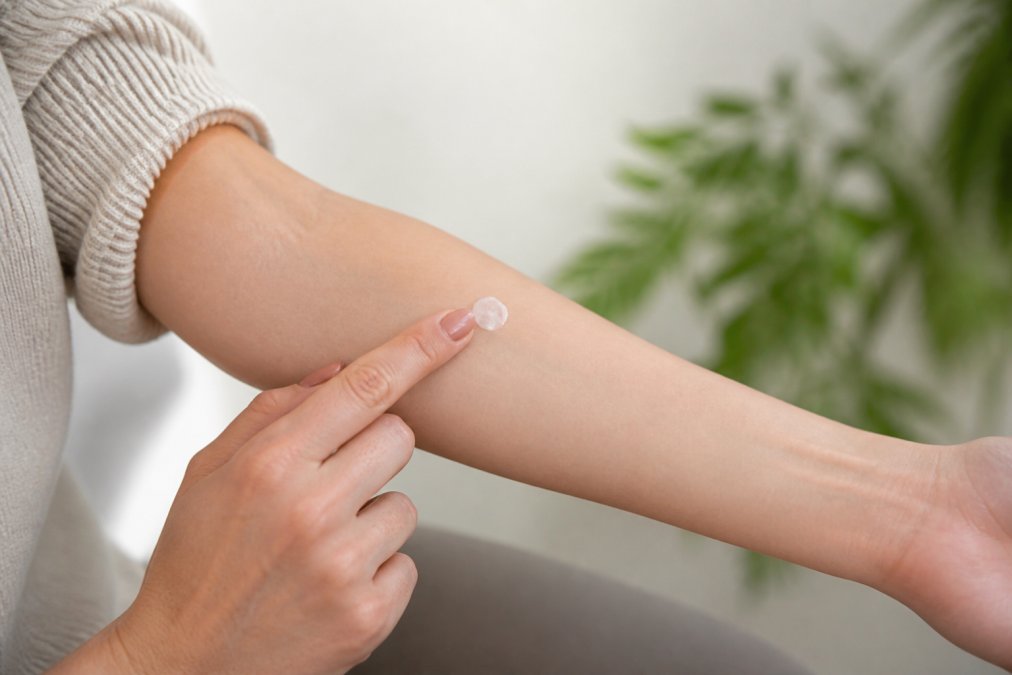
| Step | Duration | What to Watch For |
|---|---|---|
| Test area application | 24 hours | Redness, stinging, burning, swelling |
| Face test (if passed) | 3-5 days | Irritation, increased sensitivity, texture changes |
| Full routine integration | 1 week | Cumulative reactions, barrier stress |
Dermatologist-Recommended Skincare for Sensitive Skin
Dermatologist-tested products aren't a guarantee, it's a marketing term that varies widely. What matters is whether a product is formulated with dermatologist input and whether it avoids known irritants.
Ingredients to Avoid
Fragrance (including "natural fragrance" and essential oils), alcohol denat, sulfates, parabens, and dyes are the usual suspects. But there are subtler irritants worth knowing about.
Ingredients to Look For
Ceramides (ceramide NP, ceramide AP, ceramide EOP) rebuild your barrier structure. Hyaluronic acid hydrates without irritating. Centella asiatica (also called cica) is a botanical that calms inflammation without the irritation of essential oils.
Building Your Sensitive Skin Routine: Cleansing to Moisturizing
Your routine during barrier repair should be minimal. Three steps: cleanse, treat, moisturize. That's it.
Budget-Friendly vs. Medical-Grade Products for Sensitive Skin
This is where many people get stuck. Medical-grade products are formulated with higher concentrations of active ingredients and stricter quality controls. They're also more expensive. Budget-friendly options can work, but they require more careful selection.
Frequently Asked Questions
What is the best skincare routine for extremely sensitive skin?
A minimal routine works best: cleanse gently with a fragrance-free, pH-balanced cleanser, apply a hydrating serum with hyaluronic acid and soothing ingredients like aloe vera, then follow with a rich moisturizer containing ceramides to repair the skin barrier. The Super Nourishing Calming Face Cream provides up to 48-hour hydration with hyaluronic acid and ceramides specifically formulated for extremely dry, sensitive skin. Always patch test new products first and avoid active ingredients until your skin stabilizes.
How do I know if my skin is sensitive or just reactive?
Sensitive skin responds negatively to many products and environmental factors consistently, while reactive skin flares up in response to specific triggers. Extremely sensitive skin shows symptoms like stinging, burning sensations, persistent redness, and inflammation across multiple products. If your skin reacts to fragrance-free, hypoallergenic products, you likely have chronically sensitive skin rather than occasional reactivity. Keeping a log of what triggers flare-ups helps identify your pattern.
What ingredients should I avoid if I have extremely sensitive skin?
Avoid fragrance (synthetic or natural), essential oils, alcohol denat, sulfates, strong exfoliants, and common allergens like nut oils. Skip products with high concentrations of acids or retinoids until your barrier heals. Steer clear of products claiming to treat acne aggressively, as these often irritate sensitive skin further. Always read ingredient lists for known triggers; hypoallergenic and fragrance-free labels help, but patch testing remains essential since sensitivity varies person to person.
How long does it take to repair a damaged skin barrier?
Barrier repair typically takes 2 to 4 weeks with consistent care, though severe damage may take 6 to 8 weeks. Focus on ceramides, hyaluronic acid, and gentle moisturizers that support transepidermal water loss reduction. The Rich Calming Cream contains hemp oil and aloe vera to restore your skin's natural healing process. Avoid any irritating products during this period, maintain a minimal routine, and use sunscreen daily to prevent further damage while your barrier rebuilds.
Can diet affect extremely sensitive skin?
Yes, certain foods can trigger sensitivity flare-ups. Spicy foods, high-histamine foods, excess sugar, and inflammatory oils may increase redness and irritation. Conversely, foods rich in omega-3 fatty acids, antioxidants, and vitamins support skin health from within. Staying hydrated helps maintain skin hydration and barrier function. If you notice flare-ups after eating certain foods, consider eliminating them temporarily to see if sensitivity improves.
Should I use different products for seasonal changes?
Yes, seasonal shifts affect sensitive skin significantly. Winter's low humidity and cold temperatures increase transepidermal water loss, requiring richer moisturizers and more frequent application. Summer's heat and UV exposure can trigger inflammation and redness. Adjust your routine by layering lighter serums under heavier creams in winter and using mineral-based sunscreen with zinc oxide or titanium dioxide year-round. The Lightweight Face Moisturizer works well for warmer months while the Super Nourishing Calming Face Cream provides winter protection.