
Why Quality Beauty Products Last Longer
Table of Contents
- What Makes Quality Beauty Products Last Longer
- How Preservative Systems Protect Formula Stability
- Skincare Shelf Life Guidelines and Expiration Understanding
- How to Store Beauty Products for Longevity
- Cost Per Use Beauty Calculation and Long-Term Value
- Signs Your Beauty Product Has Expired
- Why Professional-Grade Products Outperform Budget Alternatives
- Frequently Asked Questions
Last Updated: September 3, 2026
What Makes Quality Beauty Products Last Longer
Quality beauty products last longer because their formulations resist degradation, packaging prevents contamination, and preservative systems maintain stability over months or years. The difference between a product lasting six months and one lasting two years comes down to formula chemistry, packaging integrity, and storage conditions. A quality serum with strong preservatives and airless pump packaging maintains potency far longer than a budget alternative in a jar exposed to air and light.
At sheshedbeauty4U, we curate products designed to preserve efficacy, delivering consistent results throughout the product's shelf life. Understanding why longevity matters helps you make smarter purchasing decisions and get better value from every purchase.
How Preservative Systems Protect Formula Stability
The preservative system prevents microbial contamination, bacteria, and mold growth that degrades formulas and compromises safety. Quality products use multi-layer preservative systems that inhibit bacterial and fungal growth, slow oxidation, maintain pH balance, and keep active ingredients potent throughout shelf life. Budget products often use minimal preservation, degrading faster once opened or exposed to air.
Traditional Synthetic vs. Clean Beauty Preservatives: The Shelf-Life Trade-Off
Traditional synthetic preservatives like parabens and phenoxyethanol are highly effective at preventing microbial contamination across broad temperature ranges (peer-reviewed research). A product preserved with parabens reliably maintains a 24-month PAO because the preservative system remains stable even in non-ideal conditions, warm bathrooms, humid climates, temperature fluctuations.
Clean beauty and naturally-derived preservatives, plant extracts, fermentation-derived preservatives, essential oils, require different formulation approaches. These preservatives are narrower in spectrum, protecting against some microbes effectively but requiring additional layers to achieve broad-spectrum protection. A clean beauty serum may have an 8-12 month PAO instead of 18-24 months because natural preservatives degrade more quickly when exposed to light and air and are less stable across temperature swings. Natural preservatives are volatile compounds that evaporate or break down over time, while synthetic preservatives remain stable.
When evaluating clean beauty products, check the PAO window and preservative list. If a product claims to be "clean" and "naturally preserved" but has a 24-month PAO, the formulation likely includes synthetic preservatives or uses concentrations of natural preservatives high enough to affect texture or scent.
Why Preservative Efficacy Matters After Opening
Once opened, the preservative system is your only defense against contamination. Every dip of a finger, applicator use, or air exposure introduces bacteria and oxygen. Quality brands formulate preservative systems with a safety margin, testing products at the end of the PAO window to ensure the system remains effective enough to prevent contamination after months of exposure. Budget products often formulate to minimum effective preservative levels, meaning by month 6-8, the concentration may drop below the threshold needed to prevent microbial growth.
A product with a 12-month PAO from a quality brand is safer to use at month 11 than a budget product at month 6 because the preservative system still performs its intended function.
Skincare Shelf Life Guidelines and Expiration Understanding
Most unopened beauty products maintain full efficacy for 24-36 months from manufacturing when stored properly. Once opened, the period after opening (PAO) is typically much shorter.
Reading Batch Codes and Expiration Dates
Batch codes appear on packaging or the product itself, formatted with letters and numbers representing the month and year. Learning to decode your batch code helps you understand how long a product sat on a shelf before purchase. Expiration dates, when printed, indicate when the product should no longer be used. The FDA does not require cosmetics to have expiration dates but requires manufacturers to ensure products remain safe and effective throughout their shelf life (the FDA). Always check the batch code before purchasing to ensure you're getting recently manufactured product.
Period After Opening (PAO) Symbol Explained
The PAO symbol appears as a small jar icon with a number and the letter "M" (for months). A "12M" PAO means the product is safe and effective for 12 months after opening, assuming normal use and proper storage. Quality products often have longer PAO windows, 18M or 24M, because their preservative systems and formulations resist degradation more effectively once exposed to air.
The PAO begins the moment you open the product. A product with a 12M PAO will show signs of separation, thickening, or reduced efficacy around month 13, even if stored perfectly.
How to Store Beauty Products for Longevity
Three environmental factors degrade formulas faster than time alone: light exposure, heat, and humidity. Quality products resist these factors, but they cannot overcome truly poor storage conditions.
Environmental Factors That Degrade Formulas
UV radiation degrades active ingredients, particularly antioxidants and vitamins. Direct sunlight can degrade a serum's potency by 30-50 percent within weeks (peer-reviewed research). Heat accelerates chemical reactions, speeding oxidation and causing emulsions to separate. Humidity introduces moisture, diluting formulas and creating environments where bacteria thrive.
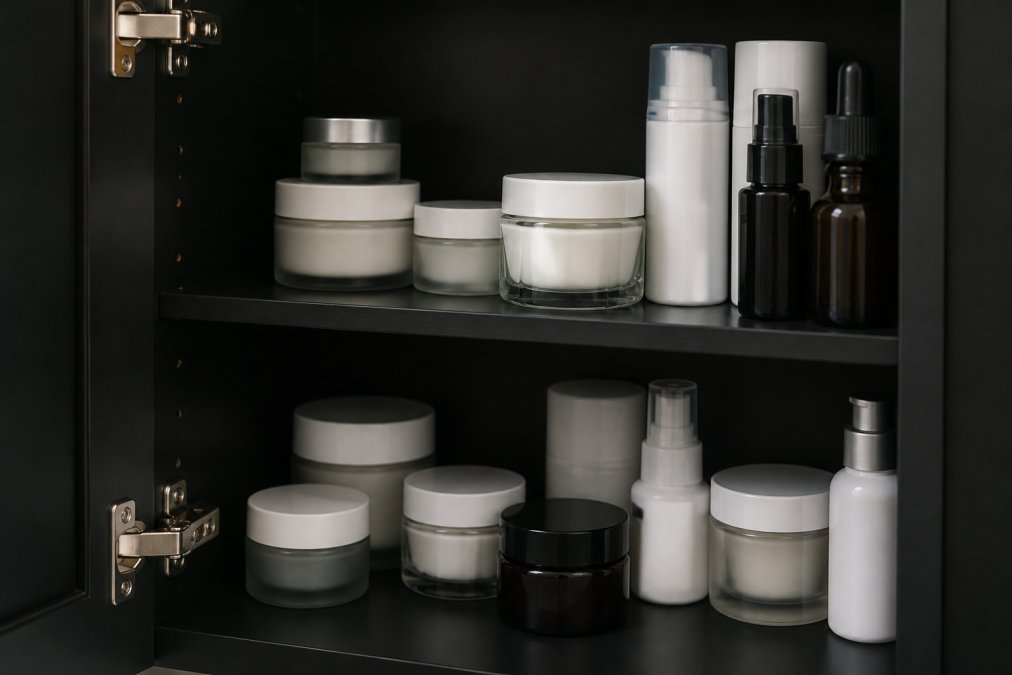
The ideal storage environment is cool, dark, and dry, a bedroom drawer away from direct sunlight or a bathroom cabinet with a door. Avoid bathroom countertops in direct light, windowsills, and shower shelves where steam and heat are constant. Temperature stability matters more than absolute temperature. A product stored consistently at 65-70°F lasts longer than one swinging between 50°F and 85°F daily, even if the average is the same.
Travel and Temperature Fluctuations: A Hidden Degradation Risk
Travel exposes beauty products to rapid temperature swings, pressure changes, and extreme heat. A product packed in a hot car, placed in airplane cargo (which can reach 50°F), then moved to a warm hotel room undergoes multiple thermal shocks within hours. Each cycle stresses the emulsion and accelerates separation, particularly in products with lower-quality preservative systems.
For travel lasting more than a few days:
- Use travel-size products rather than full-size bottles. They have less headspace, meaning less oxidation during temperature fluctuations.
- Pack products in the center of your luggage, surrounded by clothing, rather than outer edges where they experience more temperature extremes.
- Avoid leaving products in hot cars or direct sunlight during travel. A product left on a hotel windowsill during a 90°F day can reach internal temperatures of 110-120°F, accelerating oxidation and causing permanent emulsion separation.
- Store products in a cool hotel room or mini-fridge, particularly serums, vitamin C products, and retinol formulations, which are more heat-sensitive.
- Inspect products upon return for separation, color change, or texture change. If a product has separated during travel, it may not re-emulsify even if stored properly afterward.
Quality products with robust preservative systems tolerate travel better than budget alternatives.
Common Contamination Myths: Why "Reviving" Products Backfires
When products thicken, dry out, or separate, many consumers attempt to "revive" them by adding water, oil, or other liquids. This directly contradicts the preservative system's ability to protect the formula.
Adding water introduces unpreserved water into the formula. The preservative system was formulated for a specific ratio of water to oil to actives. Extra water dilutes preservative concentration below the level needed to prevent microbial growth. Bacteria can colonize the product within days.
Adding oils changes the formula's chemistry and can cause further separation. Oils are a breeding ground for bacteria and mold if not properly preserved.
Mixing products together introduces cross-contamination. Combining a serum with a moisturizer mixes two separate preservative systems, making them less effective.
Heating a separated product may temporarily re-emulsify it, but doesn't restore stability. Once an emulsion has separated, the chemical bonds holding oil and water together have broken. They will separate again, often more quickly.
If a product has thickened, separated, or changed texture, replace it. The product has degraded beyond delivering intended results, and attempting to revive it introduces contamination risks.
Packaging Types and Cross-Contamination Prevention
Airless pump packaging is superior to jars because it minimizes air exposure. Every jar opening introduces oxygen and bacteria. An airless pump dispenses product without exposing remaining formula to air, dramatically extending shelf life and maintaining efficacy.
Opaque or tinted packaging blocks UV radiation more effectively than clear glass. A serum in frosted amber glass stays potent longer than the same formula in clear glass. Pump dispensers with sealed systems prevent cross-contamination, the primary driver of formula degradation once opened. Glass containers offer better protection than plastic, which can leach chemicals and allows more oxygen permeation. Heavy glass bottles with tight seals and opaque tinting represent the gold standard for stability.
Cost Per Use Beauty Calculation and Long-Term Value
A $60 serum lasting 12 months with consistent efficacy costs $5 per month. A $20 serum losing 40 percent potency after 4 months and unusable by month 8 costs $2.50 per month for the first four months, then delivers diminishing returns. Quality formulations maintain efficacy throughout the entire shelf life window, delivering consistent results month 1 through month 24. Budget products often show visible degradation by month 4-5.
The sheshedbeauty4U Radiant Beauty Essentials are selected for their ability to maintain stability and efficacy over extended periods. Our curation process evaluates packaging, preservative systems, and real-world longevity data to ensure you're getting products that deliver consistent value throughout their shelf life.
Signs Your Beauty Product Has Expired
Separation, where oil rises to the top of a cream or serum, indicates emulsion breakdown. Color changes, particularly darkening or yellowing, suggest oxidation. Texture changes like unusual thickness, graininess, or clumping indicate chemical breakdown or microbial growth.
Smell is a reliable indicator. A product that smells off, rancid, or noticeably different from when first opened has degraded. Some products develop a chemical or metallic smell as preservatives break down. If a product smells wrong, don't use it.
Efficacy loss is harder to detect but equally important. If a serum that once absorbed quickly now sits on your skin, or a moisturizer that once felt hydrating now feels heavy, the formula has changed. Once efficacy noticeably declines, replace the product.
Why Professional-Grade Products Outperform Budget Alternatives
Professional-grade and prestige beauty products last longer because they invest in superior formulation chemistry and packaging. They use higher concentrations of active ingredients, allowing them to lose some potency during storage and still deliver results. They use multi-layer preservative systems maintaining stability across temperature and humidity ranges. They use premium packaging blocking light and minimizing air exposure.
Budget products use lower active ingredient concentrations to hit price points, minimal preservative systems to reduce costs, and plastic containers allowing air and light exposure. They degrade faster, lose efficacy sooner, and deliver fewer results per dollar spent over the product's actual usable life.
This is why quality products often have longer PAO windows. A 24-month PAO reflects confidence in formula stability. An 8-month PAO reflects realistic expectations about degradation once opened. Quality products frequently offer better cost-per-use value across the entire usable period.
The brands carried through sheshedbeauty4U, including our curated Radiant Beauty Essentials, are selected for durability. We evaluate real-world longevity, not marketing claims. You're investing in products delivering consistent results throughout their shelf life.
| Factor | Quality Products | Budget Alternatives |
|---|---|---|
| Preservative System | Multi-layer, broad-spectrum | Single or minimal |
| Packaging | Airless pumps, opaque glass | Jars, clear plastic |
| PAO Window | 18-24 months | 8-12 months |
| Active Ingredient Concentration | High (maintains efficacy through shelf life) | Lower (degrades faster) |
| Oxidation Resistance | Formulated to resist | Limited protection |
| Cost Per Use (full efficacy period) | Lower | Higher |
Investing in quality beauty products isn't just about better results today, it's about products maintaining those results throughout their entire shelf life. Quality formulations, preservative systems, and packaging work together to slow degradation and keep your investment potent. At sheshedbeauty4U, our Radiant Beauty Essentials are curated specifically for stability and long-term efficacy. When you choose products designed to last, you're choosing better value and more consistent results. Explore our collection and discover products that deliver efficacy you can count on month after month.
Consider the READY SET REFRESH SETTING SPRAY (https://sheshedbeauty4u.com/products/ready-set-refresh-setting-spray) for $30.00, or the convenient Ready Set Refresh Setting Spray travel size (https://sheshedbeauty4u.com/products/ready-set-refresh-setting-spray-travel-size) for $22.00. For your lips, the Waterproof Gel Lip Liner by CHICA BEAUTY (https://sheshedbeauty4u.com/products/waterproof-gel-lip-liner-by-chica-beauty) is available for $15.00, and you can get the LOVE/AMOR SET (Lipstick + Lip Liner) (https://sheshedbeauty4u.com/products/love-amor-set-lipstick-lip-liner) for $30.00.


Frequently Asked Questions
How long do quality beauty products actually last after opening?
Most quality beauty products remain safe and effective for 6-12 months after opening, though this varies by product type. The Period After Opening (PAO) symbol on packaging shows exactly how long a product lasts once opened. Serums and treatments with potent active ingredients may degrade faster than stable formulas. Proper storage in cool, dark conditions extends shelf life significantly. Products with robust preservative systems maintain their efficacy longer than preservative-free alternatives.
Does the price of skincare correlate with its shelf life?
Higher-quality products typically last longer because they use advanced preservative systems, superior packaging, and more stable active ingredients. Professional-grade formulas invest in chemical stability and oxidation prevention. However, price alone doesn't guarantee longevity. A $30 setting spray with airless pump technology may outlast a $60 jar formula exposed to air and light. Quality brands prioritize formula integrity as part of their value proposition, making cost per use a better metric than upfront price.
What ingredients make a beauty product more shelf-stable?
Antioxidants like vitamin E and ferulic acid prevent oxidation and extend shelf life. Advanced preservative systems (including clean beauty options) inhibit bacterial growth and microbial contamination. Emulsion stabilizers keep water and oil components from separating. Products with stable pH balance resist degradation from chemical changes. Quality brands also use chelating agents to prevent metal-catalyzed breakdown. These ingredients cost more, which is why professional-grade products often remain potent longer than budget formulas without these protective compounds.
How does proper storage extend the life of beauty products?
UV radiation, heat, and moisture exposure cause formula degradation, oxidation, and saponification in certain products. Storing beauty items in cool, dark places away from bathrooms prevents thermal and moisture damage. Airless pump packaging prevents cross-contamination and air exposure better than jar packaging. Keep products in their original containers to maintain pH balance and prevent ingredient separation. Travel-related temperature fluctuations degrade formulas faster, so avoid leaving products in hot cars or humid environments. Proper storage can extend shelf life significantly compared to careless conditions.
This article was written using GrandRanker