
Choose Flattering Colors for Your Skin Tone
Table of Contents
- Skin Tone vs. Skin Undertone: What's the Difference
- How to Find Your Skin Undertone
- Warm, Cool, and Neutral Undertones Explained
- Best Clothing Colors for Your Skin Tone
- How to Match Clothes to Your Skin Tone
- Building Your Personal Color Palette
- Personal Preference and Style Goals Matter Too
- Frequently Asked Questions
Last Updated: October 12, 2026
Skin Tone vs. Skin Undertone: What's the Difference
Understanding the difference between skin tone and skin undertone is the foundation for choosing flattering colors skin tone.
Many people confuse the two. You might have a deep skin tone with cool undertones, or a light skin tone with warm undertones.
Think of skin tone as the base layer of paint on a wall, and undertone as the primer underneath that affects how the final color appears. When you choose flattering colors for your skin tone, you're really matching your undertone first, then considering the depth of your complexion.

Our Effortless Style Collection is designed with color harmony in mind, making it easier to find pieces that enhance your complexion.
How to Find Your Skin Undertone
Finding your undertone requires honest observation in the right conditions. No single test works for everyone, so try multiple methods. If the results align, you've found your undertone; if they conflict, you may be neutral or olive.
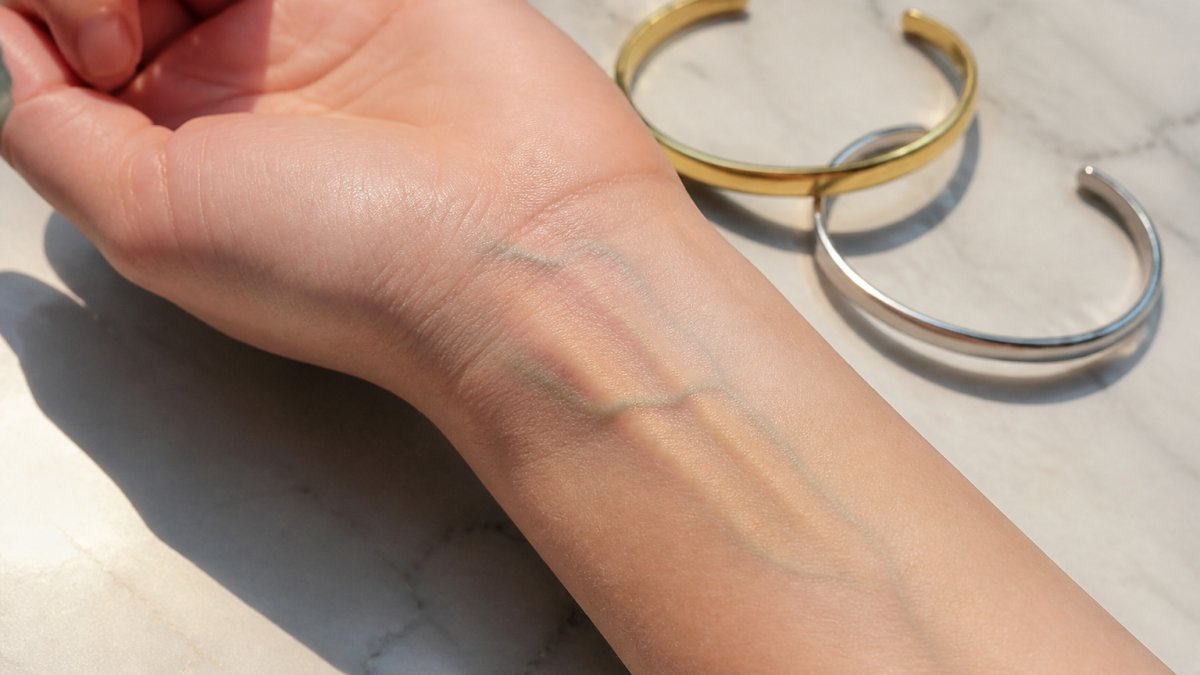
The Vein Test
Look at the veins on your inner wrist in natural daylight. This is one of the most reliable undertone indicators.
- Green veins suggest warm undertones
- Blue or purple veins suggest cool undertones
- A mix of both colors suggests neutral undertones
The vein test works because undertones affect how blood color shows through your skin: green veins appear more prominent on warm skin, blue veins on cool skin.
One limitation: some people's veins are hard to see or look ambiguous. If yours look greenish-blue or you're uncertain, move to the next test.
The Jewelry Test
Wear gold and silver jewelry side by side. Notice which metal looks more natural against your skin and makes you feel more confident.
- Gold looks better = warm undertones
- Silver looks better = cool undertones
- Both look equally good = neutral undertones
This works because metals reflect light differently: gold's warm, yellow-based tones harmonize with warm undertones, while silver's cool, blue-based tones complement cool undertones.
The jewelry test is practical because you probably own both metals already. Wear them for a full day if possible, since first impressions can deceive; your gut reaction matters more than analysis.
The Natural Light Test
Stand near a window in bright daylight (not fluorescent lighting). Look at your skin's undertone directly.
- Peachy, golden, or warm-toned skin = warm undertones
- Pink, red, or cool-toned skin = cool undertones
- Olive or neutral-toned skin = neutral or olive undertones
Natural light reveals your true undertone better than any other lighting.
This test requires honest observation. Many people see what they expect rather than what's actually there.
Warm, Cool, and Neutral Undertones Explained
Once you've identified your undertone, you can start building a color palette that flatters your complexion. Each undertone category has distinct characteristics and works with specific color families.
Warm Undertones
Warm undertones include golden, peachy, and yellow-based hues beneath your skin. If you have warm undertones, your skin likely has a golden glow in natural light.
People with warm undertones often have:
- Golden or honey-toned skin
- Freckles that appear golden or bronze
- Hair with warm, reddish, or golden highlights
Warm undertones harmonize naturally with colors that have yellow or golden bases, which feel like an extension of your skin rather than something sitting on top of it, creating a polished, cohesive look.
Cool Undertones
Cool undertones include pink, red, and blue-based hues. If you have cool undertones, your skin likely has a rosy or pink glow.
People with cool undertones often have:
- Pink or rosy-toned skin
- Freckles that appear reddish or brown
- Hair with cool, ashy, or blonde highlights
Cool undertones harmonize with colors that have blue or pink bases, enhancing your skin's natural cool tones for a luminous effect that makes you look fresher and more awake.
Neutral and Olive Undertones
Neutral undertones are a balanced mix of warm and cool hues. Olive undertones have a greenish cast that can appear in any skin depth.
People with neutral undertones often have:
- A balanced mix of warm and cool characteristics
- Veins that appear both green and blue
- Metals that look equally good on their skin
People with olive undertones often have:
- A greenish or golden-green cast to their skin
- Difficulty finding flattering colors because many shades clash
- Skin that can appear dull in the wrong colors
Neutral and olive undertones are more flexible than warm or cool: you can wear a wider range of colors, but must watch saturation and depth, since a shade that's too bright or too muted may not work even if it's technically in your palette.

Best Clothing Colors for Your Skin Tone
Choosing flattering colors skin tone becomes straightforward once you understand your undertone. The goal is selecting shades that harmonize with your natural coloring and make your complexion look luminous.
Colors That Flatter Warm Undertones
If you have warm undertones, your ideal color palette includes warm, earthy, and golden shades:
- Warm neutrals: Camel, tan, warm gray, cream, ivory
- Warm jewel tones: Rust, terracotta, warm gold, bronze, warm burgundy
- Warm brights: Warm yellow, warm orange, warm red
These colors echo the golden warmth in your skin for a seamless, harmonious look that makes your complexion appear brighter and more vibrant. Avoid cool silvers, icy blues, and cool pinks, which make warm undertones look dull by contrast.
Colors That Flatter Cool Undertones
If you have cool undertones, your ideal palette includes cool, jewel-like, and icy shades:
- Cool neutrals: Cool gray, cool taupe, cool beige, white, navy
- Cool jewel tones: Sapphire blue, emerald, amethyst, cool burgundy, cool pink
- Cool brights: Icy blue, cool red, magenta, cool purple
These colors complement the pink and blue undertones in your skin, making your eyes appear brighter and your skin more radiant. Warm golds, oranges, and browns can make cool undertones look washed out.
Breathable Full-Coverage Foundation – Dewy Finish, Hydrating, Vegan →
Colors That Flatter Neutral Undertones
If you have neutral undertones, you have the most flexibility. You can wear both warm and cool colors effectively:
- All neutrals: Gray, taupe, beige, cream, white, navy, black
- Both warm and cool jewel tones: Emerald, sapphire, burgundy, rust, olive
- Both warm and cool brights: Red (any undertone), blue (any undertone), purple
The key for neutral undertones is saturation and depth: a muted sage green may work better than a bright lime, and a deep burgundy more flattering than a bright cherry red. Experiment within your undertone categories to find what makes your skin glow.
How to Match Clothes to Your Skin Tone
Knowing your flattering colors is only half the equation. You also need practical strategies for testing and wearing them at home so every purchase works with your complexion.

Color Draping at Home
Color draping is the most reliable way to test whether a color truly flatters you. This involves holding fabric swatches near your face and observing how the color interacts with your skin.
Here's how to do color draping at home:
-
Gather fabric swatches in colors you're considering. You can use scarves, fabric samples, or even cut pieces from clothing you already own.
-
Find natural light. Stand near a window in bright daylight. Avoid fluorescent lighting, which distorts color perception.
-
Hold the fabric near your face. Position the swatch close to your cheek and jawline, not your hands. Your hands have different undertones than your face.
-
Observe your skin. Does the color make your skin look luminous or dull? Does it enhance your natural glow or create a contrast that feels jarring?
-
Compare multiple colors. Hold two colors side by side near your face. Notice which one makes your complexion appear brighter and more vibrant.
-
Trust your instinct. If a color makes you feel confident and radiant, it's probably flattering. If it makes you feel washed out or tired, skip it.
Color draping removes guesswork: what looks good on a hanger might not complement your skin, and what seems unflattering in a store might be perfect on you. This test gives you certainty before you buy.
Testing Garments in Natural Light
Before committing to a purchase, test how a garment looks on your body in natural light. Store lighting is designed to make everything look appealing, natural light reveals the truth.
If you're shopping in person:
- Step outside or near a window before checking out. See how the color looks in daylight.
- Notice how you feel. Does the color energize you or drain you?
- Check your reflection. Does your complexion look healthy and luminous, or does the color compete with your face?
If you're shopping online:
- Check reviews with photos. Look for customer photos taken in natural light. These show how the color actually appears on real people.
- Use the return policy. Order the item, try it in natural light at home, and return it if the color doesn't flatter you.
sheshedbeauty4U's Effortless Style Collection is designed with color harmony in mind.
Building Your Personal Color Palette
A personal color palette is a curated collection of flattering colors that work together.
Your palette should include:
- 3-4 neutral base colors (neutrals that match your undertone for everyday wear)
- 3-4 jewel tones (colors that make your complexion glow for special occasions)
- Metals that match your undertone (gold for warm, silver for cool, both for neutral)
Once these colors are identified, shopping becomes easier: instead of choosing between thousands of options, you select from a curated palette you know works, and every piece coordinates with what you already own.
Your palette should reflect your lifestyle and personality, not just color theory. A conservative workplace might call for neutrals with jewel-tone accents; a creative field might allow more brights and unexpected combinations.
Personal Preference and Style Goals Matter Too
Color theory is a useful framework, but it isn't the only factor in choosing flattering colors for your skin tone.
Some people feel most confident in bold, saturated colors. Others prefer soft, muted tones.
Consider these factors alongside undertone:
- Contrast preference: Do you like high contrast (light colors on deep skin, deep colors on light skin) or low contrast (similar values)?
- Saturation preference: Do you feel energized by bright, saturated colors or calmed by soft, muted tones?
- Color psychology: Do certain colors make you feel confident, calm, or energized?
The best color palette is one you'll actually wear.
Your undertone is the foundation, but your personal style is the structure.
Choosing flattering colors for your skin tone doesn't require complicated color theory or expensive consultations.
Frequently Asked Questions
How do I know if I have warm, cool, or neutral undertones?
The most reliable method is the vein test: look at the veins on your inner wrist in natural light. Green veins suggest warm undertones, blue veins suggest cool undertones, and a mix of both suggests neutral undertones. You can also observe how your skin reacts to gold versus silver jewelry, gold looks more natural on warm undertones, while silver complements cool undertones. If both look equally good, you likely have neutral undertones.
Can I wear colors that don't match my undertone?
Yes, but colors that harmonize with your undertone will make you look more radiant and healthy. Wearing colors outside your palette isn't wrong, it's about personal preference and style goals. If you love a color that doesn't match your undertone, pair it with accessories or makeup in your best colors to balance the overall look. The key is understanding how different colors affect your complexion so you can make intentional choices.
What's the difference between skin tone and skin undertone?
Skin tone refers to how light or dark your skin is, ranging from fair to deep. Undertone is the subtle hue beneath your skin's surface, which can be warm (golden or peachy), cool (pink or rosy), or neutral (a blend of both). Two people with the same skin depth can have completely different undertones, which is why the same color can look flattering on one person and unflattering on another.
How do I build a personal color palette that works for my wardrobe?
Start by identifying your undertone using the vein and jewelry tests. Then select 5-7 core colors that flatter your undertone and coordinate well together, these become your foundation. Add accent colors for variety and interest. Test garments in natural daylight before purchasing to see how they interact with your complexion. This approach ensures your pieces work together, making outfit combinations effortless and your wardrobe more cohesive.