
Skincare Ingredients to Avoid While Breastfeeding
Table of Contents
- Why Skincare Ingredients Matter During Breastfeeding
- Retinol While Breastfeeding: What the Evidence Shows
- Hydroquinone While Breastfeeding: Safety and Absorption
- Salicylic Acid While Breastfeeding: Concentration and Risk
- Other Ingredients to Avoid: Parabens, Phthalates, and More
- Breastfeeding-Safe Skincare Ingredients You Can Use
- Practical Application: Where and How to Apply Products Safely
- What to Do If You Accidentally Used a Restricted Ingredient
- Frequently Asked Questions
Last Updated: October 13, 2026
Why Skincare Ingredients Matter During Breastfeeding
Choosing the right skincare ingredients while breastfeeding requires careful consideration because what touches your skin can potentially transfer to breast milk. This guide from sheshedbeauty4U covers the skincare ingredients to avoid while breastfeeding, helping you maintain healthy skin without compromising your nursing infant's safety.
The concern isn't theoretical. Topical products absorb into your bloodstream to varying degrees depending on ingredient concentration, application frequency, and where you apply them. Some ingredients pass into breast milk more readily than others.
Many breastfeeding mothers feel caught between two needs: wanting to address skin concerns like acne, hyperpigmentation, or aging, and wanting absolute certainty that their skincare choices won't affect their baby. The reality is more nuanced than a simple yes-or-no list. Some ingredients carry genuine concerns. Others have minimal absorption risk.
Retinol While Breastfeeding: What the Evidence Shows
Retinol and retinoids represent one of the most common concerns for breastfeeding mothers seeking anti-aging skincare. The risk profile depends heavily on the specific retinoid type and concentration you're using.
Retinoids vs. Retinol: Understanding the Difference
Retinoids is the umbrella term for vitamin A derivatives used in skincare. Within this category, potency varies dramatically. Prescription retinoids like tretinoin and adapalene are far more potent than over-the-counter retinol.
The distinction matters for breastfeeding because higher potency means greater systemic absorption risk. A 1% retinol product poses different considerations than a 0.3% formulation.
If you're using a low-concentration retinol product applied only to your face and neck at night, the transfer risk to breast milk appears minimal based on how topical absorption works.

sheshedbeauty4U offers the Wrinkle Repair Retinol Night Cream, which contains 1% retinol, a lower concentration designed for sensitive skin. This formulation includes supporting ingredients like hyaluronic acid, aloe vera, and vitamin E that enhance hydration while the retinol works overnight.
Topical Absorption and Systemic Exposure
How much of a topical ingredient actually enters your bloodstream depends on several factors: the ingredient's molecular weight, the vehicle (cream, serum, oil), skin condition at the application site, and application frequency.
Retinol molecules are relatively large, which limits how deeply they penetrate intact skin. When applied to your face and neck only, areas your baby doesn't contact, the amount reaching breast milk becomes theoretically very small.
Leave-on products pose more absorption risk than rinse-off formulas because they remain on your skin longer. A retinol night cream stays on your face for 6-8 hours, allowing extended absorption time. A retinol cleanser you rinse off after 60 seconds presents minimal absorption concern by comparison.
Hydroquinone While Breastfeeding: Safety and Absorption
Hydroquinone is a skin-lightening ingredient used to treat hyperpigmentation, melasma, and post-inflammatory hyperpigmentation from acne. Many breastfeeding mothers worry about this ingredient specifically because it's a prescription medication in higher concentrations.
Hydroquinone absorbs systemically when applied topically, particularly in higher concentrations (4%) and with frequent application.
The practical concern escalates with application frequency and concentration. A 2% over-the-counter hydroquinone product applied once daily to a limited area presents lower risk than a 4% prescription formulation applied twice daily across larger skin areas.
Many dermatologists recommend waiting until after breastfeeding to use hydroquinone, particularly at prescription strengths. If you're treating melasma or significant hyperpigmentation and breastfeeding, discussing alternatives with your healthcare provider makes sense.
Salicylic Acid While Breastfeeding: Concentration and Risk
Salicylic acid is a beta hydroxy acid (BHA) used in acne treatments, exfoliating products, and anti-aging formulas. The safety profile for breastfeeding depends almost entirely on concentration and application method.
Low-concentration salicylic acid (0.5-2%) in rinse-off products like cleansers poses minimal risk. You wash it off after brief contact, limiting absorption time. Leave-on products at higher concentrations (3-4%) present greater absorption potential, especially with daily use.
Salicylic acid is lipophilic, meaning it dissolves in oils and can penetrate skin more readily than some other ingredients. However, when used in rinse-off formulas at standard concentrations, systemic absorption remains low.
If you're using a salicylic acid cleanser or gentle exfoliant 2-3 times weekly, the risk profile stays manageable.
Other Ingredients to Avoid: Parabens, Phthalates, and More
Beyond the heavy hitters, several other ingredients warrant caution during breastfeeding. These don't pose dramatic absorption risks, but the evidence suggests limiting exposure where practical.
Formaldehyde Releasers and Artificial Fragrance
Formaldehyde releasers are preservatives that slowly release small amounts of formaldehyde to prevent bacterial growth in products. Common formaldehyde releasers include DMDM hydantoin, diazolidinyl urea, and imidazolidinyl urea. These appear on ingredient lists under their chemical names, making them easy to miss.
Formaldehyde itself is a known allergen and potential irritant. While the amount released from skincare products is typically minimal, during breastfeeding you're already managing immune changes and potential sensitivities. Avoiding formaldehyde releasers is straightforward, many modern products use alternative preservation systems.
Artificial fragrance in skincare products often contains phthalates or other endocrine-disrupting chemicals.
Choose fragrance-free or naturally scented products during breastfeeding. Your skin won't suffer from the absence of fragrance, and you'll eliminate a category of potentially problematic compounds.
Sulfates and Dapsone
Sulfates (sodium lauryl sulfate and sodium laureth sulfate) are harsh cleansing agents that strip skin's natural oils. While sulfates don't transfer to breast milk in meaningful amounts, they can compromise your skin barrier and trigger irritation or allergic reactions.
During breastfeeding, when your skin may already be sensitive from hormonal changes, sulfate-free cleansers make sense. They clean effectively without the harshness, reducing inflammation and irritation risk.
Dapsone is an oral antibiotic sometimes prescribed for acne or rosacea. It's not a topical skincare ingredient, but it does appear in some discussions about breastfeeding-safe acne treatments. Dapsone transfers into breast milk and can cause hemolytic anemia in infants with G6PD deficiency. Avoid dapsone during breastfeeding, safer oral antibiotics exist for acne management if needed.
Wrinkle Repair Retinol Night Cream – Vegan, Gluten-Free, Regenerating →
Breastfeeding-Safe Skincare Ingredients You Can Use
The good news: many effective skincare ingredients remain safe during breastfeeding. You're not limited to water and moisturizer.
Vitamin C, Hyaluronic Acid, and Niacinamide
Vitamin C (ascorbic acid) is an antidote to skin dullness and hyperpigmentation. It's a water-soluble antioxidant with minimal systemic absorption when applied topically. Vitamin C serums brighten skin and support collagen production without breastfeeding concerns.

sheshedbeauty4U's Brightening Vitamin C Glow Serum contains vitamin C with ferulic acid, plus hyaluronic acid and botanical antioxidants. This formulation addresses dullness and uneven tone while remaining fragrance-free and suitable for sensitive skin, ideal for breastfeeding mothers managing skin changes.
Hyaluronic acid is a humectant that draws water into your skin, plumping fine lines and improving hydration. It's a large molecule that doesn't penetrate deeply, making it extremely safe during breastfeeding. Niacinamide (vitamin B3) strengthens your skin barrier and reduces inflammation.
Together, these three ingredients address multiple skin concerns, dryness, dullness, fine lines, and sensitivity, without risk.
Natural Alternatives: Aloe Vera, Kojic Acid, and Plant Extracts
Aloe vera has been used in skincare for centuries. It's soothing, hydrating, and anti-inflammatory. Topical aloe absorption is minimal, making it safe during breastfeeding for calming irritated or sensitive skin.
Kojic acid is a natural ingredient derived from fungi that brightens skin and addresses hyperpigmentation. It's gentler than hydroquinone and carries minimal absorption risk.
The Kojic Acid Brightening Face Cream from sheshedbeauty4U combines kojic acid with niacinamide and hyaluronic acid. This formulation targets acne-prone skin while addressing pigmentation concerns, a practical choice for breastfeeding mothers managing breakouts alongside hyperpigmentation.

Plant extracts like centella asiatica, horsetail extract, and ginseng provide antioxidant benefits without systemic absorption concerns. These support skin health and resilience while remaining safe throughout breastfeeding.
Practical Application: Where and How to Apply Products Safely
Knowing which ingredients to avoid means little without understanding application strategy. Where and how you apply products dramatically affects absorption and infant exposure.
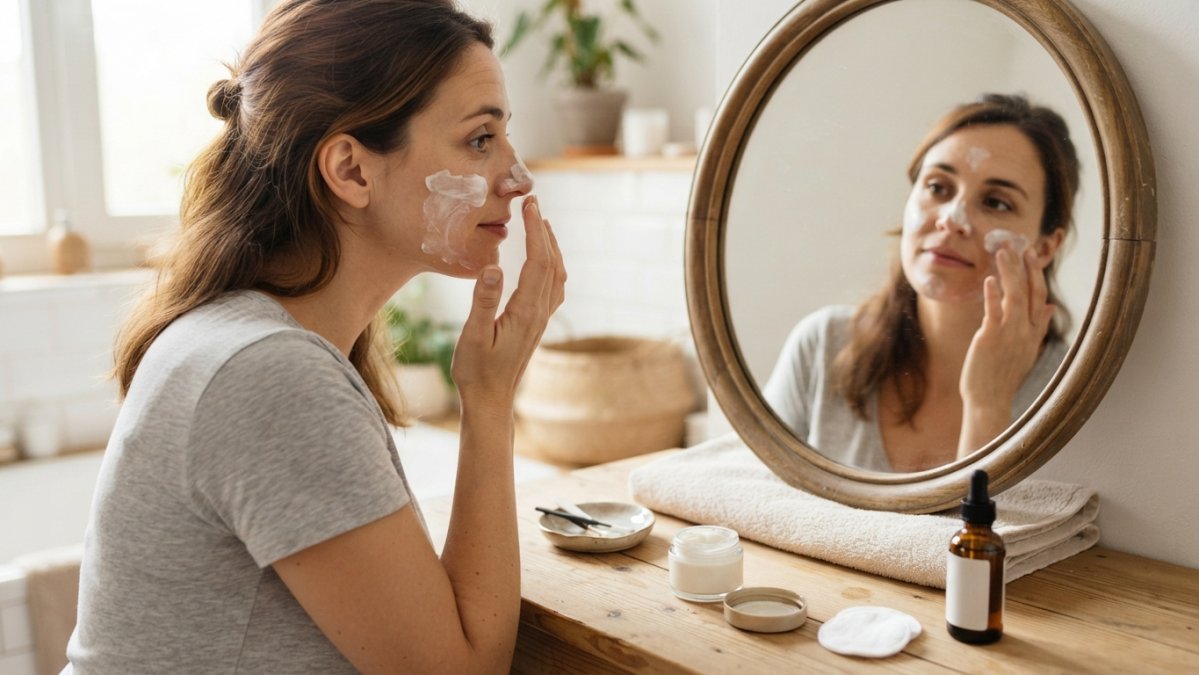
Avoiding the Chest, Nipple, and Areola
Your baby's mouth contacts your chest, nipples, and areola during nursing. Any product applied to these areas risks direct infant exposure. This is the primary reason to avoid potent ingredients in these zones.
Keep all skincare products away from your breasts entirely. Apply retinol, vitamin C serums, and other actives only to your face and neck, staying well below your collarbone.
If you're treating body acne on your chest or back, use gentle, low-concentration treatments or discuss safer options with your healthcare provider. Your face remains the safest application zone for active skincare ingredients during breastfeeding.
Leave-On vs. Rinse-Off Products
Leave-on products remain on your skin for hours, allowing extended absorption time. Rinse-off products contact your skin briefly before washing away. This distinction significantly affects how much ingredient reaches your bloodstream.
A salicylic acid cleanser you rinse off after 60 seconds poses minimal absorption risk. A salicylic acid toner you leave on your face all day presents greater risk.
During breastfeeding, favor rinse-off products for active ingredients whenever possible. Use gentle cleansers, brief exfoliants, and rinse-off masks. Reserve leave-on treatments for the gentlest, safest ingredients like hyaluronic acid, niacinamide, and vitamin C.
If you want to use a potent leave-on treatment, apply it only to your face at night, allow it to absorb fully before bed, and ensure your baby won't contact that area.
What to Do If You Accidentally Used a Restricted Ingredient
Accidents happen. You may have forgotten you were breastfeeding when you applied that retinol to your chest, or you didn't realize your new moisturizer contained hydroquinone. A single exposure doesn't cause harm.
One application of a restricted ingredient doesn't transfer meaningfully to breast milk or cause infant damage. The risk profile changes with repeated, frequent use of high-concentration products. A one-time mistake warrants no panic.
If you've used a concerning ingredient, wash the area thoroughly if you haven't already. Don't apply that product again during breastfeeding. Move forward with safer alternatives.
If you're genuinely concerned about a specific product you've used repeatedly, contact your healthcare provider or a lactation consultant. They can review the ingredient concentration and your application pattern to provide personalized reassurance.
Balancing skincare with breastfeeding doesn't require sacrificing skin health. At sheshedbeauty4U, our Radiant Beauty Essentials collection includes breastfeeding-safe options like our Vitamin C serum, Kojic Acid cream, and low-concentration Retinol night cream, formulated with ingredients like hyaluronic acid and aloe vera that support skin health without breastfeeding concerns.
Frequently Asked Questions
Can I use retinol while breastfeeding?
Retinol is a form of vitamin A that increases cell turnover and is often used for anti-aging. While topical retinol absorption through skin is generally minimal, most lactation consultants recommend caution or avoidance during breastfeeding due to the potential for systemic absorption. Prescription retinoids like tretinoin carry higher absorption risk. If you used retinol before pregnancy, discuss with your healthcare provider whether to pause during nursing or switch to safer alternatives like vitamin C or niacinamide.
Is hydroquinone safe to use while breastfeeding?
Hydroquinone is a skin-lightening agent used to treat dark spots and melasma. Studies show that topical hydroquinone has low systemic absorption, but the FDA classifies it as a Category C ingredient for pregnancy and breastfeeding, meaning safety data is limited. Most dermatologists recommend avoiding or minimizing use while nursing. If you need to treat hyperpigmentation, ask your clinician about safer alternatives like kojic acid or vitamin C serums.
Can I use salicylic acid while breastfeeding?
Salicylic acid is a beta-hydroxy acid (BHA) commonly used in acne treatments. Low-concentration salicylic acid (under 2%) in rinse-off products like cleansers is generally considered lower risk during breastfeeding because it is rinsed away quickly. High-dose or leave-on salicylic acid products carry higher absorption risk and should be avoided. If you have acne, use low-concentration cleansers sparingly and consult your healthcare provider before using stronger formulations.
Which skincare ingredients are actually safe while breastfeeding?
Many skincare ingredients are considered safe during breastfeeding, including vitamin C (ascorbic acid), hyaluronic acid, niacinamide, aloe vera, and kojic acid. These ingredients hydrate, brighten, and support skin health without significant systemic absorption. Plant-based extracts like chamomile and centella asiatica are also low-risk options. Always check product labels for ingredient lists and avoid products with parabens, phthalates, artificial fragrance, and formaldehyde releasers. When in doubt, consult a dermatologist or lactation consultant.