
8 Ways to Dress to Accentuate Your Waistline
Quick Summary

To accentuate your waistline, first find your natural waist, the narrowest point of your torso, usually just above your belly button. Then choose fitted pieces that land there, such as A-line dresses, wrap tops, peplums, belts and shaped jackets.
- Find your natural waist by bending gently to one side and noting the crease in your torso.
- Match belt width to torso length: 1 to 1.5 inches for shorter torsos, 2 to 3 inches for longer ones.
- Place a wrap top's tie or a peplum's start at your natural waist, not under the bust or at the hip.
- Shift a belt buckle about 1 to 2 inches off center to make the waist read as narrower.
- Measure yourself and compare against size charts, since waist placement varies from model to model.
Table of Contents
- Find Your Natural Waist Before You Shop
- Dresses That Cinch the Waist
- A-Line Dresses and Waist Definition
- Belts to Accentuate the Waist
- Tops That Accentuate the Waist
- Shaped Jackets, Pants and Outfit Formulas for Work and Evening
- Fit Troubleshooting: Comfort, Sizing and Common Mistakes
- Build Your Waist-Defining Wardrobe, Starting With One Piece This Week
- Frequently Asked Questions
Find Your Natural Waist Before You Shop
Last Updated: October 28, 2026
Your waist is the narrowest point of your torso, usually just above your belly button. Knowing where it sits is the first step to dressing to accentuate your waistline. Many shoppers skip this step and buy clothes that fall in the wrong place on their bodies.
Stand in front of a mirror and find the spot where your torso bends most easily to the side. That spot is your natural waist. Some women have a high natural waist, while others sit lower. Either shape can look great when clothes hit the right place.
Here is a simple way to check:
- Stand tall and bend gently to one side
- Note where the crease forms in your torso
- Measure the narrowest point with a soft tape
- Record the number for future shopping
You can save these measurements in your phone and compare them against size charts before you buy.
Watch out: Do not assume your waist sits where a store model's waist sits. Measure yourself first.
Dresses That Cinch the Waist
A dress with a defined waist line does the work for you. The seam or belt marks your narrowest point, so the eye follows the shape. Look for fabrics with some stretch, since they hug the body without pulling.
Fit matters more than style here. A dress that gaps at the waist or bunches under the bust will undo the effect. Check that the waist seam lands exactly where your natural waist sits.
The Women's Strapless Long Prom Dress Elegant Wedding Dress Casual Loose Ruched Maxi Dress Floor Length Elegant Evening Dress is listed with a natural waistline and a loose fit.
A-Line Dresses and Waist Definition
An A-line dress is fitted at the top and flares out toward the hem. That shape skims the middle and creates a clear waist. It is one of the easiest silhouettes to wear when you want definition without tight clothing.
A-line dresses work well for work and evening because they look polished on almost every body type. Choose a moderate flare. Very wide skirts can swallow the waist, while a gentle flare keeps the focus on your middle.
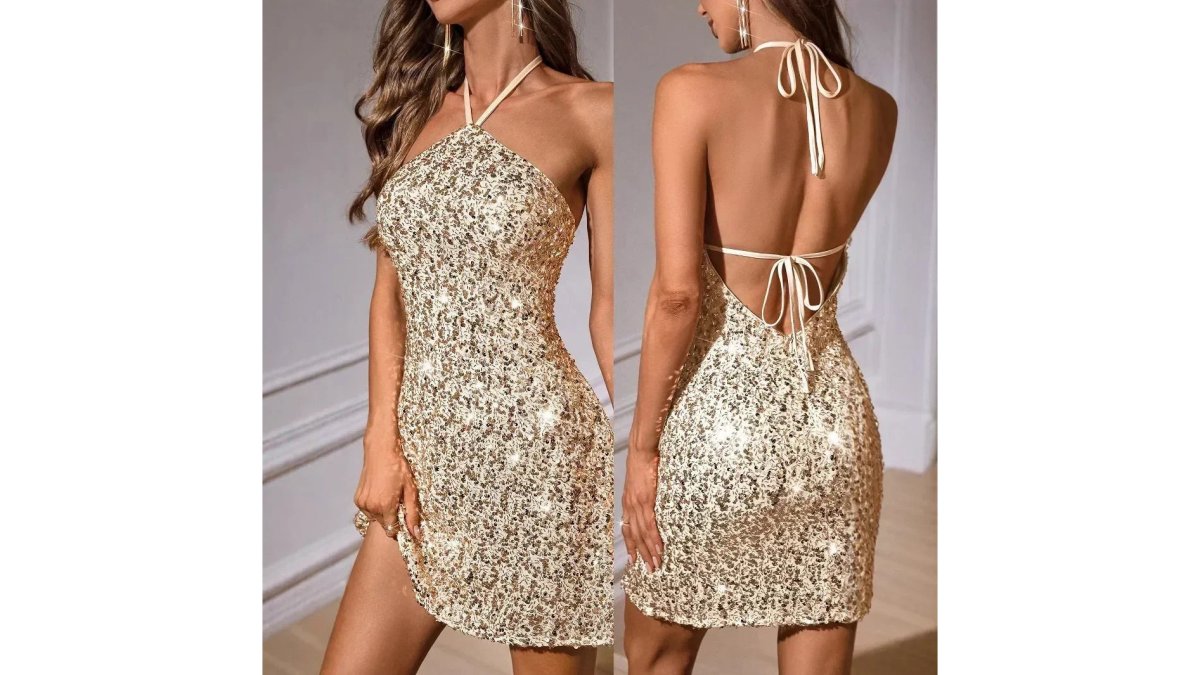
Women Short Dresses Sexy Backless Bodycon Evening dresses Sequin Halter Nightclub Cocktail Birthday Party Welcome Prom Dress XY5 is listed with an A-line silhouette and a natural waistline.
Belts to Accentuate the Waist
A belt is the fastest way to add waist definition to a dress, top, or jacket, but the result depends on three variables most guides ignore: belt width relative to your torso length, the fabric it sits on, and the buckle placement. Get those right and a $30 belt can outperform a $300 dress.
Match belt width to torso length. A common pattern among stylists is that shorter torsos look best with belts 1 to 1.5 inches wide, while longer torsos can carry 2 to 3 inches without the belt swallowing the midsection. A wide belt on a short torso visually shortens the distance between bust and waist, which can make the waist look thicker rather than narrower.
Match belt weight to fabric weight. A heavy knit, wool coat, or denim jacket needs a wider, stiffer belt (2 inches or more) so the belt doesn't dig in and create bulges. A silk blouse, chiffon dress, or lightweight jersey looks better with a slim belt (0.5 to 1 inch) because a heavy belt will drag the fabric down and distort the drape. Leather and faux leather hold their shape; braided and stretch belts relax over the day and are better for casual looks than for structured definition.
Place the buckle off-center. Centering the buckle on the natural waist draws a vertical line down the middle of the body, which can flatten the waist. Shifting the buckle slightly to one side (about 1 to 2 inches off center) creates an asymmetric focal point that makes the waist read as narrower.
Choose color deliberately. A belt in the same color as your top or dress creates a continuous column and a subtler waist line. A contrasting belt makes the waist the focal point. For a stronger effect, match the belt to your shoes or bag so the eye travels vertically rather than stopping at the waist.
Test the sit. Before committing, sit down, cross your legs, and reach forward. A belt that rides up, digs into the ribs, or gaps at the back when seated will not stay in place when you stand. Look for belts with at least five holes so you can adjust between sitting and standing.
For a quick test, try the same outfit with a thin belt, a wide belt, and no belt, and photograph each from the side. Most people find the difference between widths is larger than the difference between belted and unbelted.
The article breaks down the three variables that decide how a belt affects your waist.
Women's Strapless Long Prom Dress Elegant Wedding Dress Casual Loose Ruched →
| Variable | Guideline | Why it matters |
|---|---|---|
| Belt width vs torso length | Shorter torso: 1 to 1.5 in; longer torso: 2 to 3 in | A wide belt on a short torso can make the waist look thicker |
| Belt weight vs fabric weight | Heavy knit or denim: 2 in or more; silk or chiffon: 0.5 to 1 in | Mismatched belts bunch or distort the fabric |
| Buckle placement | About 1 to 2 in off center | Centering the buckle can flatten the waist |
| Sit test | Belt should stay put when seated and reaching forward | A belt that rides up will not hold its place when standing |
Tops That Accentuate the Waist
Wrap tops. A wrap top crosses at the front and ties at the side, creating a V-neckline and a diagonal line that draws the eye to the narrowest point. The key fit check: the tie should sit at your natural waist, not under the bust or at the hip.
Peplum tops. A peplum flares out just below the waist seam, which creates a visual shelf that makes the waist above it look smaller. The peplum should start at your natural waist and end within 2 to 3 inches below it.
Tucked-in tops. Tucking a blouse into high-waisted pants or a skirt turns the waistband into a visual anchor. For a cleaner line, use a French tuck (tuck only the front inch or two) with a relaxed top, or a full tuck with a fitted top.
Fabric and seam guidance. Look for tops with vertical darts at the bust and waist, princess seams, or a defined waist seam. These construction details shape the garment around the body instead of relying on stretch.
Necklines and collars. A V-neck, scoop neck, or open collar creates vertical lines that elongate the torso and make the waist appear narrower. A high, closed neckline can make the torso look boxy unless the top is fitted at the waist.
For a repeatable work look, pair a wrap top with high-waisted straight-leg trousers and a slim belt in the same color as the trousers. For a weekend look, try a peplum top in a structured fabric with high-rise jeans and a front tuck.
Shaped Jackets, Pants and Outfit Formulas for Work and Evening
Shaped jackets and blazers with a fitted waist add structure to any outfit. Choose a jacket that closes at the natural waist. Avoid boxy cuts that hide your middle.
For work, try this formula:
- Fitted blazer that closes at the waist
- Tucked-in blouse or knit top
- High-waisted trousers with a slim belt
- Simple flats or low heels
For evening, swap the blazer for a fitted wrap top or sequin dress. Keep accessories minimal so the shape stays the focus.
Practical tip: Pants with a high rise and a small pleat at the front give a smooth line from the waist down.
Fit Troubleshooting: Comfort, Sizing and Common Mistakes
Many waist problems come from sizing, not style. Size charts vary by brand and country. Measure your bust, waist, and hips, then compare against the chart rather than your usual size.
Common mistakes include:
- Buying a size too small to create "definition"
- Ignoring the waist seam placement
- Choosing fabrics that cling and show every bump
- Forgetting to check comfort when sitting
Some fabrics stretch and relax over time. Others hold their shape. Hand washing in cold water helps many garments keep their fit. Follow the care label for each piece (the FTC).
Watch out: A tight waist that restricts breathing or sitting is the wrong fit, even if it looks defined.
Build Your Waist-Defining Wardrobe, Starting With One Piece This Week
You do not need a full closet overhaul. Start with one piece that fits your natural waist well. A fitted A-line dress, a good belt, or a wrap top will change how your outfits look.
Pick one item this week. Try it on, check the waist placement, and wear it with a belt or tucked-in top. Add one new piece each month until your wardrobe works for you.
Browse our Effortless Style Collection and start with the one item on your list.
Frequently Asked Questions
What is the 3-3-3 rule in fashion?
The 3-3-3 rule is a quick way to plan an outfit by choosing three pieces that work together, often in a limited palette. For waist definition, apply it by pairing one fitted top, one defined bottom and one structured layer such as a belt or blazer. This keeps the look balanced and prevents the waist from being lost under too many loose layers. Start with the waist-defining piece, then add two supporting items in neutral or coordinated tones.
What are some dresses that cinch the waist?
Dresses that cinch the waist usually have a seam, tie or elasticized band placed at the natural waistline. Wrap dresses, fit-and-flare styles, sheath dresses with a waist seam and dresses with a self-tie belt all work well. At sheshedbeauty4U, the Women's Strapless Long Prom Dress Elegant Wedding Dress Casual Loose Ruched Maxi Dress Floor Length Elegant Evening Dress ($18.23) is listed with a natural waistline and a loose fit, while the Women Short Dresses Sexy Backless Bodycon Evening dresses Sequin Halter Nightclub Cocktail Birthday Party Welcome Prom Dress XY5 ($40.65) has an A-line silhouette and a natural waistline.
Do A-line dresses make your waist look smaller?
A-line dresses can make the waist look smaller by fitting closely at the bodice and waist, then flaring out over the hips. The contrast between the narrow waist and the wider hem creates the impression of a defined middle. The effect depends on where the waist seam sits. If it falls at your natural waist, the shape is most flattering. Choose a fabric with some structure so the skirt skims rather than clings.
How should I wear a belt to define my waist?
Wear the belt at your natural waistline, which is usually the narrowest point between your ribs and hips. Use a belt that is one to two inches wide for everyday wear, and tighten it enough to hold the garment in place without creating bulk. Belts work over dresses, tunics, cardigans and unstructured jackets. Choose a color that matches or contrasts subtly with the outfit so the eye stays on the waist.
