
How to Fix Foundation That Oxidizes on Skin
Table of Contents
- What Is Foundation Oxidation and Why It Happens
- How to Test Foundation Oxidation Before It Happens
- Prepare Your Skin to Prevent Oxidation
- Best Primer for Oxidizing Foundation
- How to Fix Orange Foundation Through Application
- Foundation Shade Matching Tips to Avoid Oxidation
- When to Choose a Different Foundation Formula
- Frequently Asked Questions
Last Updated: October 18, 2026
What Is Foundation Oxidation and Why It Happens
Foundation oxidation is when your foundation darkens or turns orange after application, a chemical reaction on your face, not the formula breaking down in the bottle.
The culprit is your skin's sebum mixing with foundation pigments: what looked perfect in the morning can look two shades darker by noon.
Oxidation vs. Dry-Down: Know the Difference
Dry-down is different: foundation goes on wet, settles into its true shade within 5-15 minutes, and stays stable after that.
The key difference: dry-down is predictable and stops. Oxidation keeps shifting throughout the day.
To tell which one you have, apply your foundation and check the shade at 5, 15, and 30 minutes, and 2 hours.
How Skin Oil and Heat Trigger Color Shift
Your skin produces sebum. This oil is natural and necessary. But certain foundation formulas react badly to it.
When sebum meets iron oxides (the pigments in most foundations), the pigments oxidize, their molecular structure changes, and the color changes with it.
Heat speeds this up: warm skin produces more sebum, humidity makes it worse, and a hot day means faster oxidation.
How to Test Foundation Oxidation Before It Happens
Don't wait until you're wearing the foundation all day to find out it oxidizes on you. Test it first. This saves money, time, and frustration.
The At-Home Swatch Test
Swatch on your jawline or inner arm, which have oil production similar to your face. Wait 30 minutes without touching it, checking at 5, 15, and 30 minutes for any shift, darkening, or orange cast. If the swatch stays the same color, the formula is stable on your skin; if it shifts noticeably, oxidation is happening.
Observing Settling Time and Color Stability
Watch how the foundation settles on your face over the first hour. Most dry down in 10-20 minutes and should stay the same after that, if it keeps shifting, oxidation is the problem. Photos at 15 minutes and 1 hour make the difference obvious.
Prepare Your Skin to Prevent Oxidation
Your skin prep determines whether oxidation happens. A clean, balanced, properly moisturized face produces less excess sebum. Less oil means less oxidation.
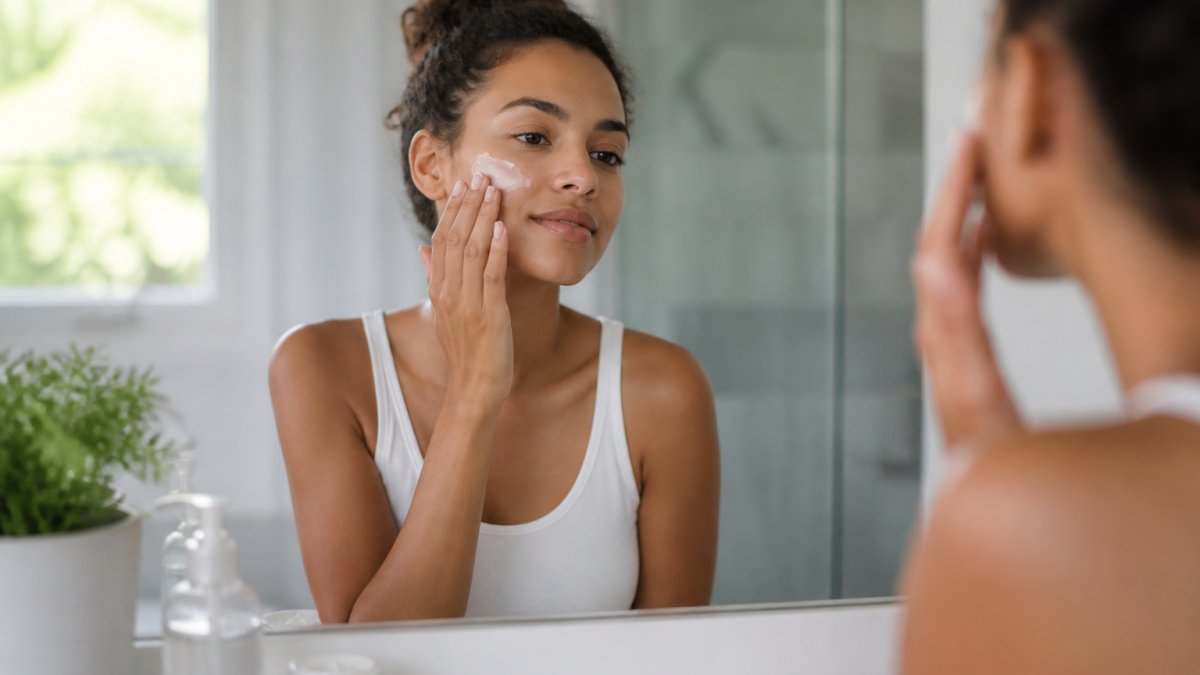
Cleanse and Moisturize for Your Skin Type
Wash with a gentle cleanser matched to your skin type: gel or foaming for oily skin (stripped skin overcompensates by producing more oil), cream for dry skin.
Next, moisturize, crucial, since dry skin produces excess sebum to compensate. Apply while skin is still slightly damp and wait 2-3 minutes before sunscreen.
Apply Sunscreen and Let It Set
Sunscreen is non-negotiable, but timing matters. Apply it after moisturizer and wait 5-10 minutes until fully set, foundation over tacky sunscreen oxidizes faster. Use about a quarter-teaspoon; too much creates a slippery base foundation can't grip.
Best Primer for Oxidizing Foundation
A primer isn't a magic shield against oxidation. It changes how much sebum reaches your foundation and how evenly it sits: used well it slows the color shift; used badly it worsens it by trapping oil or creating a slippery film.
What a Primer Actually Does Under Foundation
A primer works through three mechanisms:
- Oil absorption. Ingredients such as silica, kaolin, bentonite, and dimethicone crosspolymer soak up or bind surface sebum so it reaches the pigment more slowly.
- Film formation. Silicone resins and crosspolymers form a flexible film that keeps foundation from mixing directly with skin oils.
- Surface smoothing. Silicones and powders fill texture so foundation spreads thinner and more evenly, reducing the thick patches where oxidation shows first.
A primer doesn't stop oxidation chemically, it buys time and reduces the oil contacting pigment. That's why primer matters most for oily and combination skin, and less for dry skin, where the bigger risk is pilling.
Silicone vs. Water-Based Primers: What the Labels Mean
Silicone-based primers list dimethicone, dimethicone crosspolymer, cyclopentasiloxane, or vinyl dimethicone crosspolymer near the top of the ingredients.
Water-based primers list water or glycerin first and contain little or no silicone.
Hybrid primers combine silicone film-formers with oil-absorbing powders, a reasonable middle ground for combination skin.
One compatibility rule prevents most primer problems: match the primer base to the foundation base.
How to Layer Skincare, Sunscreen, and Primer Without Triggering Oxidation
Layering order matters as much as product choice. A pattern that works:
- Cleanse and moisturize. Apply moisturizer to slightly damp skin and wait 2-3 minutes.
- Sunscreen. Apply about a quarter-teaspoon and wait 5-10 minutes until no longer tacky; foundation over wet sunscreen breaks down faster.
- Primer. Apply a thin layer only where needed, usually the T-zone and center of the face. Wait 1-2 minutes.
- Foundation. Apply thin layers and build coverage gradually.
Two mistakes drive most oxidation complaints: primer over skincare that hasn't set (traps moisture, causes separation), and too much primer (foundation slides rather than grips, so pigment collects in patches and darkens unevenly).
Breathable Full-Coverage Foundation – Dewy Finish, Hydrating, Vegan →
Primer Ingredients to Look For and to Avoid
Look for: silica, dimethicone crosspolymer, kaolin, bentonite, nylon-12, and polymethylsilsesquioxane, which absorb oil or form a light film.
Be cautious with: heavy occlusives such as petrolatum or thick plant butters if your skin is oily, they can seal in sebum and increase color shift. Alcohol-heavy primers can strip dry skin and trigger rebound oil production later in the day.
A Controlled Primer Test
Before committing, run a split test: apply your usual routine and foundation to both sides, adding the test primer to one side only.
How to Fix Orange Foundation Through Application
Even with the right prep, application technique matters when learning how to fix foundation that oxidizes on skin. How much foundation you use and how you blend it affects oxidation.
Use the Right Amount and Blending Technique
Use less foundation than you think you need. Start with a pea-sized drop for the whole face, dot it on forehead, cheeks, nose, and chin, and blend immediately with a damp (not wet) beauty sponge, working downward to prevent pilling. Need more coverage? Add another thin layer, thin, layered applications oxidize less than one thick layer.
Setting Your Foundation Correctly
Once blended, set your foundation to lock it in place and slow oxidation. Use setting powder with a light hand, too much looks cakey and can trigger more oxidation by creating a heavy, occlusive layer. Setting spray adds moisture, which can speed oxidation, so make sure your primer controlled oil first.
Foundation Shade Matching Tips to Avoid Oxidation
Shade matching fails when you judge a foundation before it settles, the color in the first minute isn't the color you'll wear at noon. Match after dry-down, in the right light, and you remove most of the guesswork.
Match the Shade After Dry-Down, Not at Application
Most liquid foundations need 10-20 minutes to dry down. Judge the shade after that window, not before. A practical protocol:
- Get a sample. Ask for a sample pot or use a tester at the counter; at home, use the actual product you plan to buy.
- Swatch in three stripes. Apply three close shades in vertical stripes along the jawline, from cheek to neck, leaving a small gap between stripes to compare edges.
- Wait 20-30 minutes. Don't blend, blot, or touch the swatches, let them dry down and, if the formula is going to oxidize, let it start.
- Check in natural light. Step to a window with indirect daylight; artificial light, especially warm store lighting, hides undertone shifts.
- Compare the edges. The right shade disappears at the boundary between swatch and neck. A shade that looks right at minute one but shows an orange or pink edge at minute 30 is oxidizing on you.
If the best match after 30 minutes is still too dark, go one shade lighter in the same formula and repeat. Don't switch formulas mid-test, or you won't know which variable changed the result.
Read Undertone in Natural Light
Undertone is what oxidation disrupts most: a foundation can match your depth and still be the wrong undertone, and oxidation often pushes a neutral shade toward orange or a cool shade toward pink. Hold a white piece of paper next to your bare jaw in daylight and compare it to your skin and the settled swatch.
Separate Oxidation From Product Deterioration
Not every color change is oxidation, sometimes the product itself has changed. Before blaming your skin chemistry, check the product:
- Smell. A foundation that smells sour, plasticky, or different from when you bought it may be past its useful life.
- Texture. Separation, watery liquid on top of pigment, or a thickened, grainy feel can signal a compromised formula.
- Performance. If a foundation that used to wear well now patches, pills, or shifts color within an hour, the formula may have degraded rather than reacted to your skin.
If the product shows any of these signs, replace it before running more shade tests, testing a degraded product tells you nothing about how the fresh formula performs.
Choose a Formula Built for Stability
Once you have a shade that holds after dry-down, choose a formula built for stability.
Our Breathable Full-Coverage Foundation - Dewy Finish, Hydrating, Vegan, Gluten-Free (SPF 15) at $27.00 pairs hyaluronic acid with a breathable finish for people who want hydration without a heavy layer.

Whichever formula you try, run the 30-minute dry-down test on your own skin before committing.
When to Choose a Different Foundation Formula
If a foundation oxidizes no matter what you do, it's not the right formula for your skin.
Some foundations are simply incompatible with certain skin types.
If a formula oxidizes on you:
- Try a different brand or formula type
- Look for foundations with oil-controlling ingredients like kaolin or bentonite
- Avoid formulas heavy in oils or butters if your skin is oily
Foundation oxidation is frustrating, but it's fixable, the problem isn't you, it's the match between your skin and your formula.
Frequently Asked Questions
Why does foundation oxidize on my skin?
Foundation oxidizes when iron oxides in the formula react with skin oil, sebum, and heat. This chemical reaction darkens the pigments, causing the foundation to shift orange or darker. Skin pH, humidity, and the amount of oil your skin produces all accelerate oxidation. Not all foundations oxidize equally; some formulas are more prone to color shift than others.
How can I test foundation oxidation at home?
Apply a small amount of foundation to your inner arm or jawline and observe it for 15-30 minutes. Watch for any color shift toward orange or darker tones. Compare the settled shade to the shade in the bottle. For a more controlled test, apply foundation to a clean, moisturized patch of skin and photograph it immediately, then again after 20 minutes in natural light. This shows whether the formula is prone to oxidation before you commit to wearing it all day.
Can primer prevent foundation from oxidizing?
Primer creates a barrier between your skin and foundation, reducing direct contact with oil and sebum. Silicone-based primers work best for oxidizing foundations because they form an occlusive layer that slows oil migration. However, primer alone cannot fully stop oxidation if your foundation formula is inherently unstable. Combine primer with proper skin prep, the right amount of foundation, and a formula suited to your skin type for best results.
Should I choose a lighter shade if my foundation oxidizes?
Choosing a lighter shade is a temporary fix, not a solution. If your foundation oxidizes significantly, a lighter shade will still shift darker and may end up matching your original shade or looking too orange. Instead, focus on finding a formula that doesn't oxidize on your skin, or use skin prep, primer, and application techniques to minimize color shift. Shade matching should be done after your foundation has settled for 15-20 minutes to account for any color change.