
Signs Your Skincare Product Is Causing a Reaction
Table of Contents
- How to Tell If a Skincare Product Is Causing a Reaction
- Irritation vs. Allergic Reaction to Skincare Products: What's the Difference?
- A Symptom Timeline: When Reactions Appear and How Long They Last
- How to Patch Test Skincare Products Before You Commit
- How to Isolate the Culprit in a Multi-Product Routine
- How to Treat a Skincare Reaction: A Step-by-Step Response Plan
- Ingredients Most Likely to Trigger a Reaction
- What to Do After Symptoms Clear (and How to Prevent a Repeat)
- Frequently Asked Questions
Last Updated: October 17, 2026
How to Tell If a Skincare Product Is Causing a Reaction
A skincare reaction is a visible or physical response to a product you applied.
Most reactions are easy to spot once you know what to look for. The tricky part is telling a real reaction apart from normal adjustment or a product that simply does not suit you.
Below, we walk through the signs, the timeline, and what to do next, plus how to test new products safely.
The Most Common Signs, in Order of Frequency
Most people notice redness and itching first. The signs, ranked by frequency:
- Redness on the cheeks, forehead, or wherever you applied the product
- Itching that starts within minutes or hours
- Burning or stinging when the product touches your skin
- Rash that spreads beyond the application area
- Dryness, flaking, or peeling that gets worse over days
- Swelling around the eyes, lips, or jawline
- Hives (raised, itchy welts)
- Blisters or raw, cracked skin
- Skin bumps or pustules that do not behave like ordinary acne
One sign alone can be a fluke. Two or more together, especially right after a new product, point to a reaction.
Irritation vs. Allergic Reaction to Skincare Products: What's the Difference?
An allergic reaction involves your immune system, while irritation is direct damage to the skin barrier. The two need different responses.
Irritation usually stays where you put the product. Allergy can spread.
Irritant Contact Dermatitis
Irritant contact dermatitis is the most common type. It happens when an ingredient is too strong, too concentrated, or applied too often, wearing down the skin barrier and causing burning, stinging, or tightness.
Common culprits include acids, retinoids, and alcohol-heavy toners. The reaction is usually immediate or within hours. It stays local to the application site.
Allergic Contact Dermatitis
Allergic contact dermatitis is an immune response: your body decides a specific ingredient is a threat. It can take 24 to 72 hours to appear, sometimes longer.
Signs include swelling, hives, and a rash that spreads beyond where you applied the product. Once you are sensitized to an ingredient, even a tiny amount can trigger a reaction again. That is why patch testing matters so much.
A Symptom Timeline: When Reactions Appear and How Long They Last
Timing is your best clue. The gap between product use and symptom onset tells you what kind of reaction you are dealing with.
Here is a simple timeline to help you map it:
| Reaction Type | When Symptoms Start | How Long It Lasts | Key Sign |
|---|---|---|---|
| Irritation | Minutes to hours | 1-3 days after stopping | Burning, stinging, local redness |
| Allergic reaction | 24-72 hours | 1-3 weeks | Swelling, hives, spreading rash |
| Purging | 2-6 weeks | 4-6 weeks | Small bumps in usual acne areas |
| Barrier damage | Days of repeated use | 1-2 weeks | Dryness, flaking, raw skin |
Many people ask how long does a skincare reaction last. Mild irritation often calms within a few days of stopping the product.
The seven to ten day mark is a useful checkpoint. If things are not clearly improving by then, it is time to see a dermatologist.
How to Patch Test Skincare Products Before You Commit
A patch test is the best way to avoid a full-face reaction: apply a small amount of product to a small area and wait to see how your skin responds.
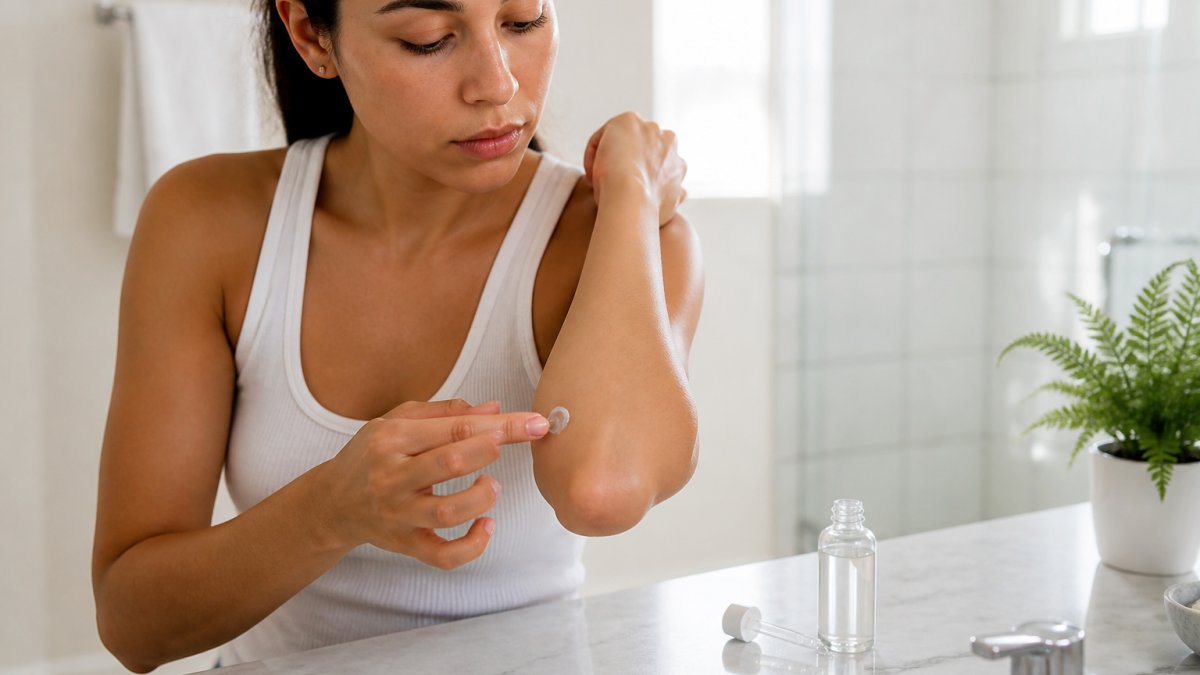
The patch test itself
- Pick the spot. Use the inner elbow or behind the ear. These areas are thin-skinned and easy to observe.
- Apply a small amount. A pea-sized dot is plenty. For a leave-on product, leave it uncovered.
- Leave it alone for 24 hours. Do not wash the area.
A patch test is not perfect. Some reactions only show up after repeated use, and it does not predict irritation from acids or retinoids, which depends on dose and frequency. Still, it catches most allergic problems before they spread across your face.
The controlled reintroduction method
When you are adding products back after a reaction, or starting several new products, use a one-at-a-time sequence rather than a full routine reset.
- Return to a baseline. Use only a gentle cleanser and a basic moisturizer until your skin is calm, usually seven to ten days.
- Add one product. Use it for three to five days before adding anything else. For leave-on products, five days is safer; for rinse-off products, three days is usually enough.
- Watch for the pattern. If the reaction returns after that product, it is your likely culprit. If nothing happens, move to the next product.
- If two products seem to trigger it, test each one alone at the baseline before concluding. Some reactions are cumulative rather than caused by a single item.
Keep a product-use log
A short log turns a guessing game into a traceable record. For each product, note:

- The product name and the date you started it
- How often you used it and where on your face or body
- The date any symptom appeared and what it looked like
This record is gold when you talk to a dermatologist. It also protects you from reintroducing an allergen you have already reacted to, because allergy does not fade with time.
How to Isolate the Culprit in a Multi-Product Routine
With several products, finding the trigger takes patience. The fastest method is elimination, not guesswork.
Brightening Vitamin C Glow Serum for Sensitive & Dry Skin – Vegan, Gluten-Free →
Stop everything except a gentle cleanser and a basic moisturizer until your skin calms, usually seven to ten days. Then add products back one at a time, three to five days apart.
Watch for these patterns:
- If the reaction returns right after you add a product, that is your culprit.
- If nothing happens, the product was not the problem.
- If the reaction returns with two products, test each one alone.
How to Treat a Skincare Reaction: A Step-by-Step Response Plan
Stop using the product first. That single step resolves most mild reactions. Then focus on calming the skin barrier while it heals.
Here is our step-by-step plan for how to treat a skincare reaction:
- Stop the suspected product immediately. Do not "wait and see."
- Wash gently with lukewarm water and a mild, fragrance-free cleanser.
- Skip actives like acids, retinoids, and vitamin C for at least a week.
- Moisturize with a simple, calming cream to support the skin barrier.
- Apply a cool compress for itching and burning.
- Avoid makeup and fragrance on the affected area.
- Do not scrub, exfoliate, or pick at flaking or blistered skin.
- Track your symptoms so you can spot improvement or decline.
For calming support, our Rich Calming Cream for Dry, Stressed & Sensitive Skin is built around hemp-derived seed oil and aloe vera, and it is formulated to soothe and hydrate stressed skin.

Red Flags That Need a Doctor, Not a Cream
Some reactions need medical care. Get help if you notice:
- Swelling of the face, lips, tongue, or throat (seek urgent care)
- Trouble breathing
- Blisters or open, weeping sores
These signs can point to a serious allergic reaction or an infection. A dermatologist can confirm the diagnosis and, if needed, run a skin test to identify the allergen.
Ingredients Most Likely to Trigger a Reaction
Fragrance is the most common cause of allergic contact dermatitis in cosmetics, hiding behind names like "parfum," "aroma," and individual essential oils. But it is only one category. Reading a label well means sorting ingredients into groups that behave similarly on skin, then matching those groups to how and where you use the product.
The main allergen and irritant categories
- Fragrance and essential oils. Look for "fragrance," "parfum," "aroma," and named oils such as lavender, citrus, peppermint, and tea tree. These frequently cause allergic contact dermatitis and can irritate compromised skin.
- Preservatives. Methylisothiazolinone, methylchloroisothiazolinone, formaldehyde releasers (such as DMDM hydantoin and quaternium-15), and parabens appear in many water-based formulas. They are necessary to prevent mold and bacteria, so identify the specific one you react to rather than avoiding all preservation.
- Botanical extracts and plant oils. "Natural" does not mean low risk. Extracts, resins, and cold-pressed oils can contain the same allergenic compounds as the plants they come from.
Why product type changes the risk
How long a product stays on your skin matters as much as what is in it.
- Leave-on products (serums, moisturizers, sunscreens, eye creams) stay in contact for hours and carry the highest risk of allergic contact dermatitis because the allergen has time to penetrate.
- Rinse-off products (cleansers, masks, body washes) have shorter contact time, so allergy is less common, but irritation from surfactants and fragrances still happens.
- Exfoliants and acids are the most common cause of irritant contact dermatitis. Overuse, not allergy, is usually the problem.
How to read a label without guessing
- Check the first five ingredients. In most formulas, ingredients are listed in descending order of concentration up to 1%. The earliest ingredients are the ones most likely to matter for irritation.
- Search for your known allergens by synonym. Fragrance appears as parfum, aroma, or essential oil names. Preservatives have several trade names. A quick search of the ingredient list against a dermatologist-provided allergen list is more reliable than scanning for one word.
- Distinguish "fragrance-free" from "unscented." Unscented products can contain masking fragrance. Fragrance-free means no fragrance has been added, though a botanical extract may still carry scent.
- Treat "clean" and "natural" as marketing terms, not safety claims. Essential oils and botanical extracts are among the most frequent causes of allergic contact dermatitis.
If you have sensitive or reactive skin, look for short ingredient lists and clear allergen statements. Our Brightening Vitamin C Glow Serum is fragrance-free and formulated without the 14 most common allergens, which makes it a gentler starting point for reactive skin.

What to Do After Symptoms Clear (and How to Prevent a Repeat)
Once your skin is calm, you can reintroduce the product carefully or leave it out for good.
If the reaction was mild irritation, try the product again once or twice a week.
To prevent a repeat:
- Patch test every new product, even ones from brands you trust.
- Introduce one product at a time, with a few days between additions.
- Keep a product journal with dates and symptoms.
A good rule: when your skin barrier is compromised, less is more. A gentle cleanser, a calming moisturizer, and sunscreen cover most needs while you recover.
At sheshedbeauty4U, our Radiant Beauty Essentials are chosen with sensitive skin in mind.
Frequently Asked Questions
How soon can a reaction to a skincare product appear?
It depends on the type of reaction. Irritant contact dermatitis, caused by harsh ingredients or overuse, can show up within minutes to a few hours of application. Allergic contact dermatitis is delayed: the immune system needs time to mount a response, so redness, itching, or a rash typically appears 24 to 72 hours after product exposure. This delay is why a skincare reaction often gets blamed on the wrong product, since the trigger may have been used two or three days earlier. If you start a new product, note the date so you can connect symptoms to the right bottle.
How long does a skincare reaction last?
Most mild irritant reactions settle within three to seven days once you stop using the product. Allergic contact dermatitis can take one to two weeks to fully clear, and the affected area may stay dry or flaky while the skin barrier repairs itself. A reaction that worsens after a week, spreads, or keeps returning points to ongoing exposure, so check every product in your routine, not just the newest one. Seek medical care if symptoms last beyond two weeks or involve swelling, blisters, or open skin.
How can you tell if a product is irritating your skin or if it's purging?
Purging happens with active ingredients like retinoids or exfoliating acids and shows up as small bumps in the areas you normally break out, usually easing within four to six weeks. A true reaction looks different: redness, itching, burning, stinging, or a rash that spreads beyond where you applied the product, and it gets worse with continued use rather than better. If your skin stings when you apply a product, feels raw, or develops flaking and peeling well beyond the treated area, stop using it. Purging does not itch or burn.
What should you do if a skincare product causes a reaction?
Stop using the suspected product immediately and simplify your routine to a gentle cleanser and a plain moisturizer until the skin calms. Rinse the area with lukewarm water, skip exfoliants, retinoids, and fragrance, and use a cool compress for itching. A fragrance-free, allergen-aware moisturizer can support the skin barrier while it recovers. If the reaction involves hives, swelling, or trouble breathing, seek urgent care. For persistent or spreading rashes, a dermatologist can confirm whether it is an allergic reaction to skincare products and identify the trigger through patch testing.
A reaction is not a failure on your part. It is information. The right response plan, a careful patch test, and a simpler routine will help you find products that work with your skin.
If you are rebuilding your routine after a reaction, start with gentle, fragrance-free formulas. Browse our Radiant Beauty Essentials at sheshedbeauty4U and find calming, allergen-aware products that help your skin recover and stay comfortable.