
How to Read Real Customer Beauty Reviews
Table of Contents
- Why Reading Real Customer Beauty Reviews Matters
- How to Spot Fake Beauty Reviews and Red Flags
- How to Identify Sponsored Skincare Reviews
- Best Websites for Unbiased Beauty Reviews
- Step-by-Step Framework for Evaluating Real Customer Feedback
- Using Sentiment Analysis and the Skin Twin Methodology
- Common Mistakes When Reading Beauty Product Reviews
- Frequently Asked Questions
Last Updated: September 1, 2026
Why Reading Real Customer Beauty Reviews Matters
Understanding how to read real customer beauty reviews is essential for making informed skincare and cosmetic purchases. The cosmetic industry thrives on user-generated content, yet not all reviews reflect genuine customer experiences. When you learn to distinguish authentic feedback from sponsored content or bot-generated noise, you gain the ability to identify products that actually deliver results for your specific skin type.
At sheshedbeauty4U, we recognize that busy professionals and wellness-focused adults need efficient ways to evaluate beauty products without wasting time or money on ineffective solutions. The stakes are real: a single poor product choice can trigger dermatological concerns, waste your budget, and derail your skincare routine. Conversely, finding the right product, backed by genuine customer feedback, can transform your skin and boost your confidence.
The challenge is that review platforms have become battlegrounds. Brands pay for positive reviews, competitors post negative ones, and algorithms amplify sensational opinions over honest ones. Learning to navigate this landscape means developing a critical eye for authenticity, specificity, and data-driven patterns that reveal which reviews deserve your trust.
How to Spot Fake Beauty Reviews and Red Flags
Fake reviews follow predictable patterns. Recognizing these signals is your first line of defense against misleading feedback that could send you down the wrong path.
Common patterns in inauthentic reviews
Inauthentic reviews often share structural similarities that reveal their manufactured nature. Generic praise like "This product is amazing!" without specific details about texture, application, or results is a red flag. Real customers describe what they actually experienced: "The serum absorbs quickly, doesn't leave a greasy residue, and my skin felt plumper by morning."
Timing clusters matter too. If a product suddenly receives dozens of five-star reviews within a short window, followed by silence, that's suspicious. Authentic feedback arrives gradually as customers purchase and use the product over weeks or months. Look for reviews that mention the application process, how the product feels on skin, and whether long-term results matched initial impressions.
Vague language is another indicator. Phrases like "perfect for all skin types" or "works great for everyone" contradict real customer experience. Genuine reviews acknowledge limitations: "This moisturizer is excellent for my dry, mature skin, but I'd skip it if you have oily skin, it might feel heavy."

Reviews that read like marketing copy, using brand language, promotional terminology, or keywords that don't sound natural, often come from paid sources. Real customers write conversationally. They mention specific problems they had before using the product and explain whether the product solved those problems.
Bot and suspicious activity indicators
Suspicious patterns emerge when you examine review metadata. Multiple reviews from accounts with no purchase history, no other reviews, and generic usernames (like "User12345" or "BeautyLover88") suggest automated posting. Legitimate reviewers typically have review histories across multiple products, showing they're actual customers.
Look at review velocity. A product that receives 50 reviews in one week, then nothing for months, then 40 more reviews the following week, often indicates paid review campaigns rather than organic customer feedback. Genuine products accumulate reviews at a more consistent pace.
Sentiment extremes are worth questioning. If a product has 300 five-star reviews and 2 one-star reviews, the distribution is suspiciously polarized. Real products generate a natural bell curve: most reviews cluster around 3-4 stars with some outliers. Extreme uniformity suggests manipulation.
Repetitive language across multiple reviews is another telltale sign. If you see the same phrases, sentence structures, or specific claims repeated verbatim in different reviews, those reviews likely came from the same source or were generated by the same person.
How to Identify Sponsored Skincare Reviews
Sponsored reviews aren't inherently bad, they're often transparent about compensation. The key is recognizing them so you can weigh them appropriately. A review that discloses "I received this product for free in exchange for an honest review" is more trustworthy than one hiding that relationship.
Check the reviewer's history. If someone posts glowing reviews for 20 different brands across multiple product categories, they're likely a paid reviewer. Authentic customers typically have strong opinions about certain brands and may skip products outside their interests.
Sponsored content often appears on influencer accounts or dedicated review sites. These reviews can still contain useful information, but factor in the financial incentive. A reviewer who receives free products has motivation to stay positive to maintain brand relationships. This doesn't mean their review is false, but it means their perspective is filtered through a business relationship.
Look for disclosure statements. The Federal Trade Commission requires influencers and paid reviewers to disclose compensation using clear language like "#ad" or "sponsored (the FTC)." If a review mentions receiving a product for free but lacks this disclosure, that's a red flag. The absence of required disclosure suggests the reviewer either doesn't understand regulations or is deliberately hiding the relationship.
Compare sponsored reviews to unsponsored ones. If a sponsored review makes claims no other customer mentions, that's worth questioning. If multiple unsponsored reviews confirm what a sponsored reviewer said, the sponsored review gains credibility through corroboration.
Best Websites for Unbiased Beauty Reviews
Several platforms prioritize review authenticity and user-generated content. Understanding which platforms maintain stricter verification standards helps you find more reliable feedback.
Websites that require verified purchase status, meaning the reviewer actually bought and received the product, filter out many fake reviews (peer-reviewed research). These platforms track purchase history and prevent users from reviewing products they didn't purchase. This single requirement eliminates a massive category of inauthentic feedback.
Community forums dedicated to skincare and beauty often host the most honest discussions. These spaces aren't monetized through review content, so users have less incentive to post fake feedback. Conversations in these forums tend to be detailed, nuanced, and willing to acknowledge product limitations alongside benefits.
Independent review aggregators that combine feedback from multiple sources and apply algorithmic filters for authenticity offer another reliable option. These platforms use data analysis to identify suspicious patterns and weight verified purchases more heavily than unverified reviews.
Retail platforms like Sephora and Ulta maintain review systems with verification requirements and community moderation. While these sites have financial incentives to promote their products, they also moderate aggressively against obvious fake reviews because customer trust directly impacts sales.
Direct brand websites often display customer reviews, and while brands have incentive to highlight positive feedback, many now display the full distribution of ratings including one-star reviews. This transparency, showing the complete picture rather than cherry-picking highlights, signals confidence in the product and genuine customer feedback.
Step-by-Step Framework for Evaluating Real Customer Feedback
A systematic approach to reading beauty reviews prevents emotional decision-making and ensures you extract actionable insights from customer feedback.
Step 1: Check verified purchase status
Start by filtering for verified purchases only. Most review platforms allow this. A verified purchase badge means the reviewer actually bought the product through that retailer, eliminating the largest category of fake reviews.
Verified purchase status doesn't guarantee honesty, but it removes a major source of noise. Someone who spent their own money on a product has more credibility than someone reviewing without purchase history.
Step 2: Assess review specificity and skin type relevance
Read the review for specific details about skin type, application process, and results timeline. Does the reviewer mention their skin type? Do they describe how the product felt? Do they explain whether results appeared immediately or after consistent use?
High-quality reviews answer these questions: What was your skin concern before using this product? How does the product feel when you apply it? Did you see results? How long did it take? Would you repurchase?
Reviews that match your skin type carry more weight than generic praise. A review from someone with dry, mature skin matters more if you also have dry, mature skin. Look for reviewers describing conditions similar to yours.

Step 3: Analyze texture, application, and long-term results
Pay attention to reviews that describe the product's texture and how it performs during application. Phrases like "absorbs quickly," "leaves a tacky residue," "has a strong scent," or "feels lightweight" give you practical information about daily usability.
Long-term results matter more than first impressions. A review that says "My skin looked great for the first week, but after two weeks I noticed breakouts" is more valuable than "This product is amazing!" Reviews mentioning consistent results over weeks or months indicate genuine product efficacy rather than placebo effect.
Look for reviews that acknowledge trade-offs. Real products work well for some skin types and poorly for others. A reviewer who says "Great for dry skin, but skip it if you're oily" demonstrates balanced thinking. This honesty makes their positive comments more credible.
Step 4: Cross-reference across multiple platforms
Read reviews on at least three different platforms before deciding. If a product receives consistent praise across independent review sites, community forums, and retail platforms, that consistency suggests genuine customer satisfaction.
Conversely, if reviews on one platform are overwhelmingly positive but reviews elsewhere are mixed, investigate why. Different platforms attract different user bases, and sometimes this explains variation. But dramatic differences between platforms can signal manipulation on one of them.
Look for common themes across reviews. If multiple customers independently mention the same benefit or drawback, that's a strong signal. If only one or two reviews mention a specific claim, treat it as an outlier.
Using Sentiment Analysis and the Skin Twin Methodology
Two emerging approaches help consumers filter review noise and identify feedback most relevant to their situation.
Sentiment analysis tools scan reviews for emotional language and extract the overall tone. These tools categorize reviews by sentiment strength, helping you quickly identify which reviews express strong conviction versus mild preference. A review with strong positive sentiment from someone with your skin type carries more weight than a lukewarm positive review from someone with different skin concerns.
The Skin Twin methodology involves identifying reviewers whose skin type, concerns, and climate match yours, then prioritizing their feedback. This approach recognizes that product efficacy varies dramatically based on individual skin biology. A moisturizer that transforms someone's dry skin might feel too heavy on oily skin. By finding your "skin twin", someone with matching conditions, you access feedback directly applicable to your situation.
Implementing this methodology means reading through reviews to identify 2-3 customers with skin type, age range, and specific concerns matching yours. Then read their complete reviews carefully. Their experience becomes your most reliable predictor of how the product will perform on your skin.
Common Mistakes When Reading Beauty Product Reviews
Most people make predictable errors when evaluating customer feedback, leading them to purchase products that disappoint.
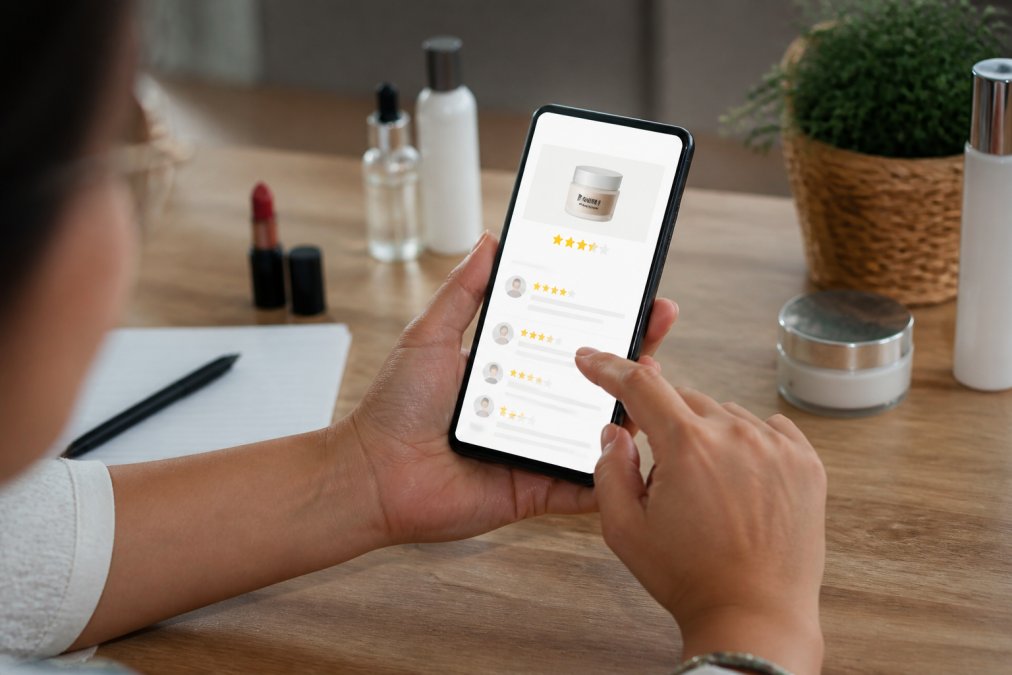
Focusing exclusively on star ratings without reading review text is the most common mistake. A five-star rating tells you someone liked the product, but not why. A one-star rating might reflect a damaged shipment, not product quality. Reading the actual review text reveals whether the rating reflects product performance or external factors.
Assuming all reviews carry equal weight ignores context. A review from someone with different skin type, climate, or skin concerns than yours has limited relevance. Weighting all reviews equally means you're averaging feedback from people whose experiences won't match yours.
Overlooking the review volume creates false confidence. A product with 20 reviews showing 4.8 stars might be less reliable than a product with 500 reviews showing 4.2 stars (peer-reviewed research). Larger sample sizes reveal true product performance better than small groups of reviews. Statistical outliers matter less when you have hundreds of data points.
Ignoring negative reviews is another critical error. One-star and two-star reviews often contain the most useful information about product limitations. These reviews help you identify whether the product's weaknesses matter to you. If the primary complaint is strong fragrance and you don't mind scent, that negative review doesn't disqualify the product.
Trusting reviews that match your expectations without scrutiny creates confirmation bias. If you've decided a product is worth buying, you'll unconsciously weight positive reviews as more credible. Apply the same critical lens to positive reviews as you do negative ones.
Many people also fail to consider the timing of reviews. A product that worked well for early adopters might have changed formulation. Check the review dates and read recent reviews more carefully than older ones. Formulations evolve, and feedback from six months ago might not reflect the current product.
Learning to read real customer beauty reviews transforms your purchasing decisions from guesswork into informed strategy. By checking verified purchase status, assessing specificity, analyzing long-term results, and cross-referencing across platforms, you dramatically increase the odds of finding products that actually work for your skin.
When you're ready to invest in quality skincare, start with products that have passed this evaluation framework. At sheshedbeauty4U, our Radiant Beauty Essentials collection includes carefully curated items like the Triple Lift Molecule Mask and Best Moisturizer for Mature Skin, products selected based on authentic customer feedback and real skin results. Start your skincare journey with products backed by genuine reviews, and experience the confidence that comes from making informed choices.

Frequently Asked Questions
What are the biggest red flags that a beauty review is fake?
Watch for overly generic language, perfect 5-star ratings without detail, reviews posted within days of product launch, or identical phrasing across multiple reviews. Fake reviews often lack specifics about skin type, application process, or actual results. Check if the reviewer has a purchase history on the platform, unverified purchases are a major warning sign. Bot patterns include suspiciously timed reviews or accounts with no other activity.
How do I know if a skincare review is sponsored or biased?
Look for disclosure language like #ad, #sponsored, or 'I received this product free.' Influencer reviews often show positive bias, especially when they have brand partnerships. Check the reviewer's other posts, if they promote many products, credibility drops. Sponsored content typically uses polished photography and promotional language rather than candid first impressions. Independent review sites and community forums tend to feature more balanced feedback than brand-partnered influencers.
What's the best way to find unbiased beauty product reviews?
Start with verified purchase reviews on retailer sites like Sephora or Ulta, which require actual purchases. Community forums and skincare subreddits often contain honest, unfiltered feedback from real users discussing long-term results. Independent review aggregators and dermatological resources provide technical comparisons. Cross-reference the same product across multiple platforms, patterns emerge when reviews are authentic. Seek out reviews from users with your skin type, as efficacy varies significantly by individual skin barrier and dermatological concerns.
How can I use the Skin Twin methodology to find relevant reviews?
The Skin Twin approach means finding reviewers with your exact skin type, age range, and specific concerns (acne, anti-aging, sensitivity). Look for reviews mentioning your skin barrier condition, climate, and skincare routine. A 55+ reviewer's experience with mature skin products is more valuable to you if you're also 55+ than a 25-year-old's review. Pay attention to reviews describing similar application processes and expectations for product longevity. This targeted approach filters noise and identifies reviews with genuine relevance to your purchasing decision.
This article was written using GrandRanker