
How to Store Skincare for Longevity: A Step-by-Step Guide
Table of Contents
- Why Proper Storage Matters for Your Skincare Investment
- Step 1: Assess Your Current Storage Environment
- Step 2: Choose the Right Storage Location
- Step 3: Understand Your Skincare Shelf Life Guide
- Step 4: Maximize Skincare Fridge Benefits
- Step 5: How to Tell if Skincare Is Expired
- Step 6: Organize and Maintain Your Routine
- Common Mistakes to Avoid When Storing Skincare
- Frequently Asked Questions
Last Updated: October 1, 2026
Why Proper Storage Matters for Your Skincare Investment
Your skincare products are an investment in your skin's health. How to store skincare for longevity matters just as much as what you buy. Heat, humidity, light, and air exposure break down active ingredients, a $60 serum stored in a steamy bathroom loses potency within months, while the same serum stored properly stays effective for years.
This guide covers how to store skincare for longevity: how temperature and light destroy active ingredients, where to store products, how to read expiration dates, whether a skincare fridge is worth it, and travel storage strategies. Proper storage extends shelf life, preserves efficacy, and protects your investment.
Step 1: Assess Your Current Storage Environment
Before you reorganize anything, understand what's happening to your products right now.
Temperature and humidity factors
Most bathrooms are terrible for skincare: hot showers create steam, humidity spikes, and temperature fluctuates constantly. Ideal storage temperature is between 50-70°F; most bathrooms exceed this regularly, and even a few hours of heat exposure can damage formulations.
Humidity accelerates preservative breakdown (moisture allows bacteria growth) and ingredient oxidation (moisture reacts with vitamin C and retinoids, reducing potency). If steam fogs your mirror during showers or your bathroom gets direct sunlight, your skincare is being damaged.
Light exposure risks
Direct sunlight and harsh artificial light degrade products. Vitamin C serums turn brown (signaling oxidation), and retinoids break down under UV exposure. Light-sensitive products need opaque or amber-colored bottles; clear bottles allow damaging wavelengths to reach the formula daily.
Step 2: Choose the Right Storage Location
Not all storage locations are equal. The right choice depends on your climate, bathroom setup, and which products you're storing.
Bathroom vs. bedroom storage
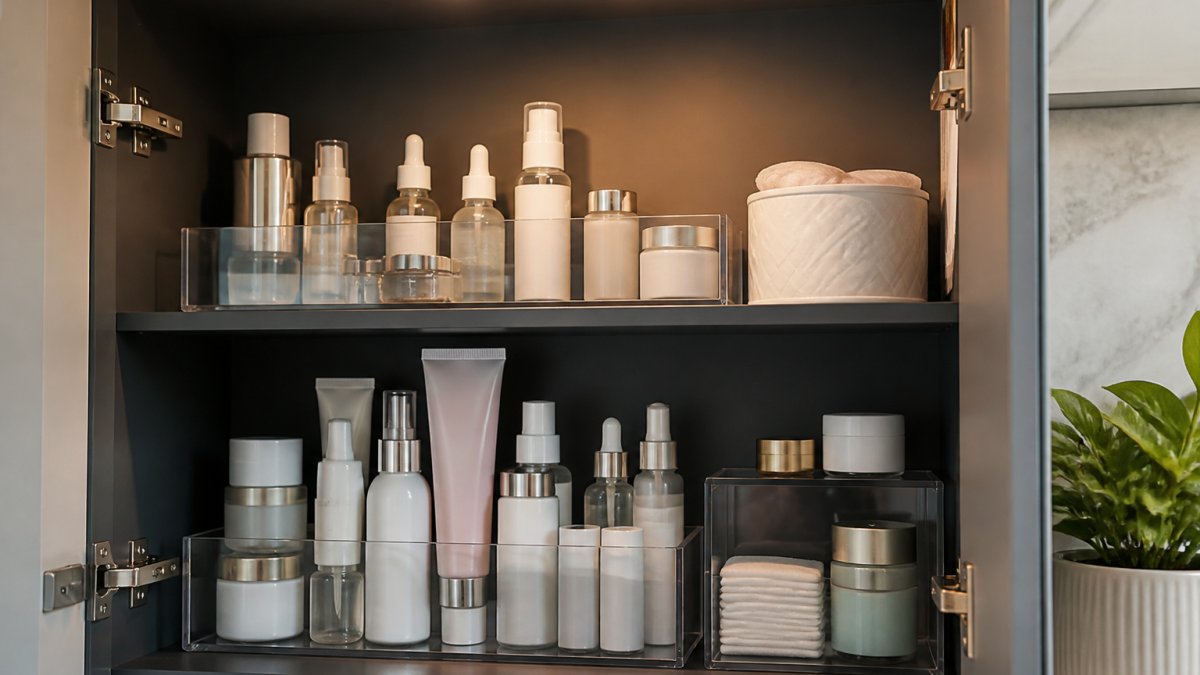
Bedroom storage is superior. Bedrooms stay cooler and have less humidity than bathrooms. They're darker. Temperature fluctuates less. If you have a cool, dark closet or drawer in your bedroom, that's your best option.
Move your active products out of the bathroom entirely. Keep only the products you use daily in the bathroom, cleanser, moisturizer, sunscreen. Everything else belongs in a bedroom drawer or closet.
Some products must stay in the bathroom for convenience: daily moisturizers, sunscreen, cleansers. But serums, treatments, and specialty products should live elsewhere.
Travel storage protocols
Travel creates extreme storage challenges: luggage gets hot, humidity changes constantly, and products get jostled. Pack products in an opaque travel bag with dedicated compartments, keep the bag in your hotel room's coolest spot away from direct sunlight, never leave skincare in a hot car, use travel-size products when possible, and keep lids tightly sealed.
Step 3: Understand Your Skincare Shelf Life Guide
Every product has a lifespan. Understanding expiration dates and the Period After Opening (PAO) symbol prevents using degraded products.
Reading the PAO symbol and expiration dates
The Period After Opening (PAO) symbol (an open jar with a number like "6M" or "12M") indicates how many months the product is safe after opening. It accounts for air exposure, contamination risk, and preservative depletion. Unopened products last until the manufacturing expiration date; opened products follow the PAO symbol.
Step 4: Maximize Skincare Fridge Benefits
A skincare fridge is a small, dedicated refrigerator for skincare. It's not essential, but it slows chemical degradation and oxidation for specific active ingredients.
How temperature affects ingredient stability
Active ingredients degrade through oxidation and hydrolysis, which accelerate with heat. For every 10°F increase above ideal storage temperature, product potency decreases by 25-50%. Vitamin C oxidizes rapidly at room temperature (3-4 months stable) but stays potent 8-12 months when refrigerated.
Which products benefit most from cool storage
High-priority candidates for fridge storage: Vitamin C serums (the single biggest beneficiary), retinoid serums and creams, peptide serums, acid toners and exfoliants, eye creams with active ingredients, sheet masks, and hydrating serums with hyaluronic acid.
Skincare fridge specifications and ROI
Dedicated skincare fridges cost $40-$60 for a basic model (4-6 liter capacity) maintaining 45-50°F. A $60 fridge pays for itself if a $50 Vitamin C serum lasts 10 months refrigerated versus 4 months at room temperature. For frequent travelers or those in hot, humid climates, a skincare fridge becomes more valuable.
Proper fridge storage practices
Keep the fridge between 45-50°F, store products in airtight containers to prevent moisture absorption, keep it away from direct sunlight and heat sources, use trays to prevent condensation, and check products before use. A skincare fridge is worth considering if you use Vitamin C or retinoid serums regularly, live in a warm climate, or travel frequently.
Travel Toiletry and Makeup Bag – Compact Organizer for Women →
Step 5: How to Tell if Skincare Is Expired
Most premature expiration is caused by contamination after opening, not manufacturing defects. Learn the subtle signs of product degradation and contamination.
Signs of product degradation and oxidation
Color changes signal oxidation: Vitamin C serum turns yellow, orange, or brown; clear serums become cloudy; oils develop a darker appearance; retinoid products shift to amber or yellow. Texture changes indicate chemical breakdown: creams become watery or grainy; serums get thicker or gelatinous; emulsions separate; gels become runny. Smell changes mean chemical breakdown: sour, vinegary, or off smells indicate bacterial growth; sharp chemical smells indicate oxidation; rancid or musty odors suggest mold or contamination.
Post-opening contamination: The primary longevity killer
Most premature expiration is caused by contamination after opening, not age. Poor hygiene practices deplete preservatives and introduce pathogens that multiply exponentially. Contamination happens through bare-finger contact, reusable applicators not cleaned between uses, double-dipping, leaving lids open, sharing products, and using wet hands or applicators.
Hygiene protocols to extend shelf life after opening
For creams and balms: Use a clean spatula or disposable applicator every time; never use bare fingers. If using fingers, wash and dry hands thoroughly. Replace the lid immediately after use and never double-dip. For serums and liquids: Use the provided dropper or pump applicator without touching the tip to your skin. For dropper bottles, never squeeze while inside the bottle. Close the lid tightly immediately after use. For all products: Never share products, store in a cool, dry place, keep containers upright, wipe bottle necks before closing, and discard immediately if contamination is detected.
The PAO symbol: Your expiration timeline
The Period After Opening (PAO) symbol looks like an open jar with a number inside (like "6M" or "12M"). It indicates how many months the product remains safe and effective after you first open it, assuming proper storage and hygiene.
- 3M (3 months): Typically serums with active ingredients (Vitamin C, retinoids, acids) that degrade quickly once exposed to air.
- 6M (6 months): Most serums, lightweight moisturizers, and treatments.
- 12M (12 months): Creams, balms, and products with robust preservative systems.
- 24M (24 months): Rare; usually only oil-based products or those with very stable formulations.
Safety rule
If you're unsure whether a product is still good, throw it out. Using a degraded or contaminated product wastes money and risks skin irritation, infection, or allergic reaction. A $40 serum isn't worth a skin barrier disruption or infection. When in doubt, discard and replace.
Step 6: Organize and Maintain Your Routine
Organization prevents mistakes. When products are visible and labeled, you use them before they expire.
Using storage containers and organizing by routine
Group products by routine: morning, evening, weekly treatments. Use clear containers or drawer dividers so you see everything at a glance.
Organize by frequency of use:
- Daily products in front
- Weekly treatments in the middle
- Specialty products in back
Preventing post-opening contamination
Contamination shortens shelf life dramatically. Bacteria multiply quickly once a seal breaks.
Use these practices:
- Never touch product with bare fingers (except creams designed for that)
- Use clean applicators or tools every single time
- Replace pump tops if they get dirty
- Wipe bottle necks with a clean tissue before closing
- Never share products with others
- Close lids tightly immediately after use
- Keep containers upright to prevent leaks
Common Mistakes to Avoid When Storing Skincare
These mistakes happen constantly. Avoid them to protect your investment.
Leaving bottles open: Air exposure oxidizes active ingredients immediately.
Frequently Asked Questions
How long does skincare actually last once you open it?
Once opened, most skincare products last 6-12 months depending on the formula and storage conditions. The PAO (Period After Opening) symbol on your product indicates how many months it remains safe to use. Active ingredients like vitamin C and retinoids degrade faster, often lasting 3-6 months after opening. Store in a cool, dark place to extend shelf life and maintain potency. Always check for signs of product degradation such as color changes, separation, or unusual odor before each use.
Does storing skincare in a fridge actually help extend shelf life?
Yes, skincare fridge benefits are significant for certain products. Cool storage slows oxidation and bacterial growth, extending shelf life for serums, eye creams, and gel-based formulas. Temperature fluctuations are minimized in a dedicated fridge, protecting active ingredients from thermal shock. However, not all products need refrigeration, creams and oils at room temperature work fine. If you use a mini-fridge, keep it between 45-50°F. Avoid the regular kitchen fridge where temperature changes and humidity are unpredictable.
What are the signs that my skincare has expired or degraded?
Product degradation shows through visible changes: discoloration, separation of ingredients, thickening or thinning of texture, or a sour or off smell. If your serum has oxidized, it may turn brown or yellow. Expired skincare loses efficacy and can cause irritation. Check the expiration date and PAO symbol on packaging. If you notice bacteria growth (cloudiness in liquids) or mold, discard immediately. Trust your senses, if it looks or smells wrong, it's time to replace it, regardless of the printed date.
How should I store active ingredients like vitamin C and retinoids?
Vitamin C serums and retinoids are light-sensitive and unstable, requiring strict storage protocols. Keep them in dark, airtight glass bottles away from direct sunlight. Store at cool temperatures (ideally 45-50°F in a mini-fridge) to slow oxidation and preserve efficacy. Retinoids degrade faster than other active ingredients when exposed to heat and humidity, so avoid bathroom storage if possible. Check these products monthly for color changes, brown or yellow discoloration means oxidation has begun and efficacy is compromised.