
Best Natural Supplements for Skin and Daily Health
Last Updated: October 22, 2026
Quick Summary
Natural supplements for skin health work from the inside out by addressing root causes like nutrient gaps and inflammation. The most effective regimens combine vitamins, collagen, omega-3s, and probiotics taken consistently for 6-12 weeks, paired with a balanced diet for optimal results.
- Vitamin A, C, D, and E support cell turnover and collagen production with results visible in 6-8 weeks
- Collagen supplements work best at 10-20 grams daily when paired with vitamin C for synthesis
- Omega-3s from fish oil or algae reduce inflammation at doses of 1,000-3,000 mg daily of EPA and DHA
- Multi-strain probiotics with at least 10 billion CFU support the gut-skin connection
- Third-party testing from NSF International, USP, or ConsumerLab verifies supplement quality and safety
Table of Contents
- Why Natural Supplements Matter for Skin and Overall Health
- Best Vitamins for Skin Health: A Closer Look
- Collagen Supplements for Skin: Building from Within
- Vitamin C for Skin Health: Antioxidant Power
- Key Nutrients Beyond Vitamins: Minerals, Probiotics, and Herbs
- Skin Supplement Safety and Effectiveness: What You Need to Know
- Our Top Picks for Daily Skin and Health Support
- Common Mistakes to Avoid When Choosing Supplements
- Frequently Asked Questions
Why Natural Supplements Matter for Skin and Overall Health
Stress, pollution, and nutrient gaps show up first on your face. That's where natural supplements for skin health come in, they work from the inside out, addressing root causes rather than masking surface problems.

At sheshedbeauty4U, we've curated supplements that support both skin appearance and daily health.
What separates supplements that work from those that don't is ingredient quality, dosage, and consistency.
| Supplement Type | Primary Benefit | Best For | Timeline |
|---|---|---|---|
| Vitamins (A, C, D, E) | Cell turnover, collagen, protection | All skin types | 6-8 weeks |
| Collagen | Elasticity, hydration | Fine lines, dryness | 8-12 weeks |
| Omega-3s | Barrier support, hydration | Sensitive, inflamed skin | 4-6 weeks |
| Probiotics | Gut-skin connection, clarity | Acne-prone, reactive skin | 6-10 weeks |
| Antioxidant herbs | Inflammation, oxidative stress | Aging, sun-damaged skin | 6-8 weeks |
Best Vitamins for Skin Health: A Closer Look
Vitamins are the foundation of any skin supplement strategy, supporting cellular regeneration and protection. But bioavailability matters, your body needs to absorb what you're taking.
Vitamin A for Cell Turnover
Vitamin A accelerates cell turnover by binding to retinoid receptors in skin cells, telling them to renew faster. That's why dermatologists recommend it for acne, aging, and dull complexions.
Too much vitamin A can cause toxicity; too little won't deliver results. Most skin-focused supplements use retinol or beta-carotene, with typical daily doses of 700 to 900 micrograms for adults.
Common mistake: Taking vitamin A without considering your diet. If you already eat plenty of sweet potatoes, carrots, and leafy greens, you may not need supplementation, combining both can push you toward upper safety limits.
Vitamin C for Collagen and Radiance
Vitamin C boosts collagen production, protects against oxidative stress, and brightens dull complexions.
Vitamin C degrades quickly, so look for stabilized forms like ascorbic acid or liposomal vitamin C. Effective doses range from 500 to 2,000 mg daily, split into smaller doses for better absorption.
Vitamin D and E for Protection
Vitamin D functions as both a nutrient and a hormone. Many people are deficient, especially in northern climates or with limited sun exposure.
Vitamin E is a fat-soluble antioxidant that protects cell membranes from oxidative damage and works synergistically with vitamin C.
Daily vitamin D recommendations are 600-800 IU for most adults, though some practitioners recommend higher doses for skin and immune support. Vitamin E typically ranges from 15 mg daily. Both are fat-soluble, meaning they accumulate in your body, so excessive supplementation can be problematic.
Collagen Supplements for Skin: Building from Within
Collagen gives skin its structure, firmness, and elasticity.
Collagen supplements come as hydrolyzed collagen (most common), collagen peptides, and marine collagen. Hydrolyzed collagen is broken into small amino acids your body absorbs easily, you don't absorb "collagen" intact.
Your body uses those amino acids to synthesize new collagen where needed.
Most effective doses range from 10 to 20 grams daily. Marine collagen has slightly higher bioavailability than bovine collagen, but both work. Pair collagen with vitamin C, because your body needs vitamin C to synthesize new collagen from those amino acids.
Vitamin C for Skin Health: Antioxidant Power
Vitamin C is that important for skin health. As an antioxidant, it neutralizes free radicals.
Supplementing with vitamin C gives your skin extra defense against daily damage.
To maximize absorption, take vitamin C with food, split doses throughout the day, and choose stabilized forms like ascorbic acid or liposomal vitamin C.
Key Nutrients Beyond Vitamins: Minerals, Probiotics, and Herbs
Vitamins are just the beginning. Your skin also needs minerals, beneficial bacteria, and plant compounds that work synergistically.
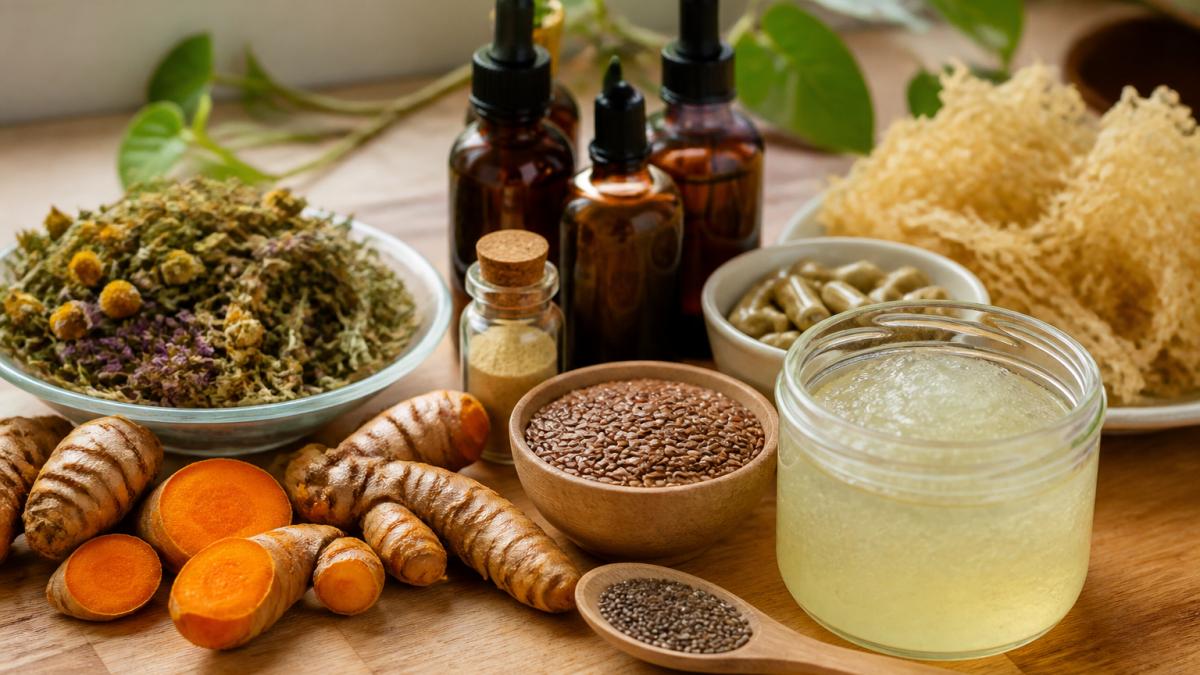
Omega-3 Fatty Acids and Skin Hydration
Omega-3 fatty acids are essential, your body can't produce them, so you must get them from food or supplements.
Omega-3s also reduce inflammation throughout the body. The most bioavailable forms come from fish oil or algae-based supplements.
Typical effective doses range from 1,000 to 3,000 mg daily of combined EPA and DHA (the active omega-3 compounds). Plant-based sources like flax and chia contain ALA, which your body converts to EPA and DHA, but the conversion rate is low, only about 10% (Are all n-3 polyunsaturated fatty acids created equal?). If you're vegetarian, algae-based supplements are your best option.
Probiotics and the Gut-Skin Connection
The gut-skin connection is real. Your gut microbiome influences inflammation, nutrient absorption, and hormonal balance.
Probiotics are beneficial bacteria that support digestion and immune function. Look for multi-strain probiotics with at least 10 billion CFU per dose.
The best probiotics include strains like Lactobacillus acidophilus and Bifidobacterium longum. Pair probiotics with prebiotic foods like garlic, onions, and asparagus, which feed the beneficial bacteria.
Antioxidants: Turmeric, Resveratrol, and Flavonoids
Turmeric contains curcumin, an anti-inflammatory compound. Curcumin is poorly absorbed alone, so look for supplements with black pepper (piperine), which increases absorption by up to 2,000%.
Resveratrol, a flavonoid found in red grapes, berries, and dark chocolate, is a potent antioxidant.
Skin Supplement Safety and Effectiveness: What You Need to Know
Not all supplements are equal, and not all claims are backed by evidence. Before investing, understand dosage, interactions, quality standards, and who should avoid certain supplements.
Advanced Daily Nutrition - Formulated for Her →
Dosage, Timing, and Upper Safety Limits
Every nutrient has a recommended dietary allowance (RDA), the amount most healthy people need daily, and an upper tolerable intake level (UL), the maximum you can safely consume without risking toxicity.
Fat-soluble vitamins like A, D, and E accumulate in your body, so excess can cause problems over time.
Timing matters too. Take fat-soluble vitamins with meals that contain fat for better absorption. Take collagen consistently, preferably at the same time daily.
Common mistake: Assuming more is better. A 2,000 mg dose of vitamin C won't work twice as well as 1,000 mg. Your body has absorption limits; excess gets excreted, wasting money and potentially causing digestive upset.
Medication Interactions and Who Should Avoid Specific Supplements
Certain supplements interact with medications. Vitamin K can reduce the effectiveness of blood thinners like warfarin. High-dose vitamin E can increase bleeding risk if you're on anticoagulants. Certain herbs like St.
If you take any prescription medications, consult your doctor or pharmacist before starting a supplement regimen. This isn't optional, some interactions are serious.
Pregnant and breastfeeding women should be especially cautious. Some supplements are safe during pregnancy, while others can cause problems. Vitamin A in excess can cause birth defects.
People with bleeding disorders should avoid high-dose vitamin E and herbs like turmeric and ginger, which have mild anticoagulant properties. If you have kidney or liver disease, some supplements can accumulate to dangerous levels, professional guidance is essential.
How to Evaluate Supplement Quality
The supplement industry is less regulated than pharmaceuticals, so quality varies widely. Here's how to evaluate what you're buying:
Look for third-party testing. Organizations like NSF International, USP, and ConsumerLab test supplements to verify that they contain what the label claims and are free of contaminants. If a supplement doesn't display one of these certifications, it's a red flag.
Check the ingredient list carefully. Look for bioavailable forms: liposomal vitamin C instead of regular ascorbic acid, hydrolyzed collagen instead of regular collagen, and chelated minerals instead of oxide forms. The form matters as much as the ingredient.
Avoid proprietary blends. If a label lists "Skin Complex Blend" without breaking down individual ingredients and amounts, you don't know what you're actually getting. Transparency is a sign of quality.
Research the brand. Companies that invest in research, publish testing results, and stand behind their products are more trustworthy than fly-by-night operations.
Our Top Picks for Daily Skin and Health Support
At sheshedbeauty4U, we've selected supplements that combine quality ingredients, proven effectiveness, and realistic pricing.
Our top recommendation is Advanced Daily Nutrition - Formulated for Her at $29.99. This multivitamin delivers clinically sourced hydration, nutrition, inner beauty, and energy, all in one easy-to-drink mix, scientifically formulated for maximum absorption.

For targeted skin support, Sea Moss Gel with Bladderwrack and Burdock Root ($44.00) is a super healing blend of sea moss, bladderwrack, burdock root, and an anti-inflammatory herb mixture.
If you're dealing with inflammation or stress, Ashwagandha Root Liquid Extract ($19.99) supports the nervous system and helps aid against anxiety, depression, exhaustion, and poor muscle tone.
These aren't the cheapest options available, but they're formulated with quality in mind.
Common Mistakes to Avoid When Choosing Supplements
Most people make the same mistakes when starting a supplement regimen. Knowing what to avoid saves time and money.
Expecting overnight results. Supplements work gradually.
Buying based on price alone. The cheapest supplement isn't a bargain if it's poorly absorbed or contaminated.
Mixing too many supplements at once. If you start five new supplements simultaneously and your skin improves, which one actually worked? Start with one or two core supplements, give them 8 weeks, then add others if needed. This lets you identify what actually works for your skin.
Ignoring interactions. Taking supplements without considering your medications, allergies, or health conditions is risky. A quick conversation with your pharmacist prevents serious problems.
Choosing supplements based on trends. Just because collagen is trendy doesn't mean it's the right supplement for your specific skin concerns. Acne-prone skin might benefit more from probiotics and omega-3s.
Forgetting about diet. Supplements fill gaps, but they're not replacements for good nutrition. A balanced diet amplifies supplement effectiveness.
Frequently Asked Questions
What natural supplements should I take every day for skin health?
Daily skin support depends on your individual needs. Advanced Daily Nutrition - Formulated for Her ($29.99) combines multiple nutrients in one daily serving. Sea Moss Gel ($32.00) is rich in iodine, potassium, magnesium, manganese, and many other minerals and vitamins. Consult a healthcare provider to avoid interactions with medications you take.
Do skin supplements actually work, and how long before I see results?
Supplements support skin health from the inside, but results depend on consistency, quality, and your baseline health.
Are there supplements I should avoid if I'm taking medications?
Yes. Reishi Mushroom ($15.99) can increase bleeding risk if you take anticoagulants or have bleeding disorders. Milk Thistle ($14.99) should not be used if pregnant. Ashwagandha ($19.99) is contraindicated for people with nightshade sensitivity. Black Seed ($16.99) should be used cautiously during pregnancy and breastfeeding. Always inform your doctor about supplements you plan to take, especially if you're on blood thinners, hormone therapy, or immunosuppressants.
How do I know if a supplement is high quality and actually effective?
Look for products that list all ingredients and their amounts on the label. Third-party testing certifications (NSF, USP) indicate quality control. Avoid vague claims like 'proprietary blends' that hide ingredient doses. Check the company's sourcing: sea moss from specific regions (Jamaica, Massachusetts) and herbs like Rhodiola from Alaska suggest traceability. Read customer reviews for consistency.
Choosing the right natural supplements for skin and health support comes down to understanding your specific needs, selecting quality products, and committing to consistency. The supplements we've highlighted at sheshedbeauty4U are formulated with real ingredients at effective dosages, designed to deliver measurable improvements in skin appearance and overall wellness. Start with one core supplement, give it 8-12 weeks, and track the changes. Your skin will thank you.
