
Layer Cream Blush Over Liquid Foundation
Last Updated: October 23, 2026
Quick Summary
Cream blush liquid foundation combinations work beautifully together because the textures complement each other, with cream blush sitting smoothly on top of liquid foundation without disrupting your base. Apply a pea-sized amount of cream blush to your cheek apples, then blend upward toward your temples using a light tapping motion with your fingertips or a soft brush.
- Start with a hydrated base by moisturizing and waiting one minute before applying foundation.
- Apply liquid foundation evenly with a damp sponge or brush, then wait 30 seconds before adding cream blush.
- Use a pea-sized amount of cream blush and build color gradually rather than applying too much at once.
- Blend cream blush with upward and outward motions using a light tapping motion to avoid disrupting your foundation.
- Set cream blush with translucent powder after blending to help it last longer throughout the day.
Table of Contents
- Why Cream Blush Works Over Liquid Foundation
- Prep Your Skin: Moisturizing and Creating a Hydrated Base
- Apply Your Liquid Foundation First
- Should You Set Foundation Before Cream Blush?
- The Step-by-Step Method for Layering Cream Blush
- Blending Cream Blush Without Disrupting Your Foundation
- How to Make Cream Blush Last Longer Throughout the Day
- Adjusting Your Technique for Different Skin Types and Foundation Finishes
- Frequently Asked Questions
Why Cream Blush Works Over Liquid Foundation
Cream blush liquid foundation combinations are a natural pairing. The textures complement each other, and when applied correctly, cream blush sits beautifully on top of liquid foundation without disrupting your base. This combination creates a seamless, long-lasting flush that looks like it's coming from within your skin.
The key is understanding how cream formulas interact with liquid bases. Cream blush has a thicker consistency that allows it to blend smoothly over a liquid foundation without sliding around or breaking up your coverage. Unlike powder blush, which can sometimes look patchy over liquid foundation, cream blush melds into the base for a more cohesive finish.
Layering cream blush liquid foundation works especially well for creating effortless, natural-looking makeup. Learn how to apply cream blush for a natural look to master the specific techniques that enhance this method.
Prep Your Skin: Moisturizing and Creating a Hydrated Base
Your skin's hydration level directly affects how well cream blush applies and wears. A well-moisturized face gives you a smooth canvas that allows cream products to blend seamlessly without clinging to dry patches or looking streaky.
Begin with a hydrating cleanser to remove impurities without stripping your skin (the American Academy of Dermatology). Follow with a lightweight moisturizer or hydrating serum. Give these products a full minute to absorb into your skin before moving to foundation. This step prevents your base makeup from sitting on top of dry skin, which causes pilling and uneven coverage.
If your skin tends toward dryness, use a hydrating primer after your moisturizer. A primer creates an even, slightly tacky surface that helps both your liquid foundation and cream blush adhere properly and last longer throughout the day.
Apply Your Liquid Foundation First
Your liquid foundation serves as the base layer for cream blush. The Super Serum Silk Natural Glow Hydrating Peptide Foundation offers a luminous finish with hydrating ingredients, while the Hydra Matte Soft Matte Liquid Foundation delivers shine control without drying out your skin.


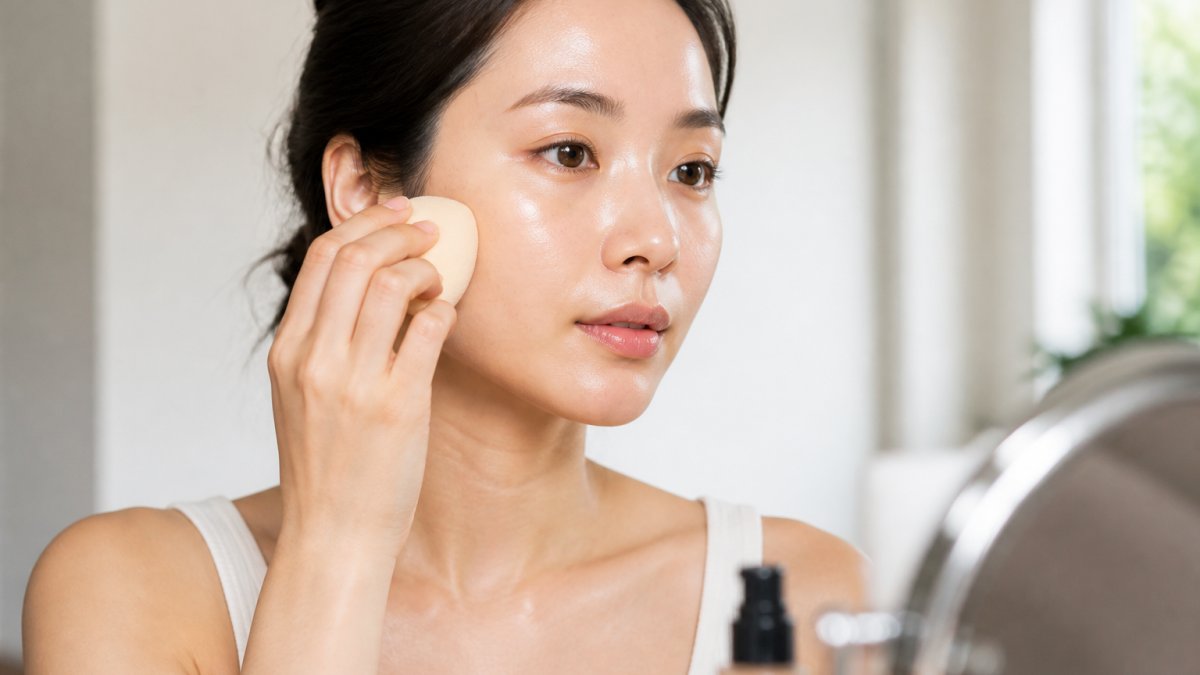
Apply foundation evenly across your face using a damp beauty sponge, brush, or your fingertips. Start in the center of your face and blend outward toward your jawline and temples. Build coverage gradually, adding more foundation only where you need it.
Let your foundation set for about 30 seconds before moving to the next step. This brief pause allows the liquid formula to stabilize slightly, creating a more stable surface for your cream blush.
Should You Set Foundation Before Cream Blush?
Whether to set your foundation before applying cream blush depends on your skin type and the specific products you're using. For most people, skipping the powder at this stage works better.
If you apply powder before cream blush, you create a barrier that can make blending difficult. The powder absorbs some of the cream's natural slip, causing your blush to sit on top of your foundation rather than melding with it.
However, if your skin is very oily or your liquid foundation tends to shift, a light dusting of translucent powder can help stabilize your base.
The best approach is to test both methods on your own skin and see which gives you better results. Most people find that skipping powder before cream blush creates a more seamless, natural-looking finish.
The Step-by-Step Method for Layering Cream Blush
Layering cream blush over liquid foundation is straightforward when you follow a consistent method. Start with a small amount of product, roughly the size of a small pea, on your fingertip or brush.
Apply the cream blush to the apples of your cheeks first. Smile to find this area, then tap the product gently onto the highest point of your cheekbone.
Next, use your finger or a blending brush to gently tap and massage the blush outward toward your temples.
If you want more color intensity, add another small amount and repeat the process. Building color gradually gives you more control than applying a large amount all at once.
How Much Blush to Use and Where to Place It
The ideal amount of cream blush is roughly the size of a pea or a small lentil. This quantity gives you enough pigment to create a noticeable flush without overwhelming your face or making blending difficult.
Placement matters as much as quantity. Apply blush to the apples of your cheeks, the fullest part of your cheek that appears when you smile. From there, blend upward and slightly backward toward your temples. This placement follows your natural bone structure and creates a lifted, youthful appearance.
If you have a smaller face or prefer a more subtle look, use even less product and focus the color on the apples of your cheeks. If you want a more dramatic flush, you can extend the blush slightly higher onto your cheekbones and temples, but always start with less and build from there.
Best Brush for Cream Blush and Other Application Tools
You have three main options for applying cream blush: your fingertips, a dedicated blush brush, or a beauty sponge.
NEW! Get It Chica "CHIQUITA" (Mini-5 Eyeshadows and 1 Blush Multi-Palette) →
Fingertips offer the most control and warmth. Your body heat slightly warms the cream blush, making it easier to blend seamlessly into your foundation.
A blush brush designed for cream products gives you a more precise application and is helpful if you prefer not to use your fingers. The Bronzer Blush Brush works well for this purpose, allowing you to apply and blend cream blush with control.
A beauty sponge like the Foundation Makeup Sponge With Handle can also blend cream blush, though it's not the most efficient tool for this step.
Most makeup artists recommend starting with your fingertips to build confidence and understanding of how cream blush behaves on your skin. Once you're comfortable, you can experiment with brushes and sponges to find your preferred method.
Choose the application method that works best for your comfort level and desired control.
| Application Tool | Best For | Key Advantage |
|---|---|---|
| Fingertips | Beginners and precise control | Most warmth and tactile feedback |
| Blush brush | Precise application without fingers | Soft, densely packed bristles for control |
| Beauty sponge | Alternative blending option | Works when slightly dampened first |
Blending Cream Blush Without Disrupting Your Foundation
The biggest concern when blending cream blush over liquid foundation is accidentally disturbing your base makeup. The key is using a light touch and the right blending motion.
Tap and press rather than swipe. Use your fingertip or brush to gently press the blush into your skin in a stippling motion. This method moves the color around without dragging across your foundation, which reduces the risk of pilling or moving your base.
Blend in upward and outward motions, following the natural lift of your cheekbone. Avoid blending downward or in circular motions, which can disrupt your foundation more easily. The upward motion is gentler on your base and creates a more flattering finish.
If you notice your foundation shifting as you blend, stop and let the area settle for a few seconds. Sometimes a brief pause allows everything to resettle into place.
How to Make Cream Blush Last Longer Throughout the Day
Cream blush generally lasts longer than powder blush because it adheres directly to your skin rather than sitting on top of powder. However, several techniques help extend its wear time even further.
Set your cream blush with a light layer of translucent powder after it's fully blended. Use a fluffy powder brush and apply the powder with a gentle pressing motion. This step locks the blush in place without creating a heavy, powdery appearance.
Keep your skin hydrated from within by drinking water throughout the day. Well-hydrated skin holds makeup better and doesn't produce excess oil that breaks down your blush.
Consider using a setting spray after your complete makeup application. A light mist of setting spray helps all your products, foundation, blush, and powder, stay in place longer. Allow the spray to dry completely before touching your face.
Adjusting Your Technique for Different Skin Types and Foundation Finishes
Your specific skin type and the finish of your liquid foundation influence how you should apply and blend cream blush.
For oily skin: Use a matte or satin-finish foundation like the Hydra Matte Soft Matte Liquid Foundation, which provides a stable base for cream blush.
For dry skin: A dewy or hydrating foundation works best.
For combination skin: Match your foundation finish to the area you're working on.
For sensitive skin: Choose gentle, fragrance-free products and test any new blush on a small area first. Cream formulas are generally gentler than powders, but always patch test before full application.
The foundation finish also matters. Over a dewy finish, cream blush blends easily and creates a cohesive glow.
Creating a polished makeup look doesn't require complicated techniques or multiple products.
Frequently Asked Questions
How do you apply cream blush over liquid foundation without moving it?
Use a light hand and apply cream blush in small dots to the apples of your cheeks, then blend gently with a damp beauty sponge or brush using stippling motions instead of dragging. Avoid heavy pressure that can disturb the foundation layer beneath. If your liquid foundation is fully set, cream blush will sit on top without disruption. For extra security, apply a thin layer of setting powder before blending your cream blush, which creates a barrier that protects your base.
Should I set my foundation before cream blush?
Setting foundation before cream blush is optional but recommended if you have oily or combination skin. A light powder layer creates a grip for cream blush and helps it blend without dragging your foundation. For dry skin, skip the powder and apply cream blush directly to your liquid foundation for a seamless, hydrated finish. If you do set first, use a minimal amount of powder and focus only on your T-zone to avoid a heavy, cakey appearance.
What's the best tool for blending cream blush over foundation?
A damp beauty sponge is ideal for blending cream blush over liquid foundation because it picks up minimal product and blends with a stippling motion that won't disturb your base. Fluffy blending brushes work well too, especially synthetic ones that don't absorb product. Your fingers are also effective for cream blush, the warmth of your skin helps it meld seamlessly into foundation. Avoid dense brushes, which can move your foundation or apply too much blush at once.
How can I make cream blush last longer throughout the day?
Layer your cream blush strategically: apply it over a hydrated, fully set liquid foundation base, then set it lightly with a translucent powder to lock it in place. Choose a hydrating liquid foundation like our [Breathable Full-Coverage Foundation - Dewy Finish, Hydrating, Vegan, Gluten-Free (SPF 15)](https://sheshedbeauty4u.com/products/breathable-full-coverage-foundation-dewy-finish-hydrating-vegan-gluten-free-spf-15), which keeps your skin plump and helps blush adhere better. Cream blush formulas with satin or matte finishes typically last longer than shimmery versions. For maximum wear, apply your cream blush before setting powder, then dust powder over it to seal everything in place.
