
Best Skincare Routine for Sensitive Aging Skin
Table of Contents
- Why Sensitive Aging Skin Needs a Specialized Routine
- Signs of Skin Barrier Damage in Aging Skin
- Essential Ingredients for Aging Skin Without Irritation
- How to Layer Skincare for Sensitive Skin
- Gentle Retinol Alternatives for Sensitive Skin
- Morning vs. Evening Skincare Steps for Mature Sensitive Skin
- Sun Protection and SPF Requirements for Aging Skin
- Conclusion
Last Updated: August 15, 2026
Why Sensitive Aging Skin Needs a Specialized Routine
Aging skin faces reduced collagen production, slower cell turnover, and a weakening barrier. Add sensitivity, and you're dealing with complications that generic routines cannot address. The challenge: the most effective anti-aging ingredients, retinoids, vitamin C, exfoliating acids, are also most likely to trigger irritation in sensitive skin. Your barrier is already compromised by hormonal shifts, environmental stress, and sun exposure, making even "gentle" actives problematic.
Sensitive aging skin isn't just "aging skin that reacts badly." It's a specific intersection requiring ingredient selection, layering strategy, and application techniques designed for this combination. At sheshedbeauty4U, we've curated products specifically for this demographic.
You don't have to choose between addressing aging and protecting sensitivity. You need to be strategic about ingredient selection, concentration, and timing. Below, we'll walk through signs of barrier damage, essential ingredients that work for this combination, and the exact layering sequence that prevents irritation while delivering real anti-aging results.
Signs of Skin Barrier Damage in Aging Skin
Your skin barrier is your first line of defense against environmental stressors, transepidermal water loss, and irritant penetration. Recognizing damage means you can address it before it worsens.
The most obvious sign is persistent dryness unresponsive to basic moisturizers. This signals ceramide and lipid depletion, your skin cannot retain water at the cellular level. You'll notice tight, flaky patches, especially around the eyes and mouth.
Redness and visible irritation indicate barrier compromise. If your skin flushes easily or shows persistent redness even without active inflammation, your barrier is compromised. This is especially common in mature skin because the stratum corneum naturally has fewer lipids and less structural integrity than it did decades ago.
Increased sensitivity to previously-tolerated products is a red flag. If a serum that never bothered you suddenly causes stinging, your barrier integrity has shifted. The damaged lipid matrix allows deeper ingredient penetration, causing irritation.
A tight, uncomfortable feeling after cleansing, even with gentle cleansers, indicates barrier damage. A healthy barrier should feel supple immediately after washing.
| Barrier Damage Sign | What It Means | Action to Take |
|---|---|---|
| Persistent dryness unresponsive to moisturizer | Ceramide and lipid depletion | Focus on barrier repair; hold actives |
| Redness and flushing | Compromised protective layer | Use fragrance-free, hypoallergenic products |
| Stinging from previously-tolerated products | Increased permeability | Simplify routine; introduce products slowly |
| Tight feeling post-cleanse | Reduced lipid barrier | Use hydrating cleanser; apply serum immediately |
| Visible flaking or rough texture | Surface barrier damage | Gentle exfoliation with lactic acid; intensive hydration |
Essential Ingredients for Aging Skin Without Irritation
Finding ingredients that address wrinkles, fine lines, and elasticity loss without triggering sensitivity is critical. The right ingredients work at the cellular level to stimulate collagen while strengthening your barrier.
Hyaluronic acid is non-negotiable for sensitive aging skin. This humectant pulls water into skin and holds it there, addressing both age-related hydration deficits and transepidermal water loss. Apply to damp skin so it binds to water. The Sunrise Hyaluronic Acid Serum for Sensitive Skin delivers hyaluronic acid in multiple molecular weights while niacinamide strengthens your lipid barrier simultaneously.

Niacinamide (vitamin B3) is one of the few actives that improves skin barrier function while delivering anti-aging benefits. It stimulates ceramide and lipid production, strengthens the barrier, reduces inflammation, and minimizes pores. Most products deliver 4-5% niacinamide, the concentration shown in research to be effective without irritation.
Ceramides are the structural lipids your barrier needs. As you age, ceramide production declines naturally, making mature skin drier and more reactive. Topical ceramides help restore the lipid barrier, reduce water loss, and calm irritation. Look for ceramide NP and ceramide AP or ceramide-mimicking ingredients like CeraLipids.
Peptides stimulate collagen and elastin production without the irritation of stronger actives like retinoids. They're particularly effective for fine lines, loss of firmness, and sagging. The Enriching Ageless Rejuvenate Face Serum uses fermented peptides that signal your skin to increase collagen production.
Antioxidants like vitamin E and resveratrol protect skin from oxidative stress caused by UV exposure and pollution, major drivers of visible aging. They work defensively while still addressing photoaging and fine lines.
Gentle exfoliants matter more than you think. While physical scrubs and harsh chemical exfoliants damage a compromised barrier, gentle chemical exfoliation with lactic acid supports cell turnover and collagen production without stripping. Lactic acid is milder than glycolic acid and works well for sensitive skin. The Gentle Exfoliating Face Scrub combines biodegradable jojoba beads with lactic acid and hyaluronic acid for gentle exfoliation that hydrates.
Effective sensitive aging skin routines understand that you're not choosing between barrier repair and anti-aging. Hyaluronic acid hydrates AND supports collagen. Niacinamide repairs your barrier AND improves fine lines. Peptides stimulate collagen AND reduce inflammation.
How to Layer Skincare for Sensitive Skin
Layering determines absorption, efficacy, and whether you'll experience irritation. For sensitive aging skin, the wrong order can neutralize actives or trigger sensitivity reactions.
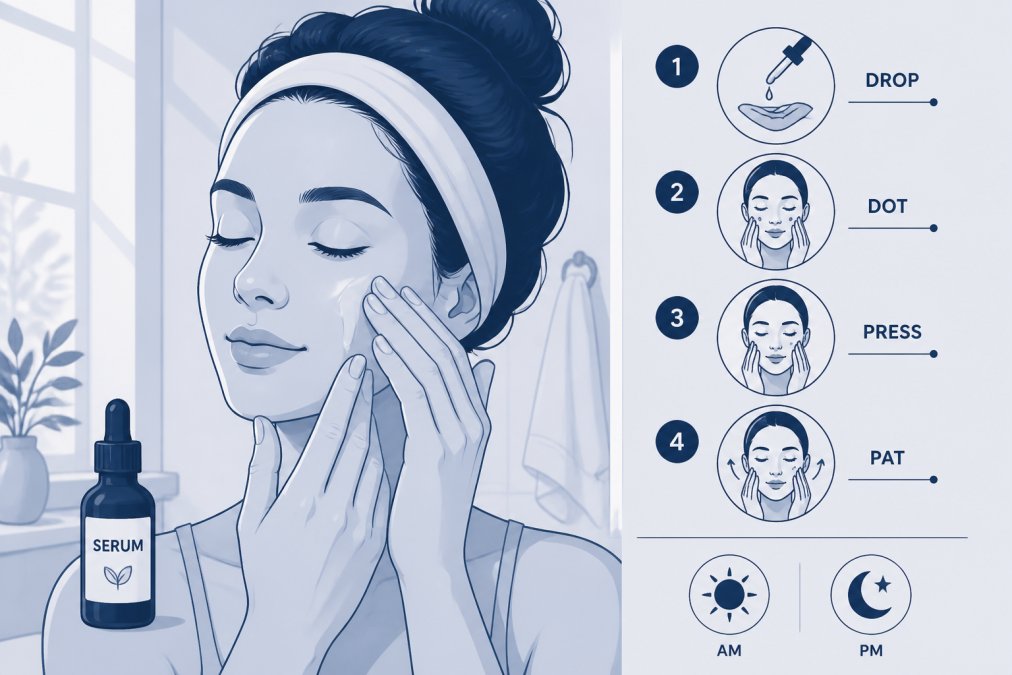
Apply products from thinnest to thickest consistency, waiting 60-90 seconds between layers for absorption. This allows each product to penetrate before the next seals it in.
Start with a gentle cleanser. The Gentle Hydrating Facial Cleanser removes makeup, dirt, and impurities without disrupting your barrier. Use lukewarm water and massage gently for 20-30 seconds.
Apply your hydrating serum to damp skin. Damp skin allows hyaluronic acid to bind to water molecules, maximizing hydration. Apply 2-3 drops using gentle patting motions. Wait 60-90 seconds for absorption.
Apply treatment serums containing peptides, niacinamide, or antioxidants. The Enriching Ageless Rejuvenate Face Serum goes here. A few drops suffice. Wait 60-90 seconds.
Apply eye cream using your ring finger (which applies least pressure) and gently tap around the orbital bone. The Enriching Ageless Rejuvenate Eye Cream for Mature Skin addresses fine lines and dark circles without irritation.

Finally, apply your moisturizer to seal in all hydration and actives. The Best Moisturizer for Mature Skin contains CeraLipids, hyaluronic acid, and peptides to address multiple aging concerns while strengthening your barrier.

The entire routine should take 5-7 minutes. Rushing defeats the purpose. Each product needs time to absorb before the next application.
| Step | Product Type | Wait Time | Why This Order |
|---|---|---|---|
| 1 | Gentle cleanser | 1 minute after rinsing | Removes impurities without stripping |
| 2 | Hydrating serum | 60-90 seconds | Thinnest consistency; allows water binding |
| 3 | Treatment serum | 60-90 seconds | Active ingredients penetrate before occlusion |
| 4 | Eye cream | 60-90 seconds | Delicate area needs targeted treatment |
| 5 | Moisturizer | Apply immediately | Seals in all previous layers |
Common mistakes: applying moisturizer too quickly after serums (preventing absorption) and using too much product at each step. For serums, 3-4 drops suffice for your entire face.
Gentle Retinol Alternatives for Sensitive Skin
Retinoids are the gold standard for wrinkles and fine lines, but they're the most common cause of sensitivity flares in mature skin. The irritation comes from dramatically increased cell turnover, which can overwhelm a compromised barrier.
If your barrier is healthy after 4-6 weeks of barrier repair, you can introduce a gentle retinol alternative. These stimulate collagen and cell turnover without the irritation profile of prescription retinoids.
Retinol esters (like retinyl palmitate) are the mildest option. They're converted to retinol, then retinoic acid, making them gentler than pure retinol. Expect results in 8-12 weeks. Start with 0.3% retinol ester, 1-2 times per week.
Bakuchiol is a plant-derived alternative delivering retinoid-like results without irritation. It increases cell turnover, stimulates collagen, and improves fine lines without redness or peeling. Many tolerate bakuchiol better than retinol, making it ideal for sensitive aging skin. Use nightly without the same barrier-disruption risk.
Time-released retinol formulations encapsulate retinol in microbeads that release slowly, reducing irritation while delivering results.
Introduce any retinoid alternative slowly. Start with 1-2 applications per week, gradually increasing frequency as your skin adapts. Always use retinoids at night (they increase sun sensitivity). Apply to completely dry skin, damp skin increases penetration and irritation risk. Wait 20 minutes after cleansing.
If you experience persistent redness, burning, or peeling beyond the first 1-2 weeks, reduce frequency immediately. Some irritation is normal during adjustment, but persistent discomfort means your barrier isn't ready. Return to barrier repair for 2-4 weeks before trying again.
Morning vs. Evening Skincare Steps for Mature Sensitive Skin
Morning and evening routines have different goals. Morning skincare focuses on protection and preparation. Evening skincare focuses on repair and active treatment. For sensitive aging skin, this distinction is critical.
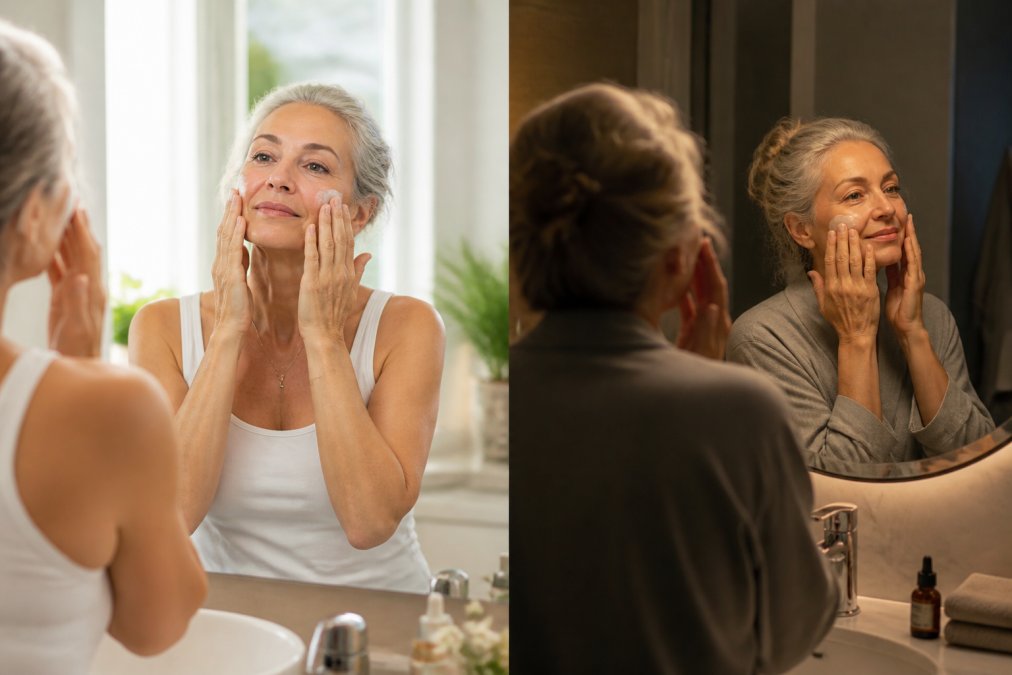
Morning Routine (5 minutes):
Cleanse with a gentle, hydrating cleanser. The Gentle Hydrating Facial Cleanser cleanses without disrupting your barrier.
Apply your hydrating serum to damp skin.
Apply eye cream to address dark circles and fine lines before makeup.
Apply a lightweight moisturizer that absorbs quickly without interfering with makeup or sunscreen.
Apply sunscreen with SPF 30 or higher.
Evening Routine (7-10 minutes):
Cleanse thoroughly to remove makeup, sunscreen, and environmental pollution.
Apply your hydrating serum to damp skin.
Apply treatment serums with peptides, niacinamide, or antioxidants. Evening is when you introduce actives since treated skin won't be exposed to UV.
Apply eye cream.
Apply a richer moisturizer. The Best Moisturizer for Mature Skin is designed for evening use and supports overnight barrier repair.
Optional: Apply a gentle exfoliant 1-2 times per week. Use the Gentle Exfoliating Face Scrub on alternate evenings.
Optional: Introduce a retinol alternative on non-exfoliation evenings, 1-2 times per week once your barrier is healthy.
Morning products should be lightweight and fast-absorbing. Evening products can be richer and more occlusive since you're not applying makeup or sunscreen over them.
Sun Protection and SPF Requirements for Aging Skin
Sun damage is the primary cause of visible aging. UV exposure triggers collagen breakdown, creates free radicals that damage skin cells, and causes hyperpigmentation and age spots. For aging skin, sun protection is the foundation of any anti-aging routine.
Damage from sun exposure is cumulative and often invisible until years later. By the time you see age spots and fine lines, cellular damage has already occurred. Prevention is infinitely easier than correction.
Use SPF 30 minimum daily, even on cloudy days and indoors. UV rays penetrate clouds and glass, so you're exposed year-round. Reapply every 2 hours if outdoors, or after swimming or sweating.
For sensitive aging skin, choose mineral sunscreens (zinc oxide or titanium dioxide) over chemical sunscreens. Mineral sunscreens reflect UV rays and sit on skin, making them less likely to trigger irritation. Chemical sunscreens absorb into skin and convert UV rays to heat, which can irritate sensitive skin.
Look for sunscreens labeled "hypoallergenic" and "fragrance-free." Avoid oxybenzone or avobenzone, which are more likely to cause irritation. The Sunrise Hyaluronic Acid Serum for Sensitive Skin includes SPF 30 with mineral sun protection.
Apply sunscreen as the final step of your morning routine after all serums and moisturizers have absorbed. Use about 1/4 teaspoon for your face and neck. Most people apply too little, which reduces effectiveness significantly.
Don't skip sunscreen on days you're indoors. Window glass blocks UVB rays but not UVA rays, so you're still exposed to aging rays while working at a desk near a window.
A best skincare routine for sensitive aging skin 2026 isn't about expensive products or 10-step routines. It's about understanding your specific needs: barrier repair, hydration, gentle anti-aging actives, and products formulated for this exact combination. sheshedbeauty4U's Radiant Beauty Essentials collection addresses all these concerns with products designed specifically for mature, sensitive skin. Start with the Gentle Hydrating Facial Cleanser, Sunrise Hyaluronic Acid Serum for Sensitive Skin, and Best Moisturizer for Mature Skin as your foundation, then layer in additional products as your barrier strengthens. Your skin will respond faster when using products specifically formulated for sensitive aging skin rather than forcing generic anti-aging routines to work for a skin type they weren't designed for.
Frequently Asked Questions
What ingredients should sensitive aging skin avoid?
Sensitive aging skin benefits from avoiding harsh actives and irritants. Skip strong acids (glycolic acid at high concentrations), fragrance, alcohol denat, sulfates, and essential oils. Retinoids can work, but start low and go slow. Avoid products with drying ingredients like benzoyl peroxide unless specifically recommended. Focus instead on ceramides, hyaluronic acid, niacinamide, and gentle peptides that support your skin barrier and collagen production without triggering reactivity.
Can you use retinol if you have sensitive skin?
Yes, but with caution. Retinol and retinoids can benefit aging skin by boosting collagen and cell turnover, but sensitivity requires a gradual approach. Start with the lowest strength (0.25% retinol or retinol alternatives like bakuchiol) once or twice weekly. Apply to dry skin, wait 20 minutes after cleansing, and use a rich moisturizer afterward. If irritation develops, reduce frequency or switch to gentler alternatives like retinol esters or peptides that support skin renewal without the harshness.
How often should you exfoliate sensitive aging skin?
Exfoliate gently and infrequently. Sensitive aging skin typically tolerates physical exfoliation (soft scrubs with biodegradable beads) once weekly, or chemical exfoliation (lactic acid or gentle AHAs) once to twice weekly at low concentrations. Never exfoliate on the same days you use actives like retinol. Over-exfoliation damages the skin barrier, accelerating visible aging. If your skin feels tight, red, or reactive, skip exfoliation entirely for a week and focus on hydration and barrier repair.
How do I know if my skincare routine is actually working for sensitive aging skin?
Results take time. After 4-6 weeks of consistent use, you should notice smoother texture, reduced redness, and improved hydration. Fine lines may appear softer as skin plumps with moisture. Your skin should feel comfortable, not tight or irritated. If you see persistent redness, flaking, or increased sensitivity after two weeks, your routine is too strong. Adjust by removing one active product and simplifying to cleanser, serum, moisturizer, and SPF. Real results come from barrier health first, then gradual introduction of anti-aging actives.
This article was written using GrandRanker