
Summer Workwear Without a Blazer: 7 Polished Alternatives
Table of Contents
- Why Blazers Don't Work for Summer Workwear
- Business Casual Without a Blazer: What Actually Works
- Lightweight Work Jackets That Replace the Blazer
- Summer Work Outfits for Women: Complete Styling Formulas
- What to Wear to Work in Hot Weather: Fabric and Breathability Matter
- Dress Codes and When Each Alternative Works
- Common Mistakes to Avoid When Skipping the Blazer
- Frequently Asked Questions
Last Updated: October 6, 2026
Why Blazers Don't Work for Summer Workwear
Traditional blazers were designed for controlled office environments with air conditioning. They trap heat, restrict movement, and feel suffocating when temperatures climb.
The real challenge isn't finding something to wear. It's finding alternatives to traditional blazers for summer workwear that maintain professionalism without the bulk. You need pieces that breathe, layer elegantly, and transition seamlessly from morning meetings to evening plans.
The solution isn't complicated: swap the blazer for lighter layers, breathable fabrics, and structured pieces that create the same visual impact without the heat penalty. This guide covers exactly which alternatives work, when to wear each one, and how to style complete outfits that look intentional, not underdressed.
Business Casual Without a Blazer: What Actually Works
Business casual without a blazer requires a shift in thinking. You're not removing structure, you're replacing it with pieces that achieve the same polished effect through different means. The goal remains the same: look professional, put-together, and intentional.
The Core Pieces You Need
Three foundational elements replace the blazer's role in business casual outfits. First, a structured top that commands attention: button-up shirts, polo shirts, or fine-gauge knits in neutral colors.
Second, a lightweight layer that adds dimension: cardigans, overshirts, or chore jackets worn open or half-buttoned.
Third, tailored bottoms that ground the look: dress trousers, structured shorts, or midi skirts in neutral tones. Fit matters enormously here, well-fitted pieces read as intentional; poorly fitted ones read as casual.
The combination of these three elements creates the same visual hierarchy as a blazer, but with far better breathability. You're building an outfit through layering rather than relying on a single heavy piece.
Lightweight Work Jackets That Replace the Blazer
Lightweight work jackets serve the exact function of a blazer while solving the heat problem. They add structure, create a defined silhouette, and elevate basic pieces into polished outfits. The difference is material: linen blends, cotton, and technical fabrics replace wool and wool-blend suiting.
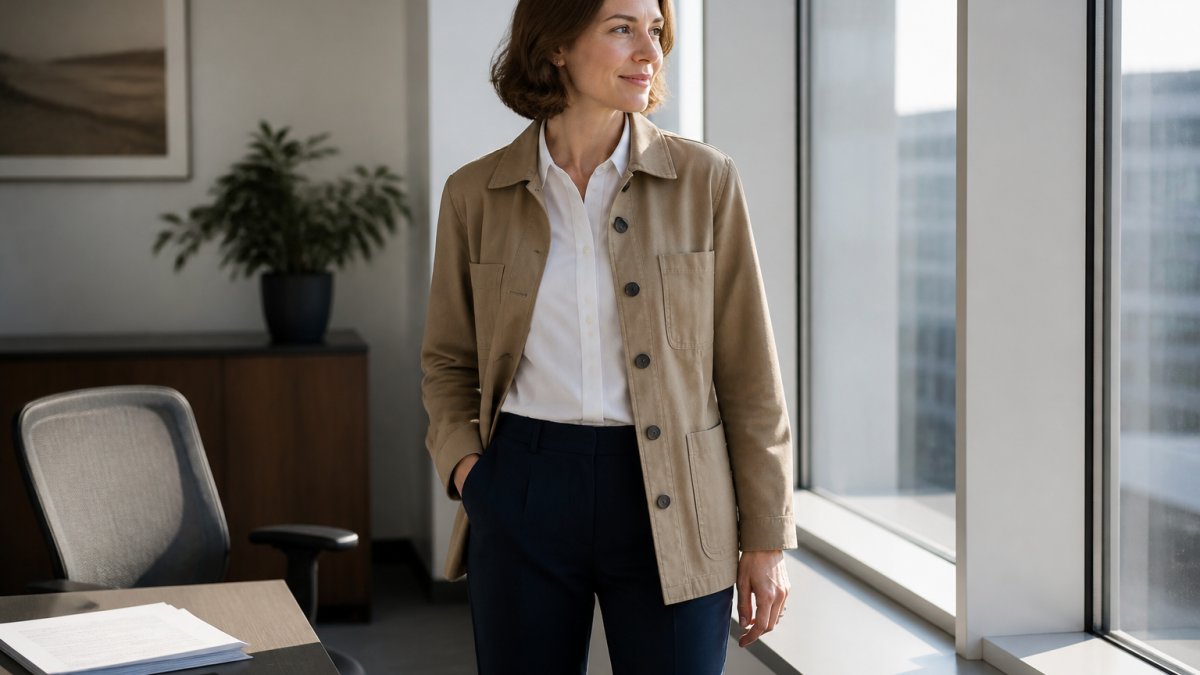
Chore Jackets and Chore Coats
Chore jackets have become the modern alternative to blazers for summer workwear, especially in business casual and creative environments. The appeal lies in their versatility: wear them over button-ups, polo shirts, or fine-gauge knits.
Look for chore jackets in neutral colors, tan, olive, navy, or black.
Pair a chore jacket with dress trousers and a crisp shirt for polished office settings. Layer it over a simple tee and structured shorts for smart casual environments.
Overshirts and Fine-Gauge Knits
Overshirts function as a lighter alternative to chore jackets, offering structure without the weight. They're essentially oversized button-up shirts in structured fabrics, perfect for layering over tees or worn alone as a top layer.
The distinction matters: an overshirt is meant to be worn open or half-buttoned as a layer, while a fine-gauge knit works as a standalone piece.
Choose overshirts in linen blends or cotton for summer. Pair them with simple tees underneath and dress trousers for a polished look. Fine-gauge knits in merino wool or cotton blends offer natural temperature regulation, they keep you warm without overheating.
Cardigans for Layering
Cardigans represent the most versatile summer workwear alternative. They layer effortlessly over any top, add visual interest through color and texture, and can be removed if you're moving between temperature-controlled spaces.
The best cardigans for work feature finished edges, a structured fit, and neutral or professional colors. Length matters: aim for cardigans that hit at your hip or just below, creating a defined silhouette. Oversized cardigans can work in creative environments but read as less polished in traditional offices.
Layer a cardigan over a button-up shirt and dress trousers for classic business casual. Wear it over a simple tee with structured shorts for smart casual settings.
Summer Work Outfits for Women: Complete Styling Formulas
Complete outfits require intentional combinations of tops, layers, and bottoms. The goal is creating visual cohesion while staying cool. Three proven formulas work across most office environments.
The Polished Neutral Combination
Start with a white or cream button-up shirt as your base. Add a lightweight layer, a tan chore jacket, olive overshirt, or fine-gauge cardigan in a neutral tone. Finish with navy or black dress trousers and simple shoes.
This combination works in any business casual environment. The neutral palette reads as intentional and professional. The layering creates dimension without adding bulk. You can remove the outer layer if you're moving between heated and air-conditioned spaces throughout the day.
Accessorize minimally: a simple watch, understated jewelry, and professional shoes complete the look. The outfit's polish comes from fit and fabric quality, not from accessories.
The Elevated Casual Look
Begin with a crisp polo shirt or fine-gauge knit in a solid color. Layer an overshirt in a complementary tone worn open or half-buttoned. Add structured shorts that hit just above the knee or dress trousers in a lighter fabric like linen.
This formula works well in creative offices and smart casual environments. The polo or knit reads as more relaxed than a button-up, while the layered overshirt elevates the overall look.
The elevated casual approach allows for slightly more personality in color choices. A sage green or dusty blue overshirt over a cream polo creates visual interest while remaining professional.
The Monochrome Office Chic Approach
Wear an all-black outfit: black button-up shirt, black chore jacket or cardigan, black dress trousers. This creates a sleek, intentional silhouette that reads as highly polished across any office setting.
Monochrome dressing simplifies the styling process while creating maximum visual impact. The all-black palette works in traditional offices, creative environments, and everything in between. Vary texture through fabric choices, a matte button-up shirt, structured chore jacket, and smooth trousers create visual interest within the same color family.
This formula is particularly effective for hot weather because all-black fabrics in lightweight materials (linen blends, cotton) stay cool while creating a powerful professional presence.
What to Wear to Work in Hot Weather: Fabric and Breathability Matter
Fabric choice determines whether you stay comfortable or overheat. Not all business casual fabrics are created equal. The right materials make alternatives to traditional blazers for summer workwear genuinely wearable rather than just theoretically cool.
Breathable Fabrics That Keep You Cool
Linen is the gold standard for hot-weather workwear. It breathes exceptionally well, wicks moisture, and develops a lived-in elegance that improves with wear.
Cotton remains a reliable choice, particularly in lighter weights. Look for cotton that's been treated for wrinkle resistance rather than heavy cotton canvas.
Technical fabrics designed for performance workwear offer another option. These often incorporate moisture-wicking properties and stretch for comfort. They're particularly useful for chore jackets and overshirts where you want structure without bulk.
Avoid heavy wool blends, thick cotton canvas, and synthetic fabrics that don't breathe. These trap heat and defeat the purpose of choosing alternatives to traditional blazers for summer workwear.
Color and Heat Management
Color affects how much heat your clothing absorbs. Lighter colors reflect heat and keep you cooler; darker colors absorb it. However, professional considerations sometimes outweigh thermal comfort, all-black outfits remain appropriate even in summer.
The practical compromise: wear light-colored tops and layers with darker bottoms. A cream or white button-up shirt under a tan chore jacket with navy trousers balances heat management with professional appearance. This combination keeps you cooler than all-dark clothing while maintaining polish.
Consider your specific office environment. If you spend most of your day in air-conditioned spaces, color choice matters less. If you commute in heat or spend time in non-climate-controlled areas, lighter colors genuinely improve comfort.
Dress Codes and When Each Alternative Works
Different office environments have different expectations. Understanding your specific dress code determines which alternatives to traditional blazers for summer workwear actually fit your workplace.
Business Casual Offices
Business casual offices expect structured, polished pieces without full suiting. Chore jackets, fine-gauge cardigans, and tailored overshirts all work here. Pair them with dress trousers, structured shorts, or midi skirts in neutral colors.
Button-up shirts should be crisp and well-fitted. Polo shirts work in most business casual environments. Avoid graphic tees, athletic wear, and anything that reads as casual rather than professional.
In business casual settings, the layering approach matters. A visible layer (chore jacket, cardigan, or overshirt) signals intentionality and polish. A single shirt without layering can read as underdressed.
Smart Casual Environments
Smart casual allows more flexibility with color, pattern, and piece selection. Overshirts in interesting colors or subtle patterns work well. Fine-gauge knits in jewel tones or patterns offer more personality than business casual allows.
Structured shorts become appropriate here, particularly if they hit just above the knee. Linen trousers in lighter shades work alongside traditional neutral options. The key remains structure and fit, pieces should look intentional, not thrown together.
Chore jackets in non-traditional colors (sage, rust, warm gray) fit smart casual environments while maintaining the professional polish that alternatives to traditional blazers for summer workwear provide.
Creative and Tech Workplaces
Creative and tech environments often embrace more casual dress codes. Overshirts in interesting colors or patterns become appropriate. Cardigans can be oversized or feature more personality through texture or color.
Even in these relaxed environments, fit and finish matter. A well-fitted oversized cardigan reads as intentional; a poorly fitting one reads as sloppy. Quality fabrics and finished edges distinguish professional casual pieces from everyday loungewear.
The fundamental principle remains consistent: layer intentionally, choose quality fabrics, and ensure pieces fit well. These elements create polish across any dress code level.
Common Mistakes to Avoid When Skipping the Blazer
The most frequent error is underdressing. Removing a blazer without replacing it with an intentional layer makes outfits feel incomplete.
Fit problems compound this issue. Oversized pieces that lack structure read as casual rather than professional.
Fabric choices matter more than most people realize. Cheap, thin fabrics in lightweight pieces read as low-quality.
Mixing too many colors or patterns creates visual chaos. Stick to neutral base colors with one accent color or subtle pattern.
Finally, avoid treating summer workwear alternatives as an excuse to dress down.
Summer workwear doesn't require sacrificing style or professionalism. Alternatives to traditional blazers for summer workwear let you stay cool while looking put-together.
Frequently Asked Questions
Can I wear a chore jacket to a business casual office?
Yes, chore jackets work well for business casual environments when styled correctly. Pair a structured chore coat in neutral tones (tan, navy, or black) with dress trousers and a polished button-up shirt. The key is choosing a fitted version with finished edges and a clean silhouette. Avoid oversized or heavily distressed styles. Chore jackets offer the layer and structure that business casual requires without the formality of a traditional blazer, making them ideal for summer workwear.
What's the best fabric for summer work outfits for women?
Cotton, linen blends, and lightweight performance fabrics are your best choices for staying cool at work. Cotton breathes naturally and is durable for frequent washing, while linen blends offer wrinkle resistance and moisture-wicking properties. Look for button-up shirts and dress trousers labeled as 'breathable' or 'moisture-wicking.' Fine-gauge knits in cotton or cotton-blend cardigans also work well for layering without adding bulk. Avoid heavy synthetics that trap heat; opt for natural fibers or technical blends designed for warm weather.
What to wear to work in hot weather if I need to look polished?
Focus on fitted silhouettes, neutral color palettes, and lightweight layers. A crisp button-up shirt in white, cream, or light blue paired with tailored dress trousers creates an instantly professional look. Add a lightweight overshirt or fine-gauge cardigan in a complementary shade for structure and polish. Choose fabrics that breathe, keep colors cool-toned, and ensure all pieces fit well at the shoulders and waist. Finished hems and clean lines matter more than fabric weight when projecting professionalism in heat.
Are there blazer alternatives that work for different body types?
Absolutely. Chore jackets, overshirts, and cardigans all come in various fits and silhouettes to suit different body types. Chore jackets work well for pear-shaped figures when paired with darker trousers. Overshirts in structured fabrics flatter apple-shaped bodies by skimming the midsection. Cardigans offer flexibility for all shapes when chosen in fitted or semi-fitted cuts rather than oversized styles. The key is choosing pieces with proper shoulder seams that align with your shoulders and lengths that balance your proportions, no single alternative works universally, so try options that match your specific frame.