
Sustainable Beauty Routine for Beginners
Table of Contents
- What Makes a Sustainable Beauty Routine Different
- Step 1: Audit Your Current Products and Identify Waste
- Step 2: Make Eco-Friendly Skincare Swaps That Work
- Step 3: Choose Refillable and Plastic-Free Alternatives
- Step 4: Build a Minimalist Beauty Routine and Understand the Benefits
- Step 5: Learn How to Recycle Beauty Product Packaging
- Step 6: Track Your Progress and Adjust Your Routine
- Common Mistakes to Avoid When Starting Out
- Frequently Asked Questions
Last Updated: September 29, 2026
What Makes a Sustainable Beauty Routine Different
A sustainable beauty routine prioritizes eco-friendly products, waste reduction, and conscious consumption by rethinking how you buy, use, and dispose of beauty items to minimize environmental impact.
A sustainable beauty routine reduces waste, cuts unnecessary products, and often saves money by prioritizing longevity, refills, and products that actually work for your skin, not fancy green brands.
The sustainable approach comes down to three things: choosing products that last, eliminating packaging waste, and understanding what you actually need. Audit what you have, identify waste, make intentional swaps, and build a routine that works for your skin.
Beauty waste adds up fast, single-use cotton pads, plastic bottles, and unfinished products pile up in landfills. A conscious beauty routine cuts that dramatically without requiring zero-waste perfection.
Step 1: Audit Your Current Products and Identify Waste
Pull everything out of your bathroom and identify what you actually use versus what sits untouched. This reveals where you're throwing money away.
Check expiration dates and toss anything past shelf life. Identify your biggest waste culprits: single-use cotton pads, plastic bottles, unused products, oversized bottles, and duplicates. Write down which create the most packaging waste, these are your priority targets. Add up your beauty spending from the last three months; waste and overbuying are likely bigger expenses than you realized.
Step 2: Make Eco-Friendly Skincare Swaps That Work
Making swaps means replacing high-waste items with products that last longer, work better, or eliminate packaging, often at the same or lower cost than what you're currently buying.
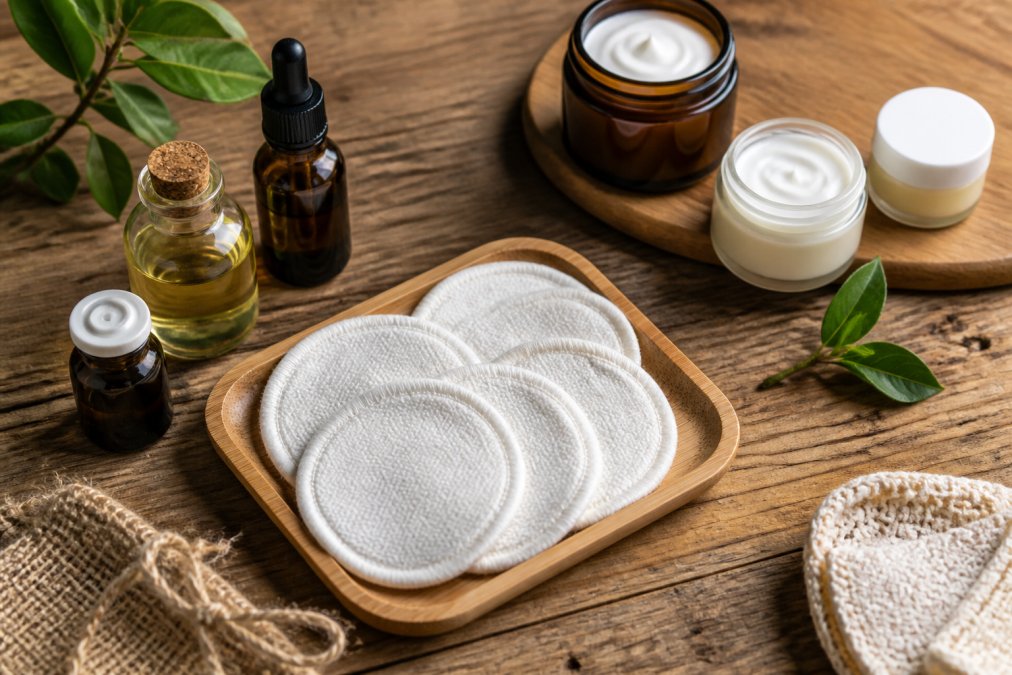
Sustainability is often framed as premium, but sustainable products save money over time because they last longer and reduce waste.
Disposable makeup wipes end up in landfills. Reusable bamboo pads can last 2-3 years, replacing many packs of wipes. The upfront cost for reusable options is often higher, but the per-use cost can be dramatically lower. The barrier isn't price, it's the mental shift from "cheap and disposable" to "durable and reusable."

Prioritize products you buy most frequently or that create the most packaging waste. High-impact swaps: makeup removal (eliminates hundreds of items yearly, pays for itself in 2-3 months), cleansing (solid bars last 2-3 times longer), and moisturizer (refillable containers reduce waste and cost less per ounce). Low-impact swaps like specialty serums, primers, and masks can wait. Focus on daily-use products first.
Calculate cost per use, not sticker price. For reusable items, divide upfront cost by lifespan. Reusable options are often cheaper long-term.
Some brands charge more for "eco-friendly" labels without actual sustainability benefits. Don't pay for the label. Pay for real features: refillability, durability, minimal packaging, or third-party certifications.
Don't swap everything at once. Pick one category, test it for 4 weeks, then move to the next. This prevents buyer's remorse and spreads upfront costs. Start with makeup removal: it's easiest, has the fastest payback (2-3 months), eliminates the most waste, and costs under $20.
Makeup Removal: Reusable bamboo pads can replace many packs of wipes. Cleansing: Oil cleanser can last for several months. Moisturizing: Refillable containers can reduce waste. Alternative: Oil cleanser can double as makeup remover and facial oil.
Some sustainable swaps require behavior changes: reusable pads need washing, oil cleansers need emulsifying, solid bars need drying. Decide what trade-offs fit your lifestyle. If you travel frequently, buy disposable wipes in bulk instead. If you have sensitive skin, test oil cleansers for 4 weeks. Sustainability only works if the product fits your life and skin.
Step 3: Choose Refillable and Plastic-Free Alternatives
Refillable products cut packaging waste by 80% over time. Look for brands with refill programs, some mail back empties, others sell refill pouches. Plastic-free options like solid bars work and last longer than liquids. When choosing refillables, check refill packaging: avoid plastic pouches. Look for glass, paper, or compostable packaging to reduce total waste.
Step 4: Build a Minimalist Beauty Routine and Understand the Benefits
A minimalist routine uses 4-6 products instead of 10-15, saving time, money, and waste. Keep only products you use at least three times weekly. A basic routine includes: cleanser, moisturizer, sunscreen, one targeted treatment, makeup primer/base (if worn), and one multi-use lip and cheek product. You buy less, use more of what you buy, and create less waste.
Step 5: Learn How to Recycle Beauty Product Packaging
Most beauty packaging combines multiple materials requiring different disposal methods. A plastic pump bottle contains the bottle, pump mechanism, and sometimes a rubber gasket, most curbside programs can't process these together. Glass bottles with plastic pumps, metal tubes with plastic caps, and cardboard with plastic windows all require separation. Most beauty packaging ends up in landfills despite being technically "recyclable" because people toss whole containers in the bin.
Check your municipality's waste management website for accepted materials, what's accepted in one area may be rejected elsewhere. Most programs accept glass bottles, aluminum tubes, and plastic #1, #2, or #5. Most reject plastic pumps, mixed-material containers, plastic tubes, and small items. If your program rejects beauty packaging, curbside isn't the right path, try alternatives.
Disassemble containers before recycling. Pry pumps from bottles (30 seconds, prevents contamination). Check if tube metal and plastic separate, some are fused and unrecyclable. Remove plastic windows from cardboard boxes before recycling the cardboard.
If curbside won't work, use brand take-back programs. Some major brands accept mail-back, and smaller brands often partner with recycling services.
Composting Natural Products
If a product is truly natural and comes in compostable packaging, composting is an option. Cardboard, paper, and plant-based materials (like mushroom leather or seaweed packaging) can go in a home or commercial compost bin.
Check your local composting facility's accepted materials list before assuming anything composts. Many facilities reject items with adhesive labels or ink, even if the base material is compostable. Some reject anything that came into contact with oils or fats, which rules out most skincare packaging.
Home composting works for cardboard boxes and paper-only packaging if you have a bin. Avoid composting anything with plastic, metal, or synthetic materials, even if they're labeled "biodegradable." Biodegradable doesn't mean it will break down in a home compost pile, it usually requires industrial composting conditions.
The Reality Check
Recycling is a last resort in the waste hierarchy. Reducing (buying less) and reusing (refillable containers) prevent the need to recycle. Once you've switched to refillable products, your recycling burden drops dramatically because you're not cycling through new packaging every month.
For the packaging you do need to recycle, spending 10 minutes to research your local program and separate materials correctly makes the difference between your waste actually being processed and it ending up in a landfill. This is the unglamorous work of sustainability, but it's where beginners can have the most immediate impact.
Step 6: Track Your Progress and Adjust Your Routine
Sustainability is a practice, not a destination. Track what's working and what isn't. This helps you refine your routine and stay motivated.
Keep a simple log for one month:
- Products used daily
- How much waste you created
- What you spent
- How your skin responded
After 30 days, review.
Common Mistakes to Avoid When Starting Out
The biggest mistake is buying everything "eco" at once. This leads to products that don't work for your skin, wasted money, and frustration with sustainability itself.
| Mistake | Why It Happens | How to Avoid It |
|---|---|---|
| Buying all eco products at once | Excitement about sustainability | Pick one swap, test it, add more |
| Choosing expensive over effective | Assuming price = sustainability | Check ingredients and performance first |
| Ignoring greenwashing | Trusting marketing language | Look for third-party certifications |
| Buying refills you never use | Underestimating commitment | Test the product before buying refills |
| Abandoning routine when one product fails | Expecting perfection | Swap that one product, keep the rest |
Frequently Asked Questions
What are the first steps to making a sustainable beauty routine more sustainable?
Start by auditing what you already own, finish products you have before replacing them. Then swap single-use items for reusable alternatives like the Bamboo + Cotton Makeup Pads ($13), which replace thousands of disposable wipes. Next, identify one eco-friendly skincare swap that fits your budget and skin type. Focus on reducing packaging waste and choosing products with minimal or recyclable packaging. Small changes compound over time.
Are sustainable beauty products more expensive than conventional ones?
Not always. Reusable items like makeup remover pads cost more upfront but save money long-term, the Bamboo + Cotton Makeup Pads can be washed and reused up to 1,000 times, replacing thousands of disposable wipes. Many refillable and plastic-free products cost the same or less per use than conventional alternatives when calculated over time. Budget-friendly sustainability is possible when you prioritize reusable tools and concentrate on reducing waste rather than buying new products.
How do I identify eco-friendly beauty products and avoid greenwashing?
Look for transparent ingredient lists. Check if products use biodegradable or recyclable packaging and verify claims about being plastic-free. Avoid vague terms like 'natural' without certification. Read customer reviews and look for brands that openly discuss their environmental impact rather than making broad sustainability claims without evidence.
Is it better to finish my current products before switching to sustainable ones?
Yes. Throwing away perfectly good products creates more waste than using them first. Finish what you have, then transition gradually to sustainable alternatives. This approach reduces your environmental impact, saves money, and gives you time to research which eco-friendly products work best for your skin type. When you do switch, prioritize reusable tools like makeup remover pads over single-use items, which have the biggest waste reduction impact.