
Ulta vs Sephora for High Performance Skincare
Table of Contents
- Ulta vs Sephora for High Performance Skincare: Quick Comparison
- Product Assortment and Prestige vs. Mass-Market Positioning
- Best Clinical Skincare Brands at Sephora
- Dermatologist Recommended Skincare at Ulta
- Ulta vs Sephora Loyalty Program Comparison
- Ulta vs Sephora Return Policy for Skincare
- Sustainability, Clean Beauty Standards, and Personalized Consultations
- Which Retailer Wins for High Performance Skincare Shoppers?
Last Updated: August 11, 2026
Ulta vs Sephora for High Performance Skincare: Quick Comparison
Choosing between Ulta and Sephora shapes which clinical-grade formulations you access, how much you pay over time, and whether you get personalized guidance that drives results. At sheshedbeauty4U, we track these purchasing decisions for beauty enthusiasts who refuse to settle for underperforming products.
Short answer: Sephora wins for prestige beauty and exclusive clinical skincare brands. Ulta wins on price accessibility, dual-tier assortment, and loyalty rewards that stretch your budget. The right choice depends on whether you prioritize brand exclusivity and luxury formulations or value-driven replenishment and convenience.
| Category | Sephora | Ulta |
|---|---|---|
| Prestige Brand Selection | Extensive, prestige-first | Selective prestige + mass-market |
| Clinical Skincare Access | Strong (SkinCeuticals, Tatcha, Drunk Elephant) | Growing (Dermalogica, some clinical lines) |
| Loyalty Program | Beauty Insider (points + tiers) | Ultamate Rewards (points + cash back) |
| Price Point Range | Mid to high-end | Budget to high-end |
| Return Policy | 60 days (opened/unopened) | 60 days (with receipt) |
| Clean Beauty Program | Clean at Sephora | Conscious Beauty at Ulta |
| In-Store Consultations | Skin analysis, Beauty Studio | Glam Lab, brand-led events |
| Mass-Market Brands | Limited | Extensive |
Product Assortment and Prestige vs. Mass-Market Positioning
The fundamental difference between these retailers comes down to strategy: one is built for beauty enthusiasts willing to pay for exclusivity, the other for shoppers who want everything in one place.
Sephora's Prestige-First Curation
Sephora operates with a prestige beauty philosophy, deliberately excluding mass-market brands to signal higher formulation standards and brand positioning. For high performance skincare shoppers, this means access to clinical skincare lines with active ingredients like retinoids, peptides, and vitamin C at therapeutic concentrations, plus exclusive distribution arrangements unavailable at drugstores. The trade-off is a narrower price range, if you want affordable daily staples alongside splurge items, Sephora's assortment will feel limited.
Ulta's Dual-Tier Assortment Strategy
Ulta's dual-tier model pairs prestige brands with mass-market options under one roof, letting shoppers mix a clinical serum with a drugstore moisturizer without separate trips. This accessibility appeals to broader demographics and lets newer skincare shoppers start at accessible price points and trade up over time. The limitation is thinner prestige selection, some coveted clinical brands are unavailable at Ulta.
Best Clinical Skincare Brands at Sephora
Sephora's clinical skincare selection is its strongest differentiator for serious shoppers.
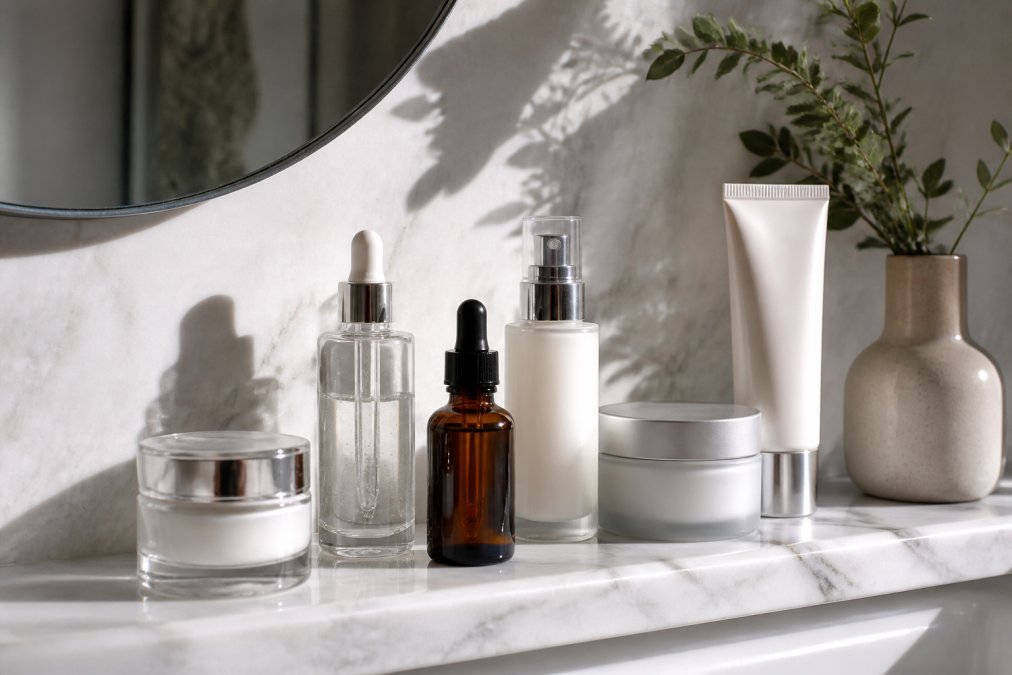
Drunk Elephant Protini Polypeptide Cream contains nine signal peptides, amino acids, and pygmy waterlily extract to support collagen and elasticity while reducing fine lines and sun damage. Clean at Sephora certified, it suits most non-oily skin types. A 1.69 oz size can be found for around $68.00 to $69.00, while a 3.3 fl oz size can be found for around $99.00.
Tatcha The Dewy Skin Cream combines Japanese purple rice, Okinawa algae, and hyaluronic acid for visible plumping and a dewy glow. Non-comedogenic, it works well for dry and combination skin without breakout risk. A 1.7 oz size can be found for around $56.47 to $72.00.
SkinCeuticals C E Ferulic is the most clinically significant vitamin C product at Sephora. It combines 15% L-ascorbic acid with 1% vitamin E and 0.5% ferulic acid, remaining effective for a minimum of 72 hours after absorption. Dermatologist-recommended and frequently cited in clinical literature, it delivers environmental protection and anti-aging efficacy. A 1 fl oz size can be found for around $185.00 to $187.00.
Dermatologist Recommended Skincare at Ulta
Ulta's clinical selection is smaller than Sephora's but growing with genuinely dermatologist-tested formulations.
Dermalogica Daily Microfoliant Exfoliator is a rice-based powder that activates with water to release papain, salicylic acid, and rice enzymes for polished texture and even tone. Formulated without artificial fragrances or colors, it suits daily use across most skin types. Prices range from $19.50 for a 0.45 fl oz travel size to $69.00 for a 2.6 fl oz full size.
Dermalogica's professional heritage, originally developed for clinical and spa settings, means its formulation standards align with professional skincare rather than typical retail brands. According to the American Academy of Dermatology's guidance on skincare ingredients, active ingredients like salicylic acid, retinol, and niacinamide are effective at specific concentrations. Check formulation details rather than relying on marketing language when selecting clinical skincare.
The limitation: if your regimen requires exclusive clinical brands, Ulta's assortment has gaps. SkinCeuticals is unavailable at Ulta, so shoppers with specific clinical needs may split purchases across both retailers.
Ulta vs Sephora Loyalty Program Comparison
Both retailers reward repeat purchases, but structure and value mechanics differ meaningfully for consistent high-performance skincare shoppers.
Sephora Beauty Insider operates on tiered points: Insider, VIB, and Rouge. The Rouge tier, reached at higher annual spend, unlocks early access to sales, exclusive launches, and free shipping. It suits shoppers concentrating spending at Sephora and valuing prestige beauty rewards.
Ulta Ultamate Rewards uses a cash-back model where points convert to dollars off future purchases, more transparent and immediately useful for replenishment-focused shoppers. Ulta also runs frequent bonus point events and birthday rewards adding real value throughout the year.
Practical difference: Sephora rewards loyalty with access and exclusivity. Ulta rewards loyalty with direct savings. For early access to new clinical skincare launches, Sephora's Rouge tier is worth reaching. For reducing out-of-pocket costs on regular replenishment, Ulta's cash-back model delivers more consistent value.
Ulta vs Sephora Return Policy for Skincare
Return policies matter when spending significantly on high-performance formulations that may not suit your skin type.
Sephora's return policy allows returns within 60 days for full refund, with both opened and unopened products accepted. This protects skincare shoppers needing time to assess whether a product works. After 60 days and up to one year, Sephora may offer store credit at its discretion.
Ulta's return policy mirrors the 60-day window with receipt or proof of purchase, accepting opened products. Without a receipt, Ulta may issue store credit based on lowest sale price.
Both policies are consumer-friendly and accommodate the reality that skincare takes time to evaluate. Act early if a product isn't working, skin reactions often show within two to three weeks, giving you maximum flexibility under either policy.
Sustainability, Clean Beauty Standards, and Personalized Consultations
Clean Beauty Programs Side by Side
Sephora's Clean at Sephora identifies products formulated without a defined list of potentially harmful ingredients, giving shoppers a shortcut for cleaner formulations.
Ulta's Conscious Beauty at Ulta organizes products across five pillars: clean ingredients, cruelty-free, vegan, sustainable packaging, and positive impact. This multi-pillar framework provides more granular sustainability information than a single label.
Neither is a regulatory standard. For verified ingredient safety, cross-reference with the Environmental Working Group's Skin Deep database.
In-Store Consultations and Skin Analysis Services
Sephora's Beauty Studio offers skin analysis, color matching, and personalized recommendations from trained advisors, particularly useful for building clinical skincare regimens.
Ulta's Glam Lab leans toward makeup and hair services, with less consistent skincare-specific consultation. For building high-performance skincare routines from scratch, Sephora's consultation infrastructure is more reliable.
Which Retailer Wins for High Performance Skincare Shoppers?
Choose Sephora if clinical brand access, luxury formulations, and prestige curation are priorities. Exclusive distribution agreements, Clean at Sephora certification, and Beauty Studio consultations make it the specialized destination for serious skincare investment.
Choose Ulta if you want clinical skincare combined with mass-market staples, a straightforward loyalty rewards structure, and shopping convenience across broader assortment. The dual-tier model and cash-back system suit frequent replenishment and direct savings.
For highly specific clinical regimens outside both retailers' assortments, purchasing directly from brand websites may offer better access and personalized guidance.
| Shopper Priority | Better Choice |
|---|---|
| Exclusive clinical brands (SkinCeuticals, Tatcha) | Sephora |
| Budget-accessible replenishment | Ulta |
| Clean beauty certification | Sephora |
| Sustainability multi-pillar framework | Ulta |
| In-store skin consultation | Sephora |
| Loyalty cash-back value | Ulta |
| Mass-market + prestige in one trip | Ulta |
| Luxury store atmosphere | Sephora |
These are complementary retailers, not mutually exclusive ones. Many beauty enthusiasts use both: Sephora for clinical serums and prestige moisturizers, Ulta for everyday staples and loyalty-driven replenishment. Understanding what each does best lets you shop both strategically.
Frequently Asked Questions
Does Sephora or Ulta have better skincare overall?
It depends on what you're looking for. Sephora carries a deeper selection of prestige and clinical skincare brands, making it the stronger choice for high performance skincare with active ingredients like vitamin C serums and peptide-rich moisturizers. Ulta covers more ground by stocking both mass-market and professional-grade lines, which gives budget-flexible shoppers more options. Neither retailer is universally better, your skin type, budget, and preferred brands should drive the decision.
Is Sephora more upscale than Ulta?
Yes, Sephora skews toward prestige beauty with an exclusive distribution model focused on luxury formulations and high-end brand partnerships. Ulta deliberately spans both mass-market and prestige tiers under one roof, which makes it more accessible to a broader consumer demographic. For a beauty enthusiast seeking clinical-grade or dermatologist-tested formulas, Sephora's curation tends to run more specialized, while Ulta's dual-tier model prioritizes shopping convenience and value.
Do Ulta and Sephora offer the same loyalty rewards for skincare purchases?
No. Ulta's Ultamate Rewards program earns points on every purchase across all price points, including mass-market products, and offers tiered membership perks with birthday gifts and bonus point events. Sephora's Beauty Insider program also uses a tiered structure with points redeemable for product samples and experiences, but rewards are weighted toward prestige purchases. For frequent high performance skincare buyers, both programs offer meaningful membership perks, the better fit depends on where you spend most.
Which retailer carries more medical-grade skincare brands?
Sephora has a wider selection of clinical skincare brands with dermatologist-tested formulations, including lines built around high-concentration active ingredients. Ulta carries professional-grade brands like Dermalogica, which are often sold through licensed estheticians elsewhere, giving it credibility in the clinical skincare space. Neither retailer stocks prescription-strength or true medical-grade products, those require a dermatologist or medical spa. For the closest over-the-counter equivalent, Sephora's product assortment edges ahead on clinical depth.
What is the return policy difference between Ulta and Sephora for skincare?
Ulta accepts returns within 60 days of purchase with a receipt, and within 30 days for items purchased with Ulta credit. Opened products are generally accepted. Sephora allows returns within 30 days for a full refund and up to 60 days for store credit, also accepting opened items. For high performance skincare shoppers who want to test a product before committing, Ulta's 60-day window with receipt gives slightly more flexibility to assess results before the return deadline closes.
Navigating two major beauty retailers to build one cohesive skincare regimen takes more effort than it should. The sheshedbeauty4U Radiant Beauty Essentials collection takes a different approach: a curated selection of high-performance products chosen for real skin results, not retail strategy. Search sheshedbeauty4U to find essentials that fit your routine without the guesswork.
This article was written using GrandRanker