
Skincare Products That Actually Work for Acne
Table of Contents
- Why Most Acne Skincare Products Fail (And What to Look for Instead)
- Best Acne Ingredients for Sensitive Skin
- Top Acne Skincare Products That Actually Work: Our Picks
- How to Build an Acne Skincare Routine That Sticks
- How Long Does It Take for Acne Products to Work?
- Managing Post-Acne Marks and Hyperpigmentation
- When to See a Dermatologist Instead of Going OTC
- Conclusion
Last Updated: August 10, 2026
Why Most Acne Skincare Products Fail (And What to Look for Instead)
Most acne products fail because they're used incorrectly, layered carelessly, or abandoned before they work. The real issue is almost never the product itself.
Acne-prone skin is characterized by excess sebum production, clogged pores, inflammation, and bacterial overgrowth. Treating it effectively requires matching the right active ingredient to the right acne type, then maintaining consistency.
The core mistake: treating acne as a single problem with one solution. Inflammatory papules respond to benzoyl peroxide. Blackheads and whiteheads need salicylic acid. Hormonal breakouts often require a retinoid. These are different mechanisms, and conflating them leads to frustrated shoppers cycling through unsuitable products.
What to look for instead:
- Clinically validated active ingredients with a clear mechanism of action
- Non-comedogenic formulas that won't worsen pore-clogging
- Skin barrier support through ceramides, niacinamide, or hyaluronic acid
- Dermatologist-recommended formulations with documented testing
Below, we break down the best acne ingredients for sensitive skin, review seven products that deliver results, and show you how to build a routine that holds up past the first two weeks.
Best Acne Ingredients for Sensitive Skin
Choosing the right ingredient is the single most important decision in any acne routine. The wrong one at the wrong concentration can damage the skin barrier and make breakouts worse. For sensitive skin, the goal is clinical effectiveness without unnecessary irritation.
Niacinamide and Azelaic Acid: Gentle but Effective
Niacinamide is a form of vitamin B3 that regulates sebum production, reduces inflammation, strengthens the skin's moisture barrier, and fades post-acne hyperpigmentation. For anyone who finds benzoyl peroxide or salicylic acid too harsh, niacinamide is the most versatile starting point. It pairs well with almost every other active ingredient and rarely causes irritation.
Azelaic acid, derived from grains, kills acne-causing bacteria, reduces redness, and targets hyperpigmentation from old breakouts. According to FDA guidance on over-the-counter acne treatments, azelaic acid is recognized as effective for both acne and rosacea. It's also safe during pregnancy, which matters for many customers.
Low-Dose Salicylic Acid and Sulfur for Reactive Skin
Salicylic acid is a beta hydroxy acid that penetrates oil-filled pores to dissolve debris causing blackheads and whiteheads. At lower concentrations (0.5% to 2%), it provides meaningful exfoliation without stripping. The key is consistency over concentration: a daily 2% salicylic acid product outperforms a 5% formula used twice a week.
Sulfur is the underrated option for reactive skin. It absorbs excess oil, reduces inflammation, and has a gentler profile than benzoyl peroxide for many users, particularly for hormonal chin breakouts.
Top Acne Skincare Products That Actually Work: Our Picks
Seven products tested, reviewed, and compared for different skin types, budgets, and acne severities.
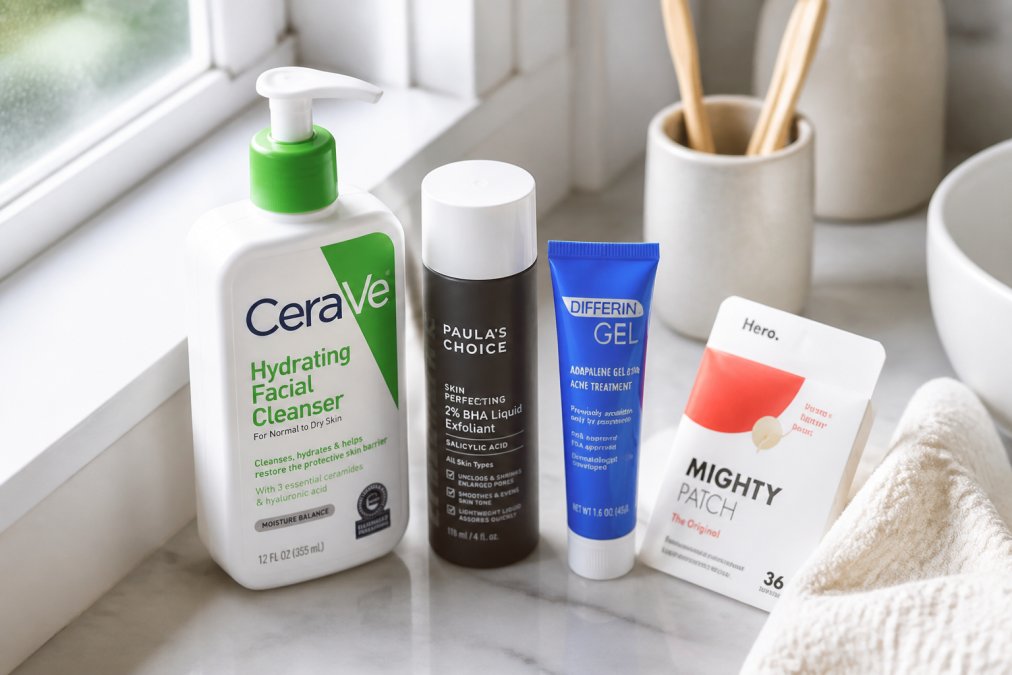
| Product | Active Ingredient | Best For | Price Range |
|---|---|---|---|
| CeraVe Acne Foaming Cream Cleanser | 4% Benzoyl Peroxide | Acne-prone, sensitive skin | $14.99-$19.29 |
| PanOxyl Acne Foaming Wash 10% | 10% Benzoyl Peroxide | Moderate to severe acne | $10.19-$14.99 |
| Differin Adapalene Gel 0.1% | 0.1% Adapalene (retinoid) | Persistent, cystic acne | $14.97-$31.46 |
| Paula's Choice 2% BHA Liquid | 2% Salicylic Acid | Blackheads, oily skin | $13.00-$37.00 |
| The Ordinary Niacinamide 10% + Zinc | 10% Niacinamide, 1% Zinc | Oil control, pore appearance | $6.00-$10.80 |
| La Roche-Posay Effaclar Duo | 5.5% Benzoyl Peroxide + LHA | Blemishes, whiteheads | $22.99-$38.99 |
| Hero Cosmetics Mighty Patch | Hydrocolloid | Active pimples, whiteheads | $8.97-$43.94 |
CeraVe Acne Foaming Cream Cleanser
CeraVe Acne Foaming Cream Cleanser is the best entry point for anyone new to acne treatment. It contains 4% benzoyl peroxide to clear existing breakouts and prevent new ones. Three essential ceramides maintain the skin barrier, hyaluronic acid retains moisture, and niacinamide soothes irritation. The 4% concentration is the practical sweet spot: effective enough to kill acne-causing bacteria without the aggressive dryness that 10% formulas trigger. It's fragrance-free, paraben-free, non-comedogenic, and dermatologist-recommended.
Best for: Acne-prone, oily skin needing effective treatment without sacrificing hydration.
PanOxyl Acne Foaming Wash 10% Benzoyl Peroxide
PanOxyl is the maximum-strength option at 10% benzoyl peroxide, the highest concentration available without a prescription. It's formulated for moderate to severe acne on the face, chest, and back. This is not a starter product; begin with CeraVe's 4% formula and step up if needed.
Best for: Moderate to severe acne, particularly body acne on chest and back.
Differin Adapalene Gel 0.1%
Differin Adapalene Gel is the most clinically significant product on this list. Adapalene is a third-generation retinoid previously available only by prescription. It normalizes skin cell turnover deep in the pore, preventing the buildup that causes blackheads, whiteheads, and inflammatory acne. It can reduce acne substantially over 12 weeks of consistent use.
The purging phase is real. During the first four to six weeks, skin cell turnover accelerates, which can temporarily surface congestion already forming beneath the skin. This is the product working, not a reaction.
Best for: Persistent acne, blackheads, whiteheads, and anyone wanting a long-term preventative approach.
Paula's Choice Skin Perfecting 2% BHA Liquid Exfoliant
Paula's Choice Skin Perfecting 2% BHA is the gold standard for leave-on salicylic acid exfoliation. At 2% salicylic acid, it penetrates oil-filled pores to dissolve congestion, smooth texture, and reduce blackheads. What separates this from drugstore products is the pH-optimized formula. According to American Academy of Dermatology guidance on acne treatments, salicylic acid is one of the most effective OTC ingredients for non-inflammatory acne, and formulation quality matters significantly.
Best for: Oily or combination skin, blackheads, enlarged pores, mild to moderate non-inflammatory acne.
The Ordinary Niacinamide 10% + Zinc 1%
The Ordinary Niacinamide 10% + Zinc 1% is the most accessible product on this list and highly versatile. The 10% niacinamide targets blemishes, uneven texture, and excess oil. The 1% zinc PCA specifically regulates sebum production. At under $11, it's the budget-conscious clinical alternative that genuinely holds its own and pairs cleanly with most other actives.
Best for: Oily or combination skin, visible pores, sebum control, and budget-conscious users.
La Roche-Posay Effaclar Duo Dual Action Acne Treatment
La Roche-Posay Effaclar Duo combines 5.5% micronized benzoyl peroxide with Lipo-Hydroxy Acid, a derivative of salicylic acid providing targeted micro-exfoliation. The micronized benzoyl peroxide is processed to be smaller than standard particles, allowing deeper pore penetration with a non-drying, fast-absorbing texture. Many users report visible results in under three days.
Best for: Acne-prone and oily skin with a mix of blemishes, blackheads, and whiteheads.
Hero Cosmetics Mighty Patch Original
Hero Cosmetics Mighty Patch is the most straightforward product on this list. Apply it overnight to an active pimple or whitehead. The hydrocolloid material absorbs fluid, pus, and oil while creating a protective barrier that prevents touching, picking, and further bacterial contamination. The limitation is equally clear: Mighty Patch does nothing for blackheads, cystic acne, or prevention.
Best for: Active pimples and whiteheads requiring targeted overnight treatment.
How to Build an Acne Skincare Routine That Sticks
The biggest obstacle in any acne routine isn't finding the right products. It's maintaining consistency long enough for them to work. Most active ingredients require four to twelve weeks of daily use before delivering measurable results. Overwhelming routines get abandoned.
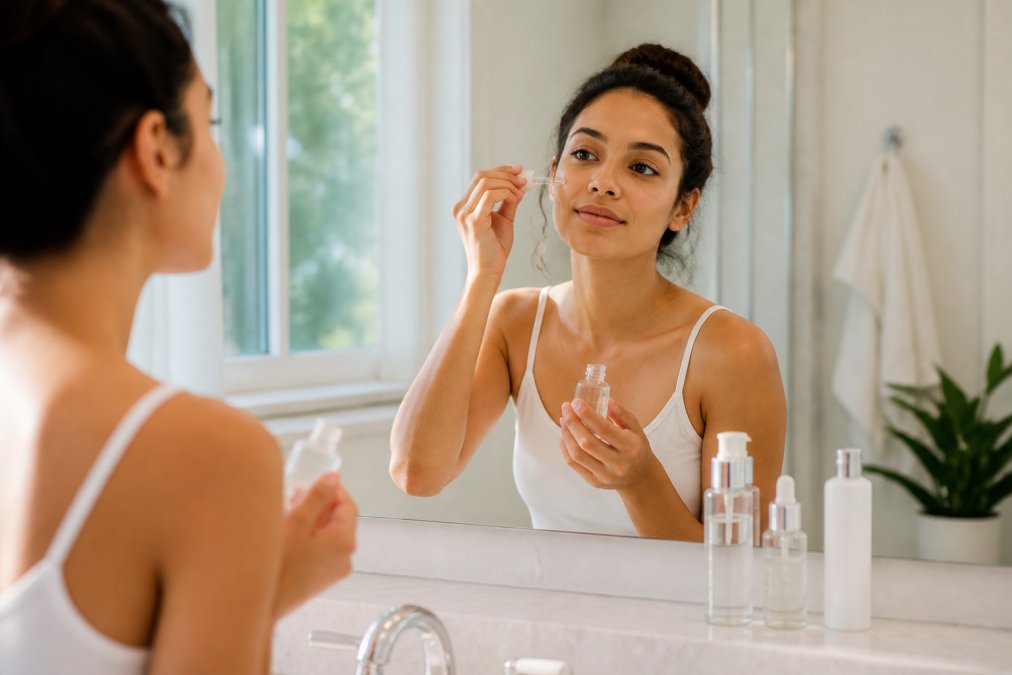
A workable acne routine follows this structure:
Morning:
- Gentle cleanser (non-medicated or low-dose benzoyl peroxide)
- Niacinamide serum (optional, for oil control and barrier support)
- Non-comedogenic moisturizer
- SPF 30+ sunscreen (non-negotiable if using any exfoliant or retinoid)
Evening:
- Cleanser
- BHA exfoliant (salicylic acid) OR retinoid (adapalene), not both in the same step
- Spot treatment (benzoyl peroxide or hydrocolloid patch on active blemishes)
- Non-comedogenic moisturizer
The sheshedbeauty4U Radiant Beauty Essentials collection is built around this purposeful, simplified approach.
Ingredient Interaction Safety: What Not to Layer
Layering the wrong actives together doesn't just reduce effectiveness; it can damage the skin barrier and worsen breakouts.
Combinations to avoid in the same routine step:
- Retinoids + benzoyl peroxide: Benzoyl peroxide can deactivate adapalene. Use retinoids in the evening and benzoyl peroxide in the morning.
- Salicylic acid + retinoids: Using both in the same evening step significantly increases dryness and peeling. Apply salicylic acid in the morning and adapalene at night.
- Multiple exfoliants simultaneously: Using a BHA, an AHA, and a retinoid in the same routine is too much exfoliation for most skin types.
The safest approach: introduce one active ingredient at a time, spaced two to three weeks apart.
Patch Testing and Managing the Purging Phase
Patch testing is the step most people skip and later regret. Before applying any new active ingredient to the full face, apply a small amount to the inner forearm or jawline for three to five days.
Purging happens when cell-turnover-accelerating ingredients bring pre-existing congestion to the surface faster than normal. Purging looks like small whiteheads or pimples in areas where you normally break out and typically resolves within four to six weeks.
A true reaction appears in new locations, includes cystic or deeply inflamed lesions, and does not improve over time.
How Long Does It Take for Acne Products to Work?
Acne products that actually work rarely show dramatic results in the first two weeks. Many people abandon effective products during the initial adjustment phase, when temporary dryness or minor purging creates the impression that the product is making things worse.
| Ingredient | Visible Improvement Timeline | Full Results |
|---|---|---|
| Benzoyl peroxide (cleanser) | 2-4 weeks | 8-12 weeks |
| Salicylic acid (BHA exfoliant) | 4-6 weeks | 8-12 weeks |
| Adapalene (retinoid) | 6-8 weeks | 12-16 weeks |
| Niacinamide | 4-6 weeks | 8-12 weeks |
| Hydrocolloid patches | Overnight (single pimple) | N/A (not preventative) |
A useful approach: take a photo of your skin every two weeks under the same lighting. Progress in acne treatment is gradual and easy to underestimate day-to-day.
Managing Post-Acne Marks and Hyperpigmentation
Clearing active breakouts is only half the challenge. Post-acne hyperpigmentation, the flat dark or red marks left after a pimple heals, can persist for months without targeted treatment.
The most effective ingredients for fading post-acne marks:
- Niacinamide: Inhibits melanin transfer to skin cells, gradually fading dark spots.
- Azelaic acid: Directly targets excess melanin production and is one of the most effective OTC options for hyperpigmentation.
- Salicylic acid (BHA): Accelerates cell turnover, bringing fresh, evenly-pigmented skin to the surface faster.
- Adapalene: Normalizes skin cell turnover and improves skin tone over time.
According to American Academy of Dermatology resources on post-inflammatory hyperpigmentation, daily sunscreen use is the single most important factor in preventing post-acne marks from darkening further.
When to See a Dermatologist Instead of Going OTC
Over-the-counter products cover many acne types, but certain situations warrant a dermatologist visit.
See a board-certified dermatologist if:
- Cystic or nodular acne is present: deep, painful, inflamed lesions do not respond well to OTC treatments.
- OTC treatments have been used consistently for 12+ weeks without meaningful improvement.
- Significant scarring is developing: raised keloid scars or deep ice-pick scars require clinical intervention.
- Acne is affecting mental health or daily functioning.
- Sudden adult-onset acne appears without prior history: this can indicate hormonal changes or other underlying conditions.
Prescription options include tretinoin, topical or oral antibiotics, spironolactone for hormonal acne in women, or isotretinoin for severe cases. Many telehealth dermatology platforms offer prescription acne treatments at lower cost than traditional visits.
For general skincare guidance, the American Academy of Dermatology's patient-facing acne resources provide dermatologist-reviewed information organized by acne type and treatment approach.
Finding skincare products that actually work for acne is difficult when the market is flooded with products making strong claims but delivering inconsistent results. The sheshedbeauty4U Radiant Beauty Essentials collection is built around the principle that effective skincare shouldn't require a chemistry degree or unlimited budget. Whether you're starting with a gentle benzoyl peroxide cleanser and a niacinamide serum or building toward a retinoid-based long-term routine, the right products exist at every price point. Search the sheshedbeauty4U catalog to find curated acne-focused essentials that fit your skin type, routine, and lifestyle.
Frequently Asked Questions
What skincare ingredients are scientifically proven to treat acne?
The most evidence-backed acne ingredients are benzoyl peroxide, salicylic acid (a beta hydroxy acid), and adapalene (a retinoid). Benzoyl peroxide kills acne-causing bacteria, salicylic acid exfoliates inside pores to prevent blockages, and adapalene normalizes skin cell turnover to stop breakouts at the source. Niacinamide and azelaic acid are also dermatologist-recommended options, particularly for acne-prone skin that is sensitive or prone to hyperpigmentation.
How long does it take for acne skincare products to show results?
Most acne skincare products require consistent use for 8 to 12 weeks before delivering noticeable results. Benzoyl peroxide spot treatments can reduce redness within a few days, but full clearing takes longer. Adapalene gel, for example, has been shown to reduce acne by up to 87% after 12 weeks of daily use. Skin may experience an initial purging phase during the first two to four weeks when introducing active ingredients like retinoids or salicylic acid.
Should I use drugstore or clinical-grade skincare for acne?
Many drugstore acne skincare products contain the same active ingredients found in clinical-grade formulations. Adapalene 0.1% gel is now available over the counter at a fraction of prescription costs. Benzoyl peroxide, salicylic acid, and niacinamide are all accessible at drugstore prices. Clinical-grade products may offer more refined delivery systems or higher concentrations, but for mild to moderate acne, well-formulated over-the-counter options are often sufficient. Severe or cystic acne typically warrants a dermatologist visit.
Can I use multiple acne treatments at the same time?
Layering acne treatments requires care to avoid over-stripping the skin barrier. Benzoyl peroxide can deactivate adapalene if applied together, so use them at separate times of day. Salicylic acid and retinoids used simultaneously increase the risk of dryness and irritation. Niacinamide pairs safely with most actives and can help calm inflammation when combined with stronger treatments. Always introduce one new active ingredient at a time, patch test first, and include a ceramide-based moisturizer to protect hydration.
What is the best skincare routine for hormonal acne?
Hormonal acne, which typically appears along the jawline and chin, responds well to a consistent routine built around sebum control and anti-inflammatory ingredients. A gentle cleanser with benzoyl peroxide or salicylic acid used morning and evening is a solid starting point. Adding a niacinamide serum helps regulate oil production. Using adapalene at night targets clogged pores and prevents new breakouts. A non-comedogenic, oil-free moisturizer maintains the skin barrier without worsening congestion. Persistent hormonal acne often benefits from a dermatologist evaluation.
This article was written using GrandRanker