
Are You Trapped by Fast Fashion? How to Break Free
Last Updated: October 24, 2026
Quick Summary
Avoiding fast fashion traps starts with a real closet audit, then filling only genuine gaps with quality pieces you will wear for years. Track your outfits for two weeks and use cost per wear to judge each purchase. Buy less, buy better, and keep each garment in use as long as possible.
- Turn every hanger backward and check after 30 days which pieces you never wore.
- Most people rotate through roughly 20 percent of their closet, so build around that core.
- Cost per wear equals price divided by number of wears; a $44.99 shirt worn 50 times costs about 90 cents per wear.
- Cap a full seasonal capsule at often 30 to 40 pieces including shoes.
- When a piece no longer works, repair first, then resell or swap, donate, and recycle last.
Table of Contents
- Why Fast Fashion Traps Keep You Stuck
- How to Build a Capsule Wardrobe That Actually Works
- How to Shop for Quality Clothes You'll Wear for Years
- Cost Per Wear Clothing: The Math That Changes Your Buying
- Secondhand Clothing Shopping Tips for a Smarter Closet
- How to Spot Greenwashing and Verify Sustainability Claims
- Shop the Effortless Style Collection at sheshedbeauty4U
- Frequently Asked Questions
Why Fast Fashion Traps Keep You Stuck
Avoiding fast fashion traps for a better wardrobe starts with understanding why the trap works so well.
The cycle runs on impulse buying. A new drop appears, your feed fills with it, and the price is low enough that saying yes feels harmless.
Three forces keep the loop spinning:
- Dopamine chasing. The thrill comes from the purchase, not the piece.
- Peer pressure. Seeing a trend everywhere makes it feel necessary.
- Low cost per item. A cheap price hides how quickly the garment gets replaced.
Fashion moves through a trend cycle faster than most closets can absorb. The result is a wardrobe full of clothes and nothing to wear.
How to Build a Capsule Wardrobe That Actually Works
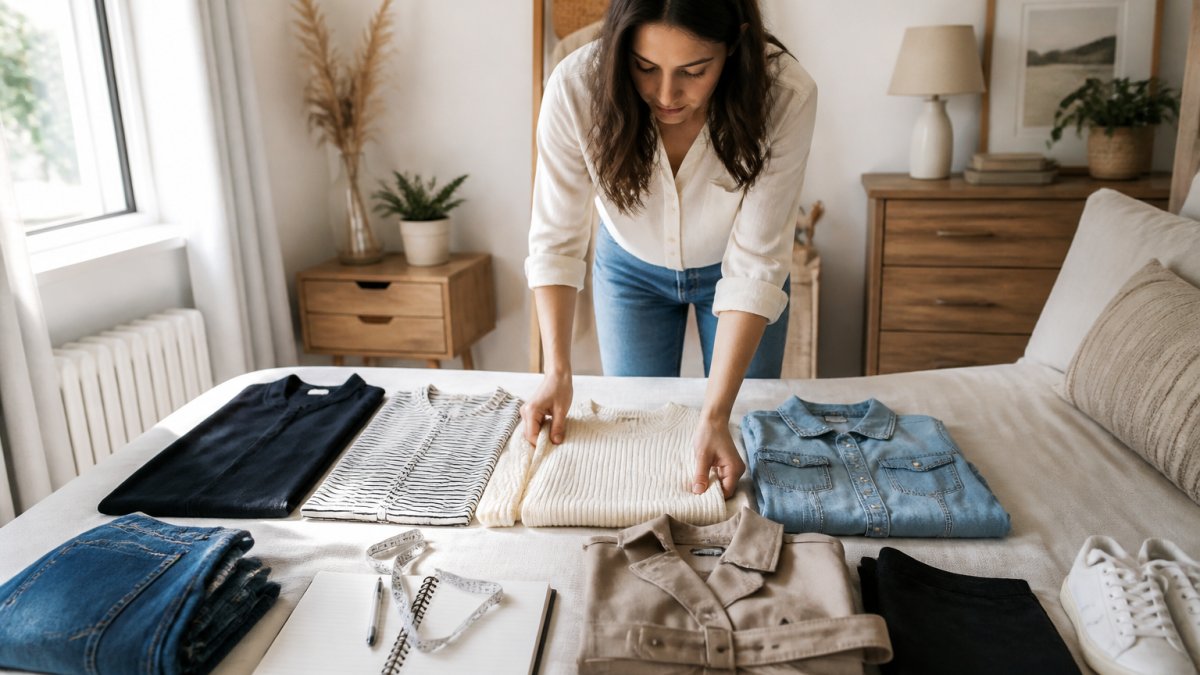
A capsule wardrobe is a small set of versatile pieces that mix and match into many outfits. Most capsules run on a tight color palette and a short list of wardrobe essentials you can wear across work, weekends, and evenings. The difference between a capsule that works and one that collapses into a boring uniform is the audit you do before you buy a single new piece.
Step 1: Run a real closet audit, not a vibe check
Pull everything out of your closet and sort it into three piles: wears often, wears rarely, and never. Do not decide from memory. Use these tools so the audit produces data you can act on:
- The hanger flip. Turn every hanger backward. When you wear a piece, turn it forward. After 30 days, the backward hangers are your true "rarely worn" list.
- A simple inventory sheet. List each item with four columns: category, color, fabric, and times worn in the last 90 days. A spreadsheet or a notes app works; the point is a written record, not a perfect system.
- The laundry test. Notice what reaches the laundry basket most often. Those are your real workhorses, regardless of what you think you love.
Step 2: Identify genuine gaps, not duplicate wants
A gap is a category you reach for and cannot find. A duplicate want is a fifth black top when you already own four. Before adding anything, answer:
- What three outfits will this piece complete that I cannot build today?
- What do I already own that does the same job?
- Which of my existing pieces will it replace, if any?
If you cannot name three outfits, it is a want, not a gap. Write the gap on a running list and wait two weeks before buying. Most wants fade; real gaps stay on the list.
Step 3: Track outfits for two weeks
For 14 days, photograph or note what you actually wear. Most people find they rotate through roughly 20 percent of their closet. That 20 percent is your capsule core. Build around it rather than around an idealized wardrobe you saw online.
Step 4: Build the capsule around a working palette
- Pick two or three base colors that all work together.
- Choose versatile pieces you can layer: a button-front shirt, a straight skirt, a simple knit.
- Cap the total at a number you can actually rotate, often 30 to 40 pieces including shoes for a full seasonal capsule.
- Fill only the gaps on your written list, and fill them with quality over quantity.
For a deeper walkthrough, our guide on how to build a capsule wardrobe breaks the process into steps. When you want outfit ideas that take minutes, these effortless style tips for busy women show how a small capsule turns into five-minute looks.
How to Shop for Quality Clothes You'll Wear for Years
Shopping for quality clothes means checking construction before you check the price tag. High-quality garments share a few visible signals, and you can spot most of them in under a minute.
Run this checklist in the fitting room:
- Stitching is tight and even, with no loose threads
- Seams lie flat and don't pucker
- Buttons and zippers feel solid, not flimsy
Read the clothing labels too. A fabric blend tells you how the piece will wear and how it washes.
The U.S. Federal Trade Commission's textile labeling rules require accurate fiber content on labels, so you can trust what you read.
Cost Per Wear Clothing: The Math That Changes Your Buying
Cost per wear is the price of a garment divided by the number of times you wear it.
Simple Button Front Shirt, Elegant Long Sleeve Shirt Tops →
That math reframes every purchase decision. Ask two questions before buying:
- How many outfits can this piece join?
- How many times will I realistically wear it this year?
A timeless piece you reach for weekly beats a trend item you wear once. This is where cost per wear and timeless style meet: durability and versatility both drive the number down.
The formula is simple, and the numbers make the case for buying fewer, better pieces.
| Item | Price | Wears | Cost per wear |
|---|---|---|---|
| Shirt | $44.99 | 50 | About 90 cents |
| Cheap top | Low price | 2 | More per outing than a well-made staple |
| Simple Button Front Shirt | $44.99 | Not stated | Earns its place through cost per wear |
| Stella Simply Taupe Denim Maxi Skirt | $56.00 | Not stated | Earns its place through cost per wear |
| Navy Leather Woven Sneaker | $295.00 | Not stated | Earns its place through cost per wear |
| Vintage Corduroy Cap | $31.99 | Not stated | Earns its place through cost per wear |
Secondhand Clothing Shopping Tips for a Smarter Closet
Secondhand clothing is one of the fastest ways to break the fast fashion habit. Thrifting and clothing swaps let you test new styles without feeding the trend cycle, and secondhand pieces often outlast cheap new ones. But secondhand is only half the loop. The other half is what happens to a garment when you are done with it, and that decision deserves the same care as the purchase.
Shop secondhand with a checklist
- Check the seams and underarms first. They show wear fastest.
- Know your measurements. Sizes vary by decade and brand, so bring a tape measure and compare against a garment you already own.
- Search by fabric, not brand. Good material lasts, and a strong natural fiber from an unknown label often beats a famous name in a thin blend.
Online resale platforms broaden the search beyond local thrift stores, but factor in shipping and return policies before you commit. A low price plus non-refundable shipping can erase the savings if the fit is wrong.
Decide end of life in the right order
When a piece no longer works for you, run this sequence before anything reaches a donation bin:
- Repair first. A lost button, a split seam, or a hem that has come down is a 15-minute fix, not a reason to discard. A tailor can often replace a zipper for far less than a replacement garment costs.
- Resell or swap next. Resale platforms and local swaps keep wearable pieces in circulation and recoup some of your cost.
- Donate with realistic expectations. Donation is not a guarantee the item will be worn again. A large share of donated clothing is exported or downcycled, so donate items that are clean and genuinely wearable.
- Recycle last, and know the limits. Textile recycling capacity is limited, and most municipal programs do not accept worn-out clothing in curbside bins. Use dedicated textile drop-off programs rather than the trash, but treat recycling as a backstop, not a solution.
Renting clothes suits one-off events, and repair extends garment lifespan far beyond a single season. The goal is to keep each piece in use as long as possible, then route it to the next-best option instead of the landfill.
How to Spot Greenwashing and Verify Sustainability Claims
Greenwashing is marketing that makes a brand look more sustainable than it is. Vague words like "eco-friendly" or "green" with no proof are the classic warning sign.
Verify claims with these checks:
- Look for specifics. Real claims name a material, a certification, or a number.
- Check the label against the marketing. The fiber content should match the story.
- Search the certification. A logo means nothing if you can't confirm it.
The FTC's Green Guides set the standards for environmental marketing claims, and they're a useful reality check. If a claim can't survive a two-minute search, treat it as decoration. Ethical fashion starts with honest information, not a green tag.
Shop the Effortless Style Collection at sheshedbeauty4U
The easiest way to escape the fast fashion trap is to buy fewer pieces you'll actually wear, and that's where a curated collection helps.
Take the Simple Button Front Shirt ($44.99). It's cut from a 95% polyester and 5% spandex blend that resists wrinkles, so it moves from office to dinner without a change.
Each piece earns its place through cost per wear, not a trend cycle. You can shop the effortless style collection and build a small rotation that works harder than a closet full of impulse buys.
Frequently Asked Questions
What is the 3-3-3 rule for fashion?
The 3-3-3 rule is a simple styling framework: three colors, three silhouettes, and three layers that mix together. The idea is that a small set of coordinated pieces creates far more outfits than a closet full of one-off trend buys. It works because every piece pairs with every other piece, so you get maximum versatility from minimum clothing. Try it as a filter when you shop: if a new item doesn't work with at least three things you already own, leave it.
How can I stop buying fast fashion?
Start with a wardrobe audit so you know what you actually wear. Then set a 48-hour rule before any online shopping purchase, and use cost per wear clothing math to compare a cheap trend piece against a durable staple. Unfollow accounts that push impulse buying, and redirect that spending toward secondhand finds, clothing swaps, or a few high-quality garments you'll wear for years. The goal isn't perfection. It's buying less and buying better, one decision at a time.
How do I know if a clothing purchase is worth it?
Run it through three checks. First, cost per wear: divide the price by how many times you realistically expect to wear it. A $45 shirt worn 30 times costs $1.50 per wear; a $15 trend top worn twice costs $7.50. Second, fabric and construction: check clothing labels for natural materials or quality blends, look at seams and buttons, and confirm it survives normal washing. Third, fit and versatility: it should work with at least three existing outfits. If it fails two of the three, skip it.
What are some alternatives to buying new clothes?
Thrifting and secondhand clothing are the most accessible options, and online resale platforms make it easy to search by size and brand. Clothing swaps with friends refresh your closet at no cost. Renting clothes works well for occasion wear you'd only use once or twice. Repair and basic sewing extend the life of pieces you already own, and proper clothing care like washing less and air drying keeps garment lifespan long. Each of these keeps textile waste out of landfills while still letting you update your look.
Breaking the fast fashion habit isn't about willpower. It's about buying fewer, better pieces and knowing exactly how you'll wear them. sheshedbeauty4U makes that easier with a curated Effortless Style Collection, versatile staples like the button-front shirt and denim maxi skirt, and pieces chosen for real cost-per-wear value. Get started with sheshedbeauty4U and build a wardrobe you reach for every day.
